




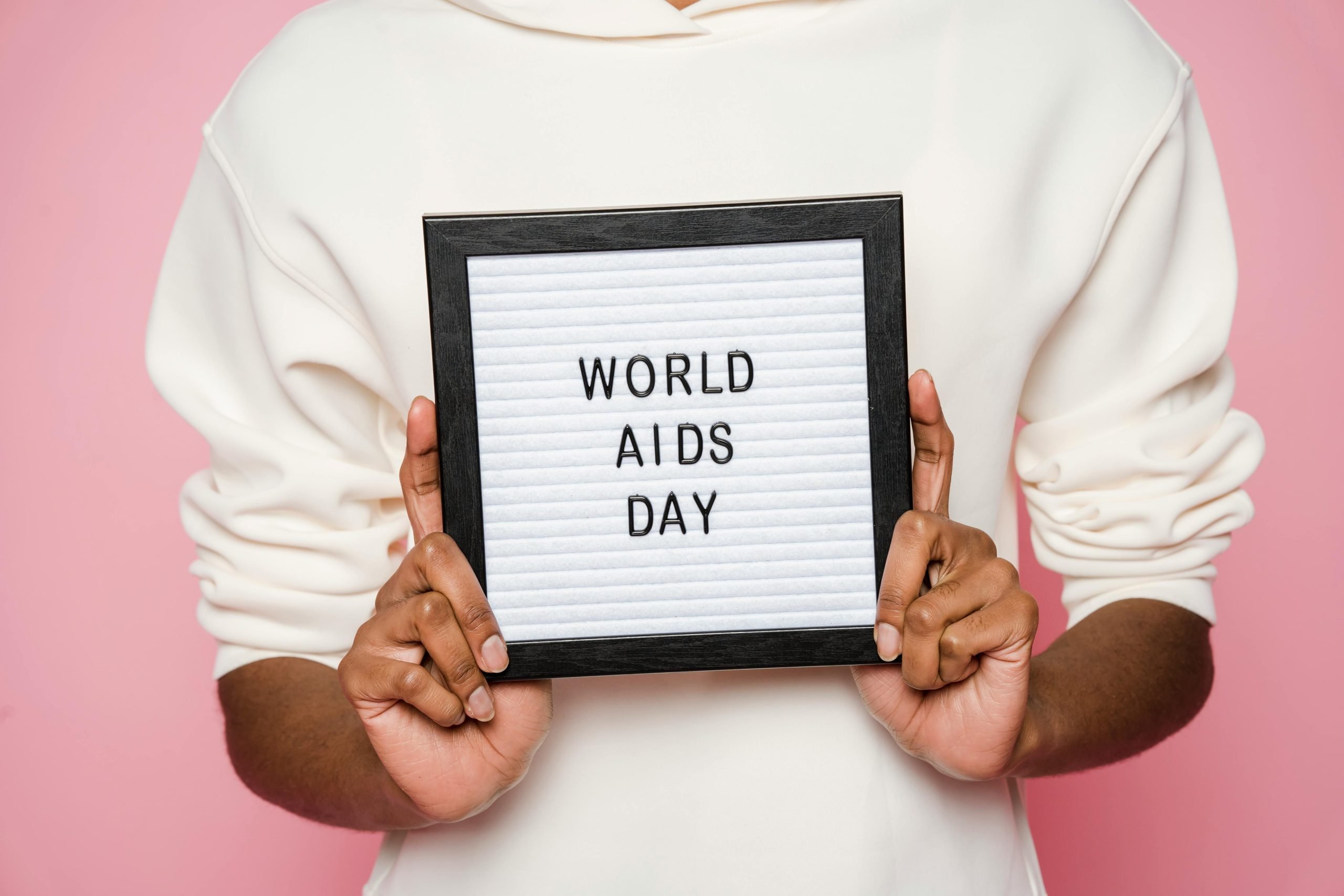
World AIDS Day may fall on December 1 every year, but awareness is a daily act of love for prevention advocates in Black communities across Chicago.
“The stigma of HIV is still far too prevalent in the Black community. It is one of the reasons why the virus continues to inequitably increase among Black people,” said Vanessa Smith, executive director of the South Side Help Center. The nonprofit offers community outreach programs and mobile testing for HIV and AIDS.
In 2022, Black and Latinx people in America made up more than half, or 70 percent, of estimated new HIV infections, according to the U.S. Centers for Disease Control and Prevention.
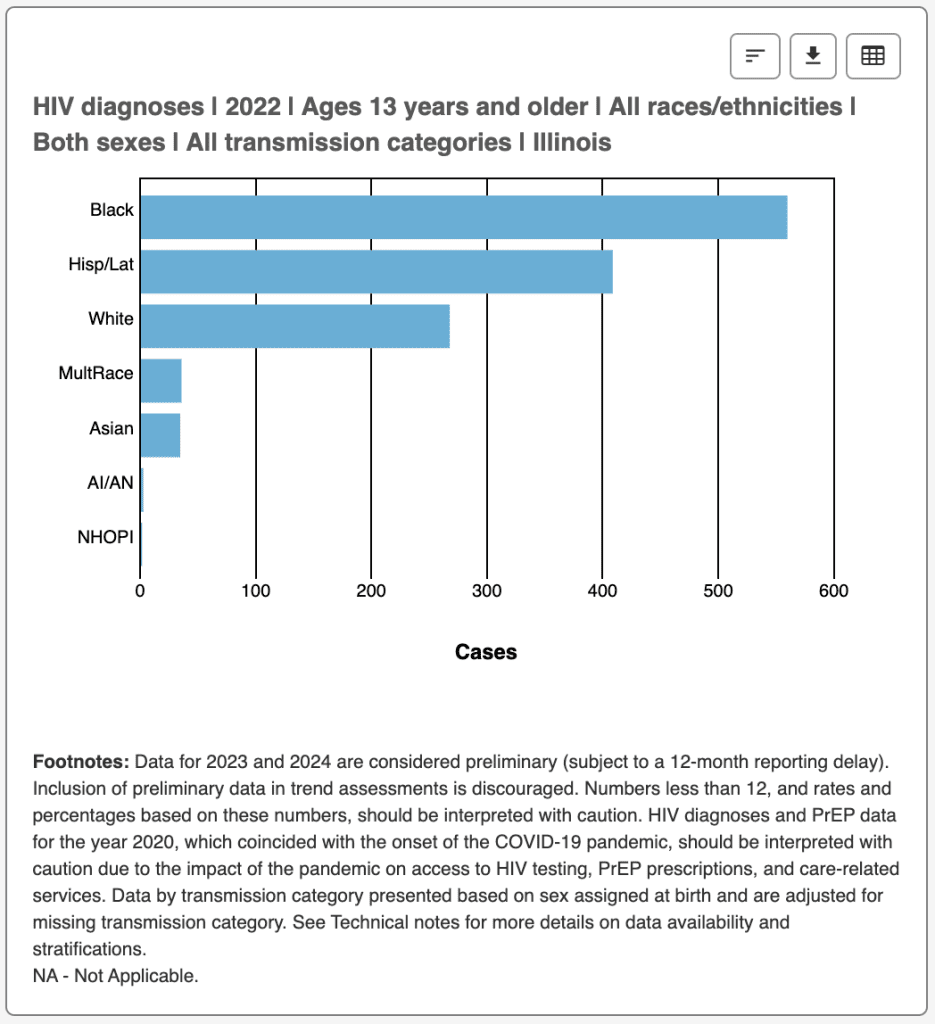
Despite the impact on Black communities, HIV prevention advocates say government agencies such as the Illinois and Chicago departments of public health allots the majority of its funding to white-led advocacy groups. They are calling on local and state policymakers to prioritize Black communities by increasing the amount of funding for HIV prevention, education, and treatment programs, especially in underserved Chicago neighborhoods.
“Funding policies must shift from white-led providers whose headquarters are in white communities,” Smith said.
In Chicago, AIDS-related deaths are the 4th leading cause of death among African American women, according to the Black Leadership Advocacy Coalition for Healthcare Equity (BLACHE), a coalition of African American-led organizations in Illinois purposed to identify and dismantle systemically racist policies and funding processes which result in inequitable healthcare.
Simultaneously, there are disparities in access to prevention and treatment medications. PrEP is the leading prescription in the fight against the HIV epidemic. However, systemic barriers, such as stigma and racism, are among the reasons why cisgender Black women and transgender Black women aren’t taking the medication.
“The majority of those who are aware of and use PrEP are white same gender-loving men,” said Creola Hampton, founding board chair of BLACHE. “Black cisgender women are not a priority population in Illinois. In essence, the Illinois Department of Public Health does not allocate funding specifically for prevention for this population.”
Chris Balthazar, executive director of TaskForce Prevention and Community Service, emphasized that HIV is preventable and manageable. He said many people today still think of HIV as a death sentence. But with modern treatment, those with HIV are living long and healthy lives.
That’s why he’s advocating for small community organizations like his to receive more funding to offer more services to more people.
“Funders look at us and they say, ‘well, we can give you a small grant but we really can’t give you the big grants yet because there is some work that you have to do to prove that you can handle the budget.’ I get that,” Balthazar said. “But I also think there is this unspoken, implicit bias when it comes to funding BIPOC-led, grassroots, smaller organizations. There is often the assumption that they’re going to screw up the money.”
Balthazar said he believes that bias is why HIV prevention organizations like his are underfunded. However, that bias ultimately hurts the communities impacted by the virus.
“Funders often place these limits on us as a small organization that really hold us
back from what we can do and how we can do it. Honestly, that is one of the biggest barriers,” Balthazar said.
There’s an ongoing spread of misinformation about how HIV is contracted. It is not spread by kissing or through saliva, sneezing or coughing. HIV is primarily transmitted through sexual intercourse. Sharing needles for intravenous drug use is another common way HIV is transmitted.
HIV prevention groups say safe sex education needs to be mandatory for all students in schools, and condoms should be offered free of charge in schools.
They also want to target members of the Chicago Department of Public Health and Chicago’s City Council to champion the issue of adequate funding to Black-led organizations.
“Black-led healthcare organizations must be equitably funded so that optimally culturally competent, effective HIV prevention programs and services can be provided in majority Black communities,” Smith said.