
Branded Content | This article is written and produced by The TRiiBE in partnership with the Chicago Bears.
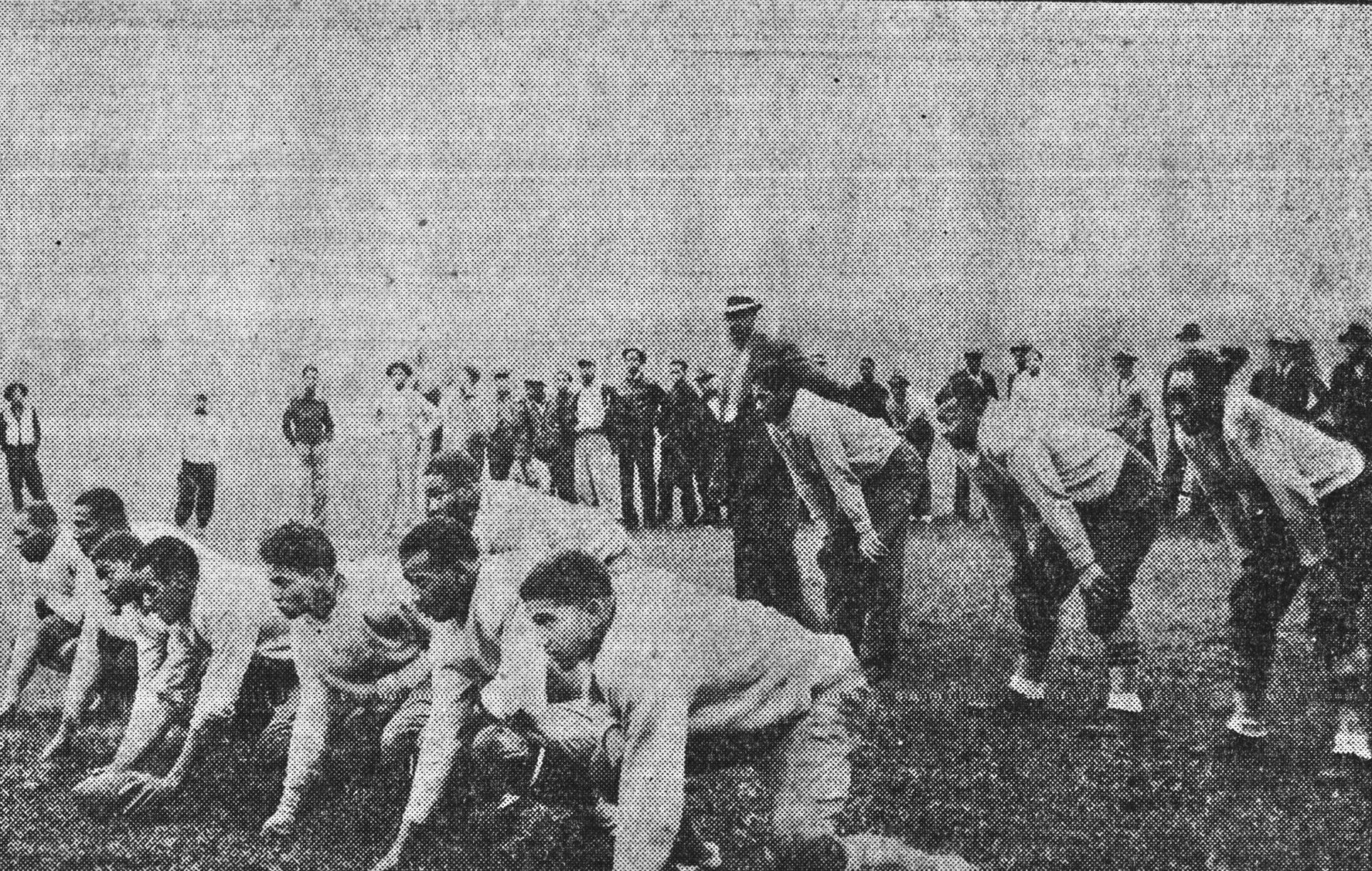
In 1938, Coach George Halas went against the grain. He agreed to his Chicago Bears playing a game against an ensemble of Negro All-Stars under the lights at Soldier Field. Although proceeds from the game would benefit Chicago charities, there seemed to be much deeper implications for the future of Black athletes and fans. One newspaper noted in its lede that “the prestige of Negro football is at stake.”
Unlike the Chicago Bears, a professional football team coming off wins against other all-star teams and the Green Bay Packers, the Negro All-Stars were a collection of former college stars and pro standouts assembled by a nationwide poll circulated throughout dozens of Black newspapers, including the Chicago Defender. Hundreds of thousands of people cut out ballots from the papers and mailed in their votes for which players should make the 1938 Negro All-Star football team.
“Help by voting for the worthwhile players regardless of whether he is your uncle’s second cousin or your wife’s brother,” prominent Chicago Defender writer Frank A. Young wrote in his sports column on Sept. 3, 1938. “‘We’ve got to have a team. We’ve got to have a line. We’ve got to make a good showing even if we might loose [sic].’ Those are my sentiments.”
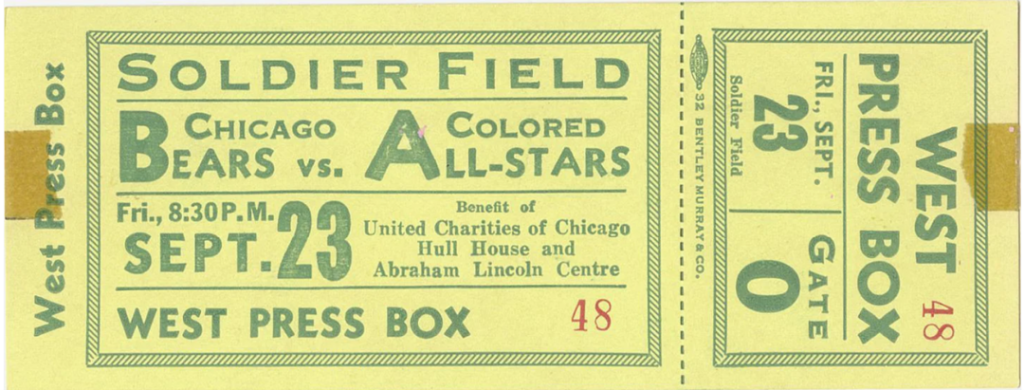
On Sept. 23, 1938, an estimated 6,000 people came out at 8:00 p.m. to watch some of the nation’s best Black football players take on the Bears. The Negro All-Stars roster included notables such as halfback Joe Lillard (University of Oregon), and halfback Ozzie Simmons (University of Iowa). Both were out of college and had played pro ball. HBCUs were represented, as well: quarterback Madison Doram (Xavier University).
Despite the Negro All-Star team’s best efforts, the Bears overpowered them 51–0.
“[George Halas] was the only leader of an NFL team to give Black players a shot,” Chicago historian Shermann “Dilla” Thomas said during “Love, Legacy & Chicago,” a Black History Month Roundtable with the Chicago Bears and The TRiiBE. “I’d imagine that a lot of future athletes, particularly here in Chicago, seeing that opportunity, seeing Black men line up against NFL players, was very inspiring.”
Click the play button to watch “Love, Legacy & Chicago,” a Black History Month Roundtable with the Chicago Bears, The TRiiBE and Historian Shermann “Dilla” Thomas.
Although many odds were stacked against Black players of the era, the 1938 Bears vs. Negro All-Stars game is a story of perseverance.
“It wasn’t like they weren’t good enough,” sportswriter and historian Tim Brown told The TRiiBE. “They were clearly good enough to play. They had succeeded in some of the best leagues in the country at the college level.”
The 1938 roster for the Negro All-Stars only had a couple weeks to prepare. The team was coached by highly-decorated Black men who had formerly played professional football: Ray Kemp (Pittsburgh Pirates) and Duke Slater (Chicago Cardinals). Kemp even wound up playing in the game, helping the struggling efforts of the offensive line.
The Chicago Defender chronicled the Negro All-Stars journey. On Oct. 1, 1938, writer John Lake noted the players weren’t as mad about the defeat as they were about the conditions surrounding the contest. Few had football equipment; one player worked out in basketball trunks. Additionally, morale was low the afternoon of the game because of a rumor that the Negro team “might not get their money after the game.”
In his post-game Chicago Defender column, Young wrote, “A howl went up from our fans that the game was ‘rotten,’ and one-sided. These fans might just as well jot it down in their books right now that the scoring this year in all football games should be larger than before because of the change in one of the rules.”
Young detailed the change. “The new rule allows four passes in a series of four downs before the ball is ruled a touchback,” he wrote. “The result is remarkable. Anywhere inside the 12-yard line and with the secondary defense spread, a line play can gain a fair amount of yardage. Four of them can produce the necessary yardage for a first down or goal and six points.” This marked the start of modern rules in the NFL.
Despite it all, Young — who was widely regarded as the “dean of Negro sportswriters” — tipped his hat to Halas for participating in the contest. “Since he made a fine gesture, stood chance to lose money – and maybe did (he lost the services of one of his best players who was injured), our hats are off to him for trying.”
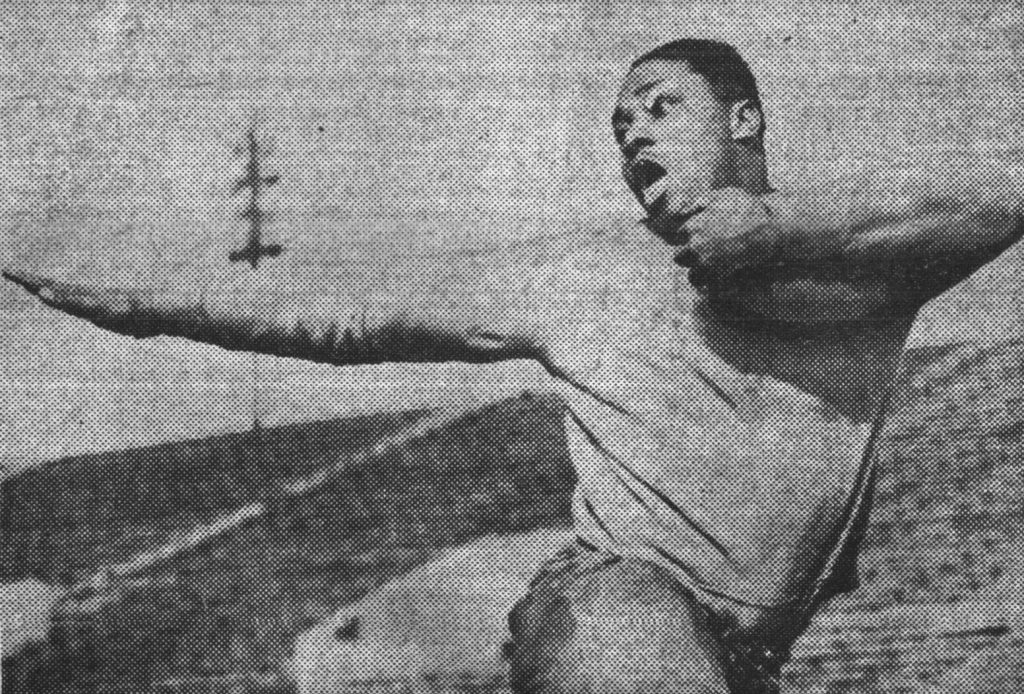
For Brown, the 1938 game matters because of the era. The NFL started off as a fully integrated league in the 1920s. During that time, Black players like all-pro halfback Fritz Pollard, a Chicago native; offensive tackle Duke Slater, defensive end Inky Williams and running back Joe Lillard not only played, they dominated.
From the mid 1930s until the mid 1940s, however, no Black players appeared in the league because of an unofficial color ban.
“Here’s this NFL team, they’re playing a game against people that they didn’t allow to play in their league,” Brown said. “There’s this progressive element to even schedule the game, but the backdrop is not one of progress.”
Black players showed, when given the opportunity, they can compete at the highest level. They opened the doors for George Taliaferro, the first Black player selected by an NFL team (the Chicago Bears) in the draft in 1949, though he had already committed to play for another team; and Eddie Macon, the first Black player in Bears history when they drafted him in 1952. Today, Black players aren’t just a part of the NFL; they are foundational to teams like the Chicago Bears.
Famed Bears running back Walter Payton is considered to be one of the greatest players of all time. The 1985 Bears, which took home the Lombardi Trophy, continues to be one of the most influential teams in the league. Their defense, which showed dominance and aggression on a weekly basis, mirrored the toughness of the city, and featured standout Black players Mike Singletary, Richard Dent, and Otis Wilson.
In 2006, the Bears made Black history when head coach Lovie Smith, alongside opposing Indiana Colts coach Tony Dungy, led their teams to the Super Bowl. The first Black coaches ever to do so.
Today, the team is being ushered into a winning future by Black leadership in the Bears front office: Kevin Warren, the first Black President and CEO in club history, and Ryan Poles, the first African American general manager in Chicago Bears franchise history.
Throughout the history of the NFL, Black players have proven to be essential to the league’s growth. Although the playing field might not have been leveled in 1938, the fellas on Negro All-Star team who met the Bears at Soldier Field laid the foundation for future generations of dominant play by Black athletes.