

The People is our section for opinions and perspectives. Submit your opinion to info@thetriibe.com.
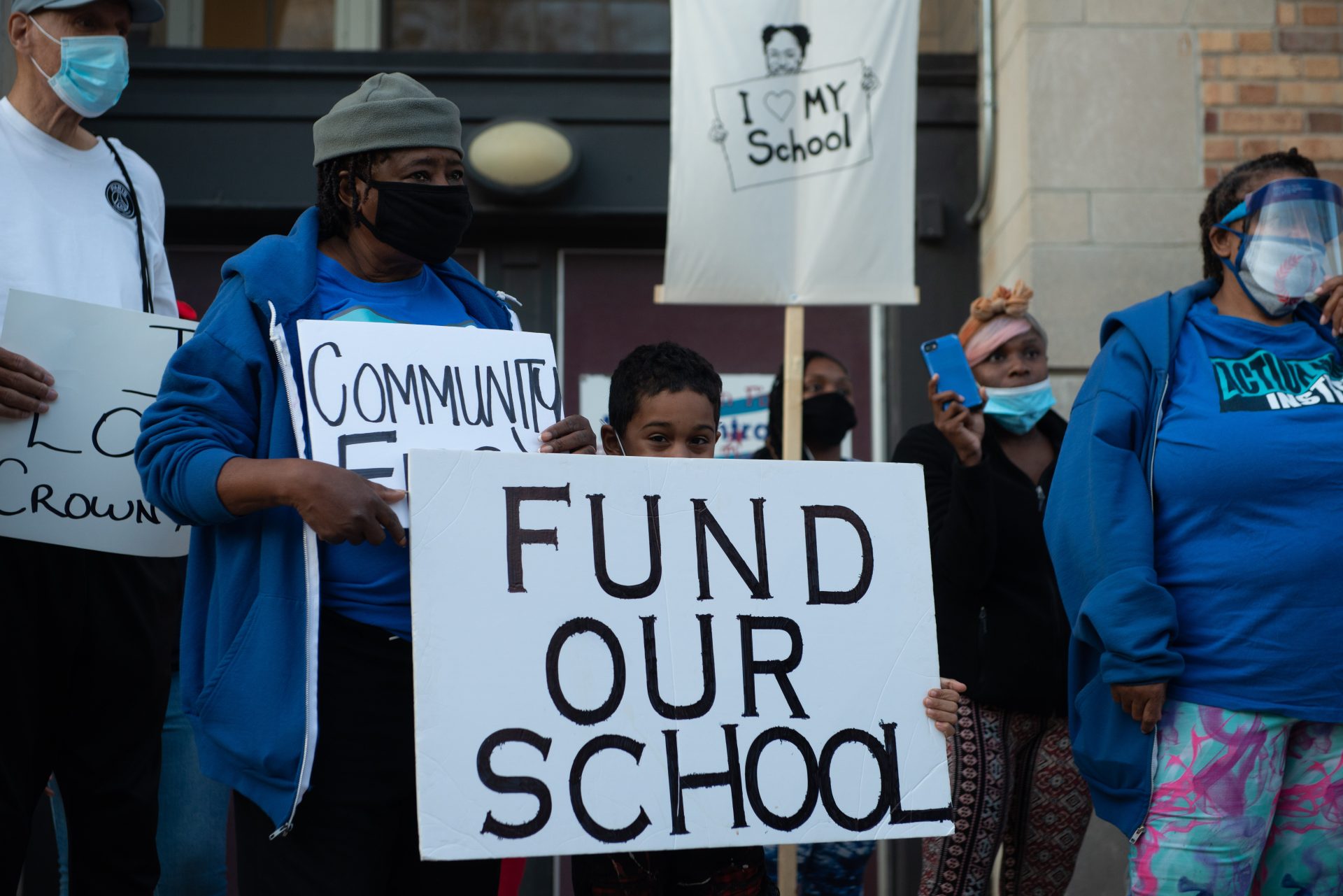
In October 1963, an estimated 200,000 to 250,000 Chicago Public Schools students stayed out of class to protest segregated schools. It was one of the largest civil rights demonstrations in the country at the time. The coalition behind it was led by a former public school teacher named Albert Raby. He was my father.
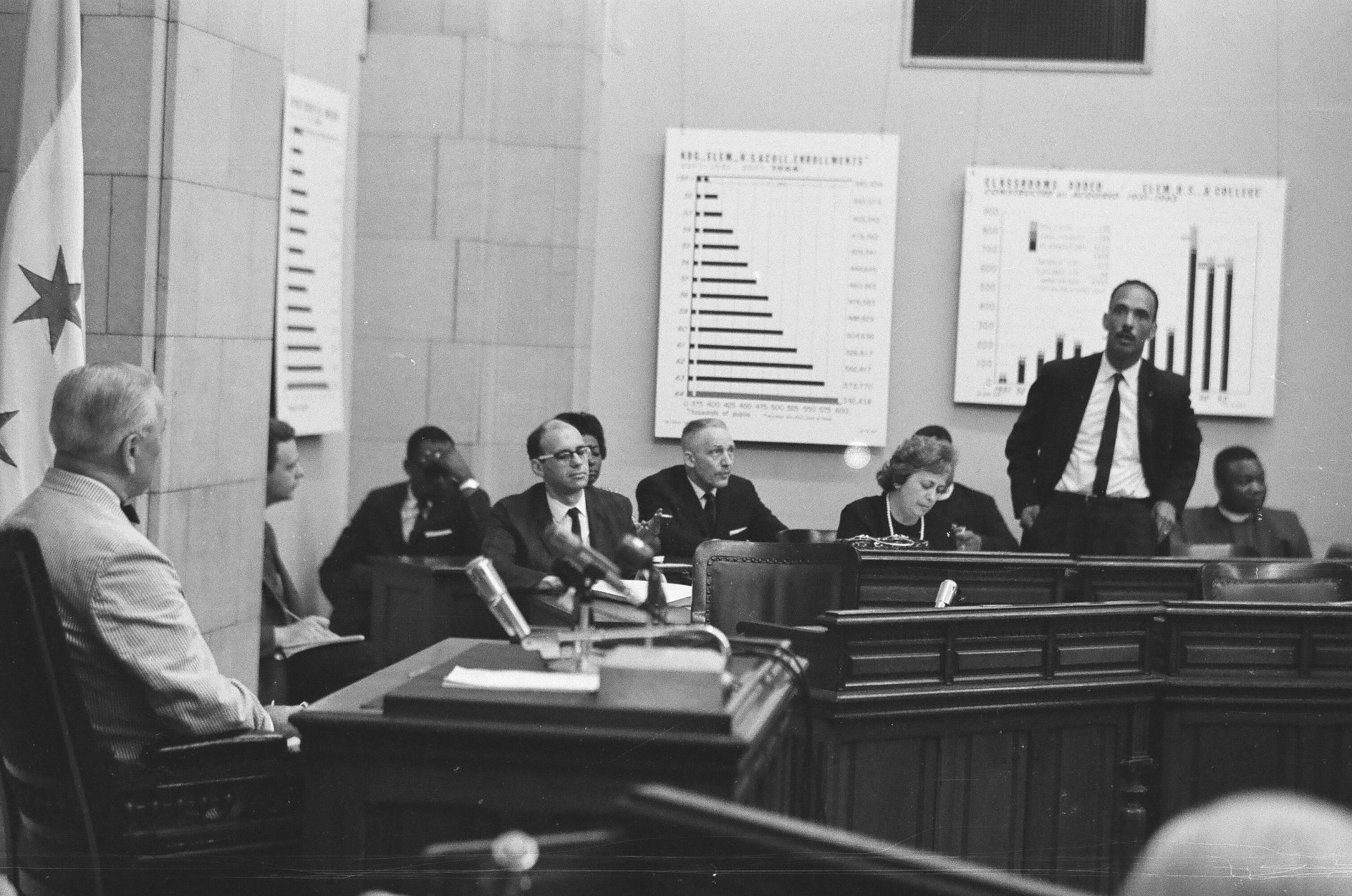
Most Chicagoans know the famous names of the movement. Far fewer know Al Raby. In 1966, he co-chaired the Chicago Freedom Movement alongside Dr. Martin Luther King, Jr. He sat across the table from then-Mayor Richard J. Daley to negotiate the historic Summit Agreement on open housing, and he led the Gage Park marches, where marchers were met with violent counter-protests. He later served as a delegate to the 1969 Illinois Constitutional Convention and directed the Peace Corps in Ghana. In 1983, he managed Harold Washington’s campaign for mayor, helping elect Chicago’s first Black mayor, and then led the city’s Commission on Human Relations until he died in 1988 at 55 years old.
In 1960, he graduated from Chicago Teachers College, which is now Chicago State University, the same year as Mamie Till-Mobley, the mother who would insist the world look at what had been done to her 14-year-old son, Emmett. One of them moved the country through grief and courage, the other through years of organizing. Mayor Brandon Johnson, who also started in a classroom, put it this way to me: “Al Raby started where I started—in a classroom. He saw firsthand what unequal schools and unequal housing did to children and families, and he organized to change it.”
On Friday, October 16, 2026, the City of Chicago will honor my father with a street dedication and proclamation day. Mayor Johnson will present an Al Raby Day proclamation, and Ald. Jeanette Taylor (20th Ward) will read the ordinance as we unveil an honorary sign at the 6300 block of S. Cottage Grove Avenue, near 63rd Street. The ceremony begins at The Grand Ballroom, 6351 S. Cottage Grove Ave, at 11 a.m. and ends at the corner where the sign will stand.
It is fair to ask why a sign matters. A sign cannot fix a school or build a home. But anyone who has grown up on a block knows that a name on a corner is a lesson that never stops being taught. A child passes it on the way to school and asks who that was. A grandmother tells the story. A teacher turns it into an assignment. A name on a street keeps a history in front of the people who live with it every day, without waiting for a textbook to include it.
That is the reason my family built the Al Raby Foundation, which is led today by Katanya Raby, Al Raby’s granddaughter and the Foundation’s CEO. Our work is to carry his legacy forward through community service, activism, and youth leadership, and to close the gap between the elders who lived this history and the young people who inherit it. We do it because the movement was never only a handful of famous men. It was teachers, mothers, ministers, and neighbors who showed up.
The work my father began is not finished. Chicago’s schools and neighborhoods are still divided by race and by investment, and the questions he asked in 1963 about who gets a good school and who gets a fair chance at a home are still being asked in 2026. Honoring him should mean more than unveiling a sign. It should mean picking up the work.
So on Oct. 16, I hope you will do two things. Learn one thing about Al Raby you did not know. Then find the person in your own life who is doing the quiet work in a classroom, on a block, or in a meeting no one reports on, and tell them their name belongs on a corner too.
Here’s how you can attend the ceremony:
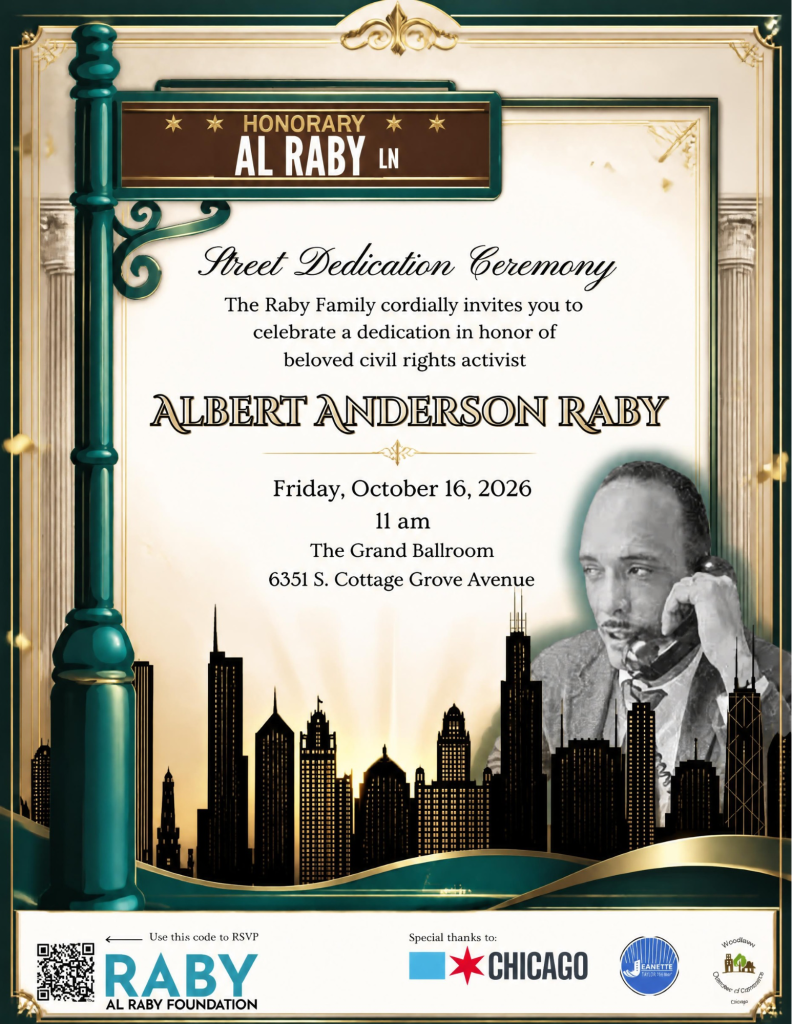
Date: Friday, October 16, 2026
Time: 10:30 AM to 1:00 PM
Location: The Grand Ballroom, 6351 S. Cottage Grove Ave, Chicago, IL 60637