



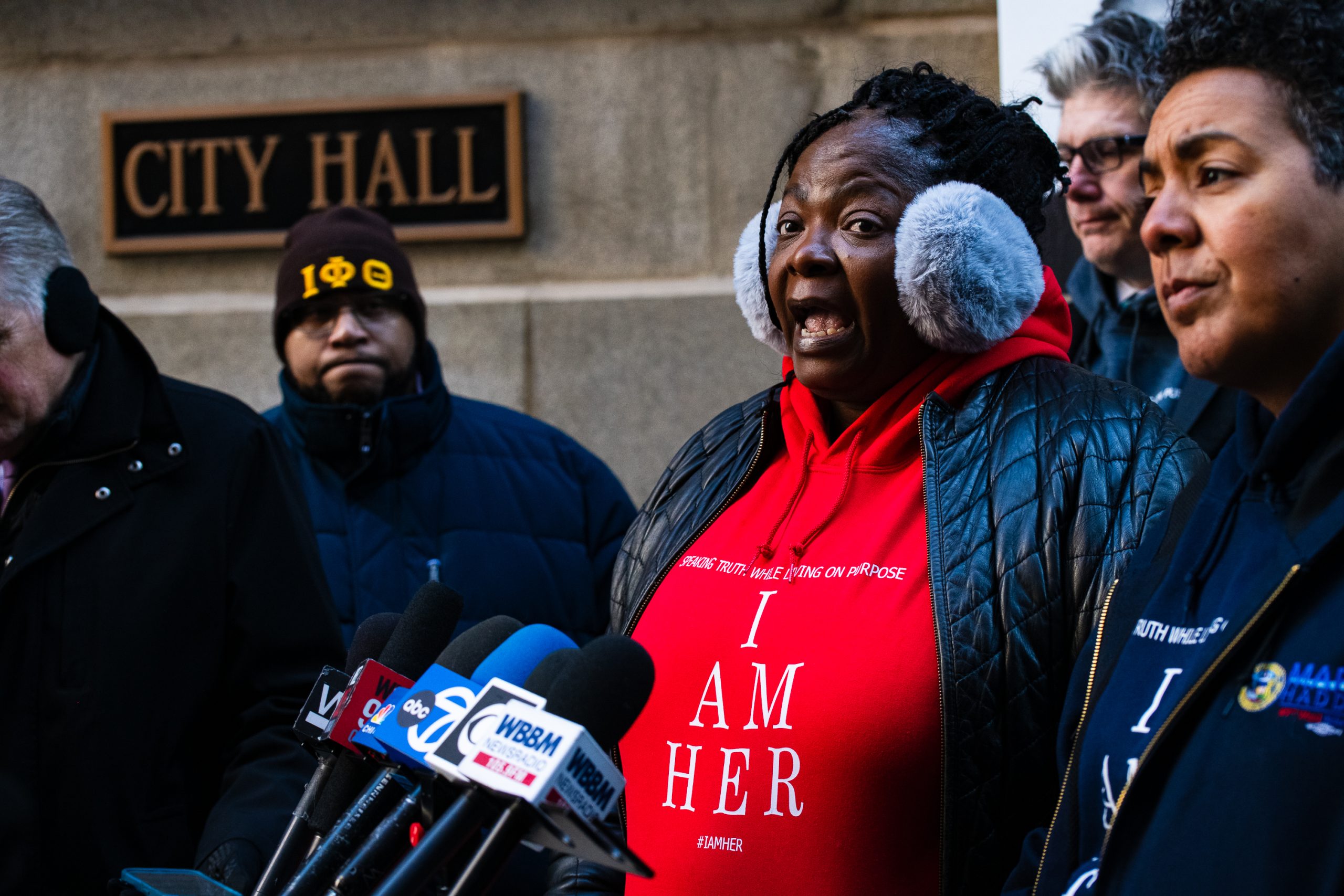
Every year, on the anniversary of the day Chicago Police erroneously raided her home, Anjanette Young braves harsh winter temperatures while standing outside of City Hall to raise awareness about her quest for justice and accountability.
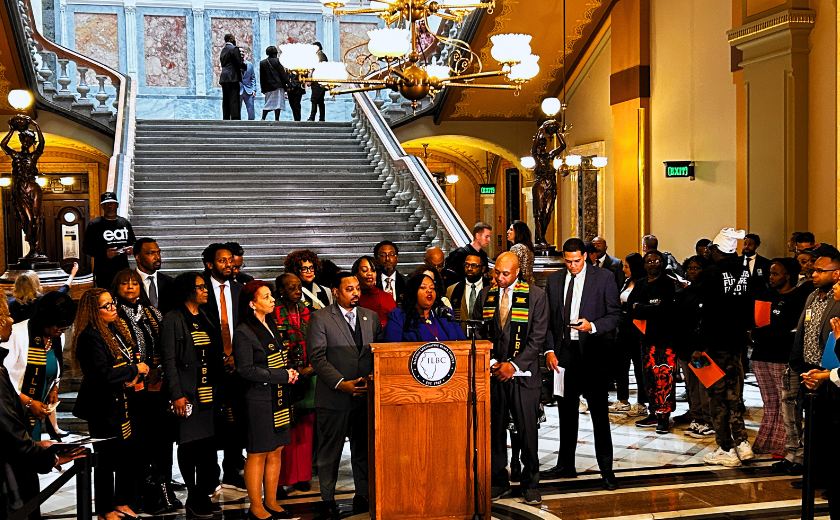
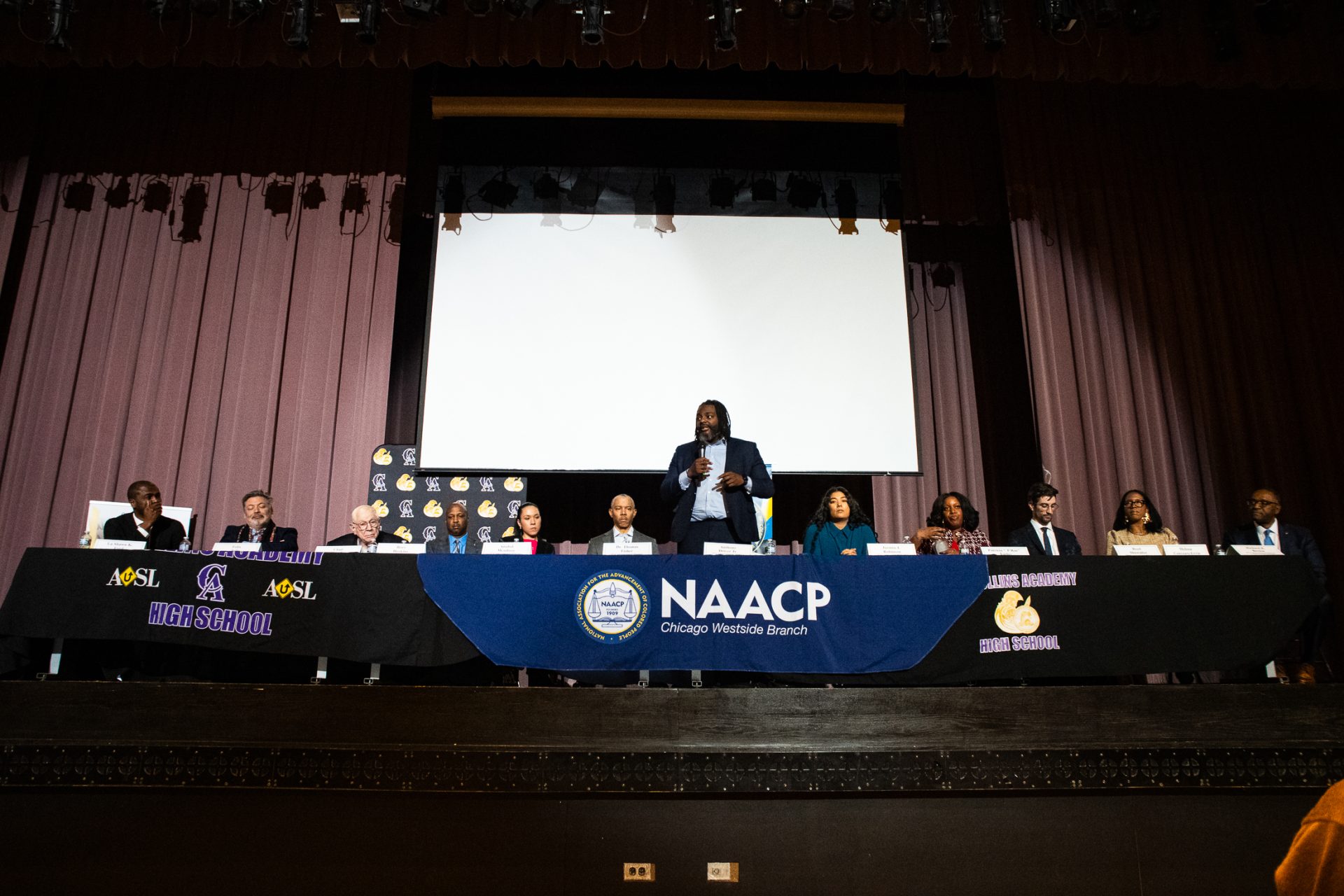
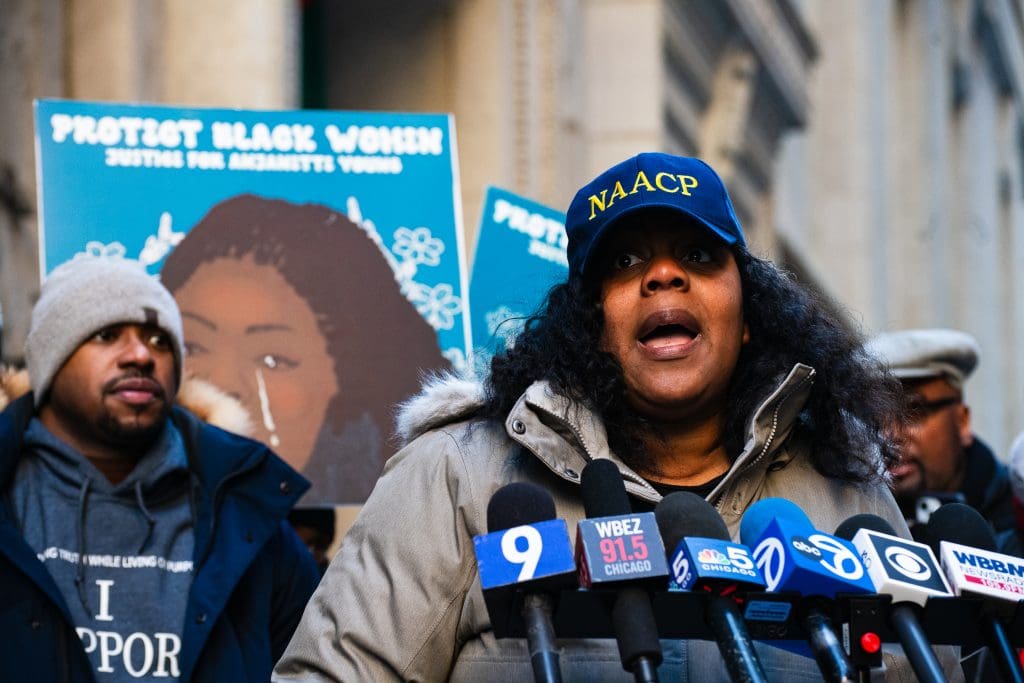
On the morning of February 21, she continued that tradition, joined by Ald. Maria Hadden (49th Ward), Illinois State Rep. Kelly Cassidy (D-14th), her attorney Keenan Saulter, Fred Hampton Jr. of the Black Panther Party Cubs, Rebecca Cook of the Westside Branch of the NAACP and other advocates.
“Today marks six years since the night my life was shattered by a wrongful police raid in my home,” Young said. “Six years since I was left humiliated, violated and traumatized by a system that refused to see me as being human. Six years since I stood before officers crying, pleading, afraid only to be ignored, and yet I stand here again, afraid and demanding for justice accountability, still demanding that those in power would keep their promise.”
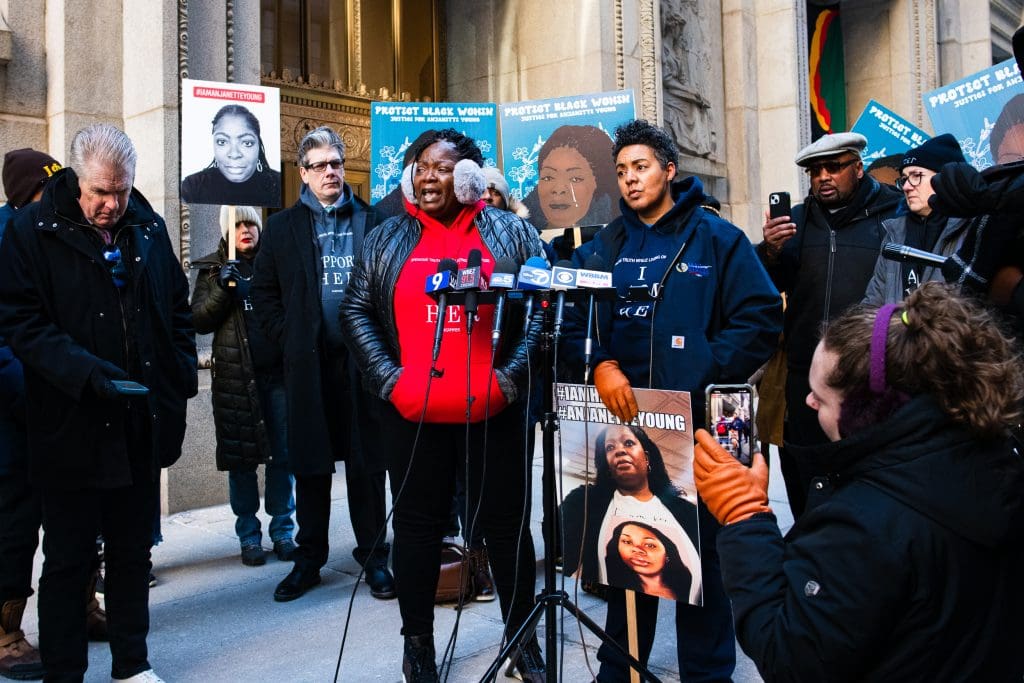
Young is also urging Chicago residents to weigh in on the police department’s revised search warrant policy. Discussion on the draft policy is open for public comment until March 14. The public can enter feedback directly under the draft policy on the CPD website. Advocates feel these updates are a good step forward. One of the revisions includes serving warrants between 6 a.m. and 9 p.m.; currently, warrants are served between 6 am and 10 p.m.
For those new to the story, here’s what happened. On Feb. 21, 2019, Young, then 49, was at home in her apartment, getting undressed and preparing for bed, when Chicago police burst into her home with guns drawn. They were acting on a tip from an informant. But the cops were at the wrong house.
Despite Young’s repeated pleas that the officers had the incorrect address, police handcuffed her naked – in a room full of male officers – and continued to search her home. The police officers initially ignored her requests for clothing. In 2021, she filed a federal lawsuit, and the city settled for $2.9 million that same year.
“The greatest violation of civil rights is to harm someone’s body,” said the NAACP’s Cook. “The second greatest violation of civil rights is to enter someone’s home uninvited, especially when you’re taking down their things.
Since 2021, Hadden and a coalition of stakeholders – including alders and community organizations—have been pushing to the city to approve the Anjanette Young ordinance. This ordinance would help prevent future situations like what happened to Young. On Friday, both Young and Hadden told reporters that they’re closer in the process than they’ve been previously, but there is still not a firm agreement yet from all sides on language within the new ordinance that would reform how CPD executes warrants.
“We’ve listened to the police department, we’ve listened to our colleagues, we’ve listened to the mayor’s policy team, and the version of the ordinance that we’ve been working on looks very different from our original ordinance,” said Hadden.
One of the sticking points is a requirement that police officers wait 30 seconds for people to respond and open the door when executing search warrants.
Saulter argued that doing so would protect both police and residents.
“Police officers often talk about the most dangerous thing they could do was enter a home without warning,” Saulter said. “They’re concerned about what’s on the other side of the door. It’s better, in our opinion, from a legal perspective and from a safety perspective for both the citizens of Chicago, Illinois, and for the Chicago Police Department and law enforcement agencies all over the state of Illinois to ensure that protections we’re advocating for outside of the most extreme situations are put in place.”
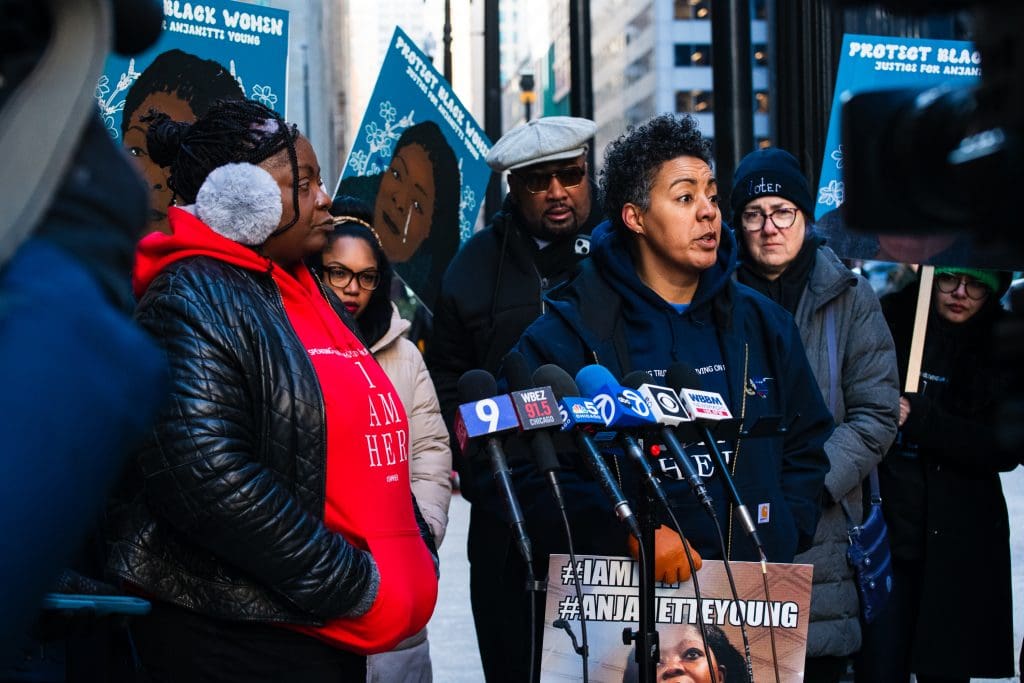
Young didn’t explicitly blame Mayor Brandon Johnson for the delay in implementing the policy. She told reporters that Johnson is supportive of the language of the ordinance but that there are barriers at the negotiation table that are preventing the progress of the ordinance.
“Two years ago, Mayor Brandon Johnson stood with me,” Young said. “He told the people of Chicago that he would be for justice, transparency, and accountability. They believed him. I believed him, and yet another year passes, and I’m still deeply disappointed that we have not gotten to our ultimate goal.”
Young’s experience also spotlighted CPD’s practice of conducting “no knock warrants” in primarily Black and brown neighborhoods, and the residual harm and trauma of the practice. Young isn’t the only wrongful victim. Consider Peter Mendez, who was nine years old when CPD conducted a wrongful raid at his home in 2017.
At the state level, Young and other advocates are calling for the passage of House Bill 1611, which would prevent the use of no-knock warrants for low-level offenses. It also calls for search warrants to only be executed between 9 a.m and 7 p.m. The legislation, which is sponsored by Illinois State Rep. Kam Buckner (D-26th), requires officers to knock and wait at least 30 seconds before entering.
“Call your alderman. Email them. Tell people that this is important, and it’s important not because of what happened to me; it’s important because if it happened to me,” said Young. “It still can happen.”