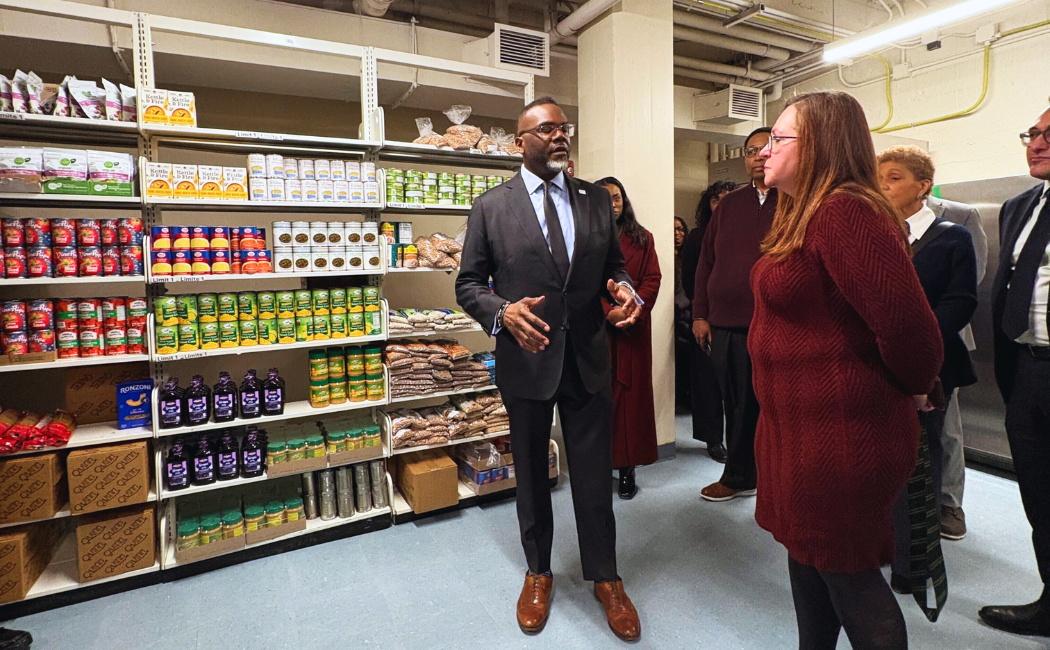




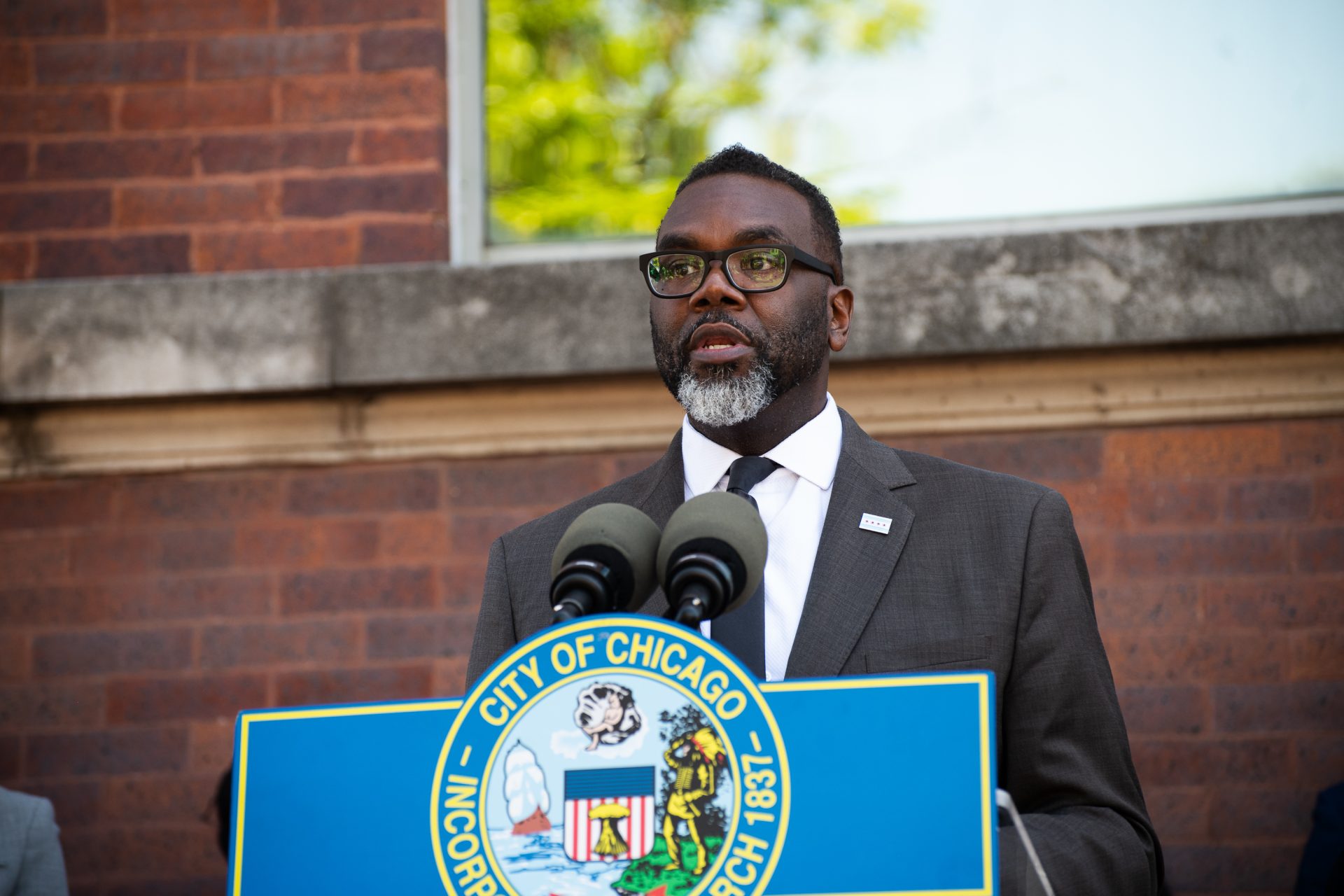
On Thursday morning, Mayor Brandon Johnson, along with other leaders and community partners, announced the launch of the city’s first women-focused Community Reentry Support Center (CRSC). The Women’s CRSC will support women returning from incarceration and provide access to resources that are specific to their needs.
“Today’s announcement marks a milestone, not only for WJI [Women’s Justice Institute] but for the entire city of Chicago,” Colette Payne, a director at Women’s Justice Institute, said during today’s press conference. “More importantly, it is a win for every woman and survivor who has come home from jail or prison only to feel overlooked in a one-size-fits-all program for men, misunderstood, shamed, not believed, undeserved, or as if she left her dignity at the door. We say, we see you, we hear you, we believe in you. You are welcome here.”
The women’s CRSC contract was awarded to the Women’s Justice Institute (WJI), a nonprofit “think and do tank” dedicated to ending women’s mass incarceration, transforming systems, and building leadership among formerly incarcerated people. The CRSC will operate from the WJI Reclamation Center in Pilsen, which is located at 2150 S. Canalport Ave. Alders Bryon Sigcho Lopez (25th Ward) and Emma Mitts (37th Ward) were among the elected leaders present for today’s press conference.
“Today’s launch of the Women’s Community Reentry Support Center is a direct result of listening to the courageous testimony of women who named the gaps and challenges that they experience upon returning to our communities and what they did, which is powerful; they demanded better, and that’s what this moment is presenting, something better,” Johnson said.
Black and brown women, specifically those who have been incarcerated, have experienced domestic violence, and over 60% of women who are incarcerated are mothers to children under the age of 18, Johnson added.
“Women must find opportunity and stability for themselves, which is no small feat and oftentimes a foundation for their children and the entire family. We cannot abandon our mothers and sisters, leaving them to struggle, not in this city, and never again, Johnson said.
For women who are navigating the criminal legal system, their incarceration causes distinct ripple effects, according to Joseph Mapp, the Johnson administration’s director of reentry.
“Women are frequently caregivers, economic stabilizers and relational anchors within their families and in neighborhoods. When women are removed from their communities, the disruption extends beyond the individual,” Mapp said.
The services and programs that will be offered at The Women’s CRSC were built on WJI’s Women’s Justice Pathways Model, which provides a range of gender-responsive, trauma-informed, and family-centered services primarily delivered by women with lived experience.
Services and programming that will be offered at the Women’s CRSC include:
- Access to a citywide network of services and supports;
- A safe, dignified, child-friendly space designed by/for system-impacted women;
- Peer-led, trauma-informed and gender responsive systems navigation and care; coordination services that center dignity and personal agency;
- Development of individualized plans and goals;
- Interventions and support for women who have experienced domestic violence, sexual assault, sex trafficking and other forms of abuse;
- Mental and behavioral health services connections;
- Housing and employment navigation;
- Family reunification;
- Wellness and holistic care programming;
- Access to community-building, arts and healing programs.
“Healing is a public safety strategy when people are supported in healing and stability and connection, communities are stronger and safer,” Mapp continued.
The city also announced four additional delegate agencies as awardees for the 2026 CRSC operation contracted across four zones. These agencies will serve all formerly incarcerated people regardless of gender identity.
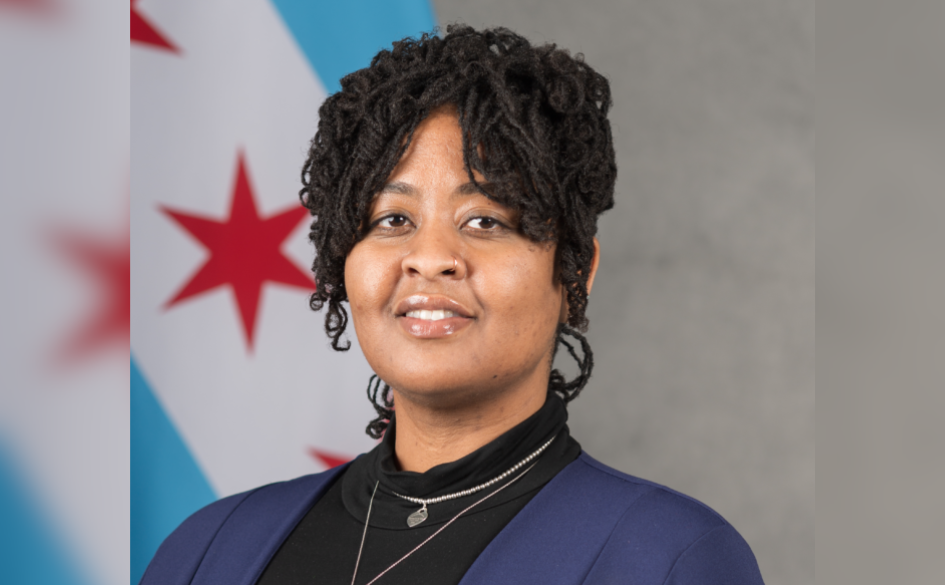
“I’m humbly proud that we are breaking barriers in service by expanding the support we provide individuals returning from incarceration and especially system-impacted women and gender non-conforming individuals whose needs and unique challenges have far too often been ignored, overlooked, under-resourced and misunderstood,” Department of Family and Support Services Commissioner Angela Green said.
Green, during her remarks, named other delegate agencies on the North, South and West sides of the city, including the Howard Evanston Community Center, Teamwork Englewood and UCAN’s locations in North Lawndale and West Pullman.
The city’s five CRCSs are components of the Johnson administration’s People’s Plan for Community Safety. This community-led initiative aims to unite Chicagoans to address historic disinvestment and work toward healing communities, ensuring Chicago is safe for everyone.
“Coming home from incarceration is not simply about release. It’s about rebuilding. It’s about healing trauma, restoring dignity, reconnecting families and learning how to believe in yourself again in a world that too often refuses to see your worth,” Dyanna Winchester, a WJI reclamation specialist, said.