

This story is part of Reframing Crime Narratives, a 10-part series about public safety by The TRiiBE to create space for community conversation about crime in Chicago.
The series is supported in part by the John D. and Catherine T. MacArthur Foundation and the Envisioning Justice grant by Illinois Humanities.
Former Sangamon County Sheriff’s Deputy Sean P. Grayson has been a repeat offender, in every sense of the word, for nearly a decade. On top of receiving back-to-back DUIs in 2015 and 2016 while in the U.S. Army, Grayson has worked for six different law enforcement agencies in a span of four years. He was disciplined by the Logan County Sheriff’s Office in Ohio, a previous employer, after hitting a deer with his squad car during a high-speed chase that violated department policy. His personnel record from Logan County shows that two people filed complaints against him, including a woman accusing him of “inappropriate” behavior during her arrest.
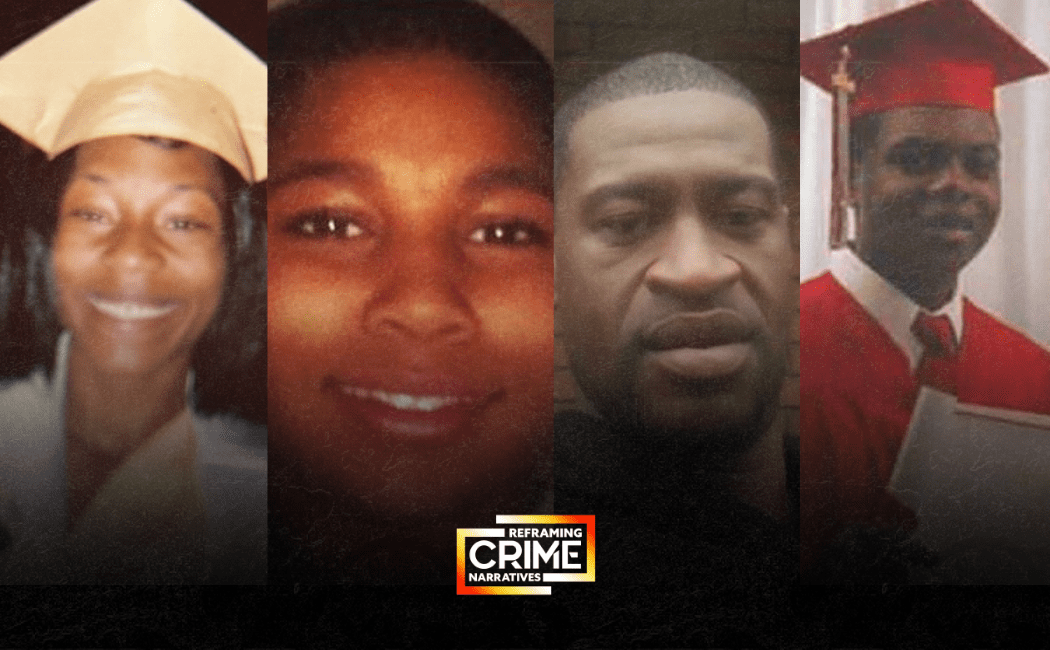
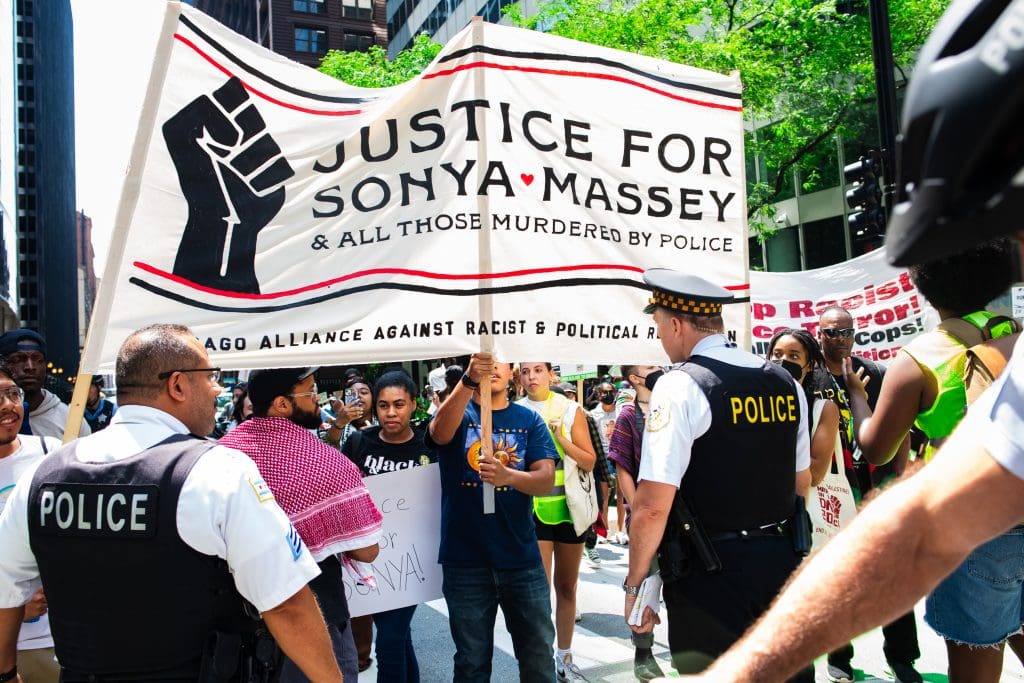
Yet, it wasn’t until July 6, 2024, when he shot and killed Sonya Massey, an unarmed Black woman who called police due to a suspected prowler inside her home, that his record finally caught up with him.
It begs the question: if the Sangamon County Sheriff’s Office had taken police accountability seriously, would Sean Grayson have had a job in law enforcement? Would Sonya Massey still be alive?
Grayson, of course, isn’t the only worm to slip through the cracks of America’s virtually nonexistent law enforcement accountability process — just like Sangamon isn’t the first law enforcement agency to pick up a wayward asshole like Grayson.
In fall 2014, former Cleveland officer Timothy Loehmann arrived at a park where 12-year-old Tamir Rice was playing, and shot him dead. Before that job, while an officer in Independence, OH, Timothy Loehmann’s deputy chief reported that he “could not follow simple directions, could not communicate clear thoughts nor recollections, and his handgun performance was dismal.” Loehmann resigned from Independence PD prior to termination. The Cleveland Police Department, however, did not check his background before hiring him.
The now infamous Derek Chauvin, the former Minneapolis police officer, received at least 22 complaints, and was responsible for several police shootings (one fatal) in Minneapolis prior to murdering George Floyd in 2020. In 2021, he was convicted of second-degree unintentional murder, third-degree murder, and second-degree manslaughter.
Former Chicago police officer Jason Van Dyke was investigated for 25 complaints since 2000, at one point leading to a $350,000 settlement after handcuffing a Black man so violently that he required surgery. However, Van Dyke still had a badge on Oct. 20, 2014, when nine of the 16 shots he fired at 17-year-old Laquan McDonald struck and killed the boy. Van Dyke was convicted of second-degree murder and 16 counts of aggravated battery. He was sentenced to nearly seven years — although he was released after serving less than half the prison term.
There’s also Officer Kevin Schnell of the Kansas City Police Department who failed to provide medical assistance to Sofia Salva in 2007, resulting in the death of her premature child. And Chicago Police Officer James Chevas who, in 2005, was accused of beating a woman who called the police after being assaulted by a club bouncer.
The list goes on and on, however, one thing remains clear: law enforcement agencies across America have exceptionally ineffective resolution processes for police misconduct.
Chicago, for example, is no stranger to the concept of police accountability. From the Office of Professional Standards (OPS) established in 1974, to the Independent Police Review Authority (IPRA) of 2007, to the Civilian Office of Police Accountability (COPA) launched in 2017, our city has created a number of initiatives to address police misconduct, becoming one of the frontrunners in the national push for law enforcement accountability reform.
Unfortunately, even at the cutting edge of reform, each of these institutions have displayed major bias towards the very police they were created to investigate. Both the OPS and IPRA crashed and burned publicly, evidenced by the catastrophically mismanaged investigation of former Chicago police Commander Jon Burge, whose 20-year tenure oversaw at least 120 documented acts of torture on predominantly Black men, and the botched cover up of Laquan McDonald’s murder by police, respectively.
In addition to the massive investigative biases of these institutions, Chicago’s police union consistently resists necessary reform from these “independent” organizations by blocking access to files, attempting to reinstate dismissed officers, spreading blatant misinformation about police shootings, and arguing that transparency initiatives are ineffective and counterproductive. These tactics have handicapped every attempt at police reform in this city for the last half century.
Additionally, beginning in 2016, during former Chicago mayor Rahm Emanuel’s second term in office, and coincidentally right after IPRA’s failed cover up of the Van Dyke scandal, Chicago police’s PR team increased by a staggering 400%. Additional staff were added in 2017, 2018, and 2019. By Emanuel’s last year in office, CPDs full-time Public Relations team had grown from six employees to 52.
And yet, on the other side of police resistance to accountability, organizations like the Invisible Institute take radical countermeasures to arm communities with the tools necessary to gather evidence to hold police accountable
In the summer of 2015, the Invisible Institute, Chicago’s leading police accountability journalism nonprofit, launched the Civic Police Data Project (CPDP), a database that collects and publishes data about police misconduct in Chicago.
The CPDP has two major functions: First, users can search officers by name and badge number to view allegations of misconduct, instances of discipline, etc. Secondly, users can filter misconduct complaints via demographics such as geography (neighborhoods, zip codes, districts, etc.), complaint category (ie. criminal misconduct, domestic, use of force), complaint outcome and more.
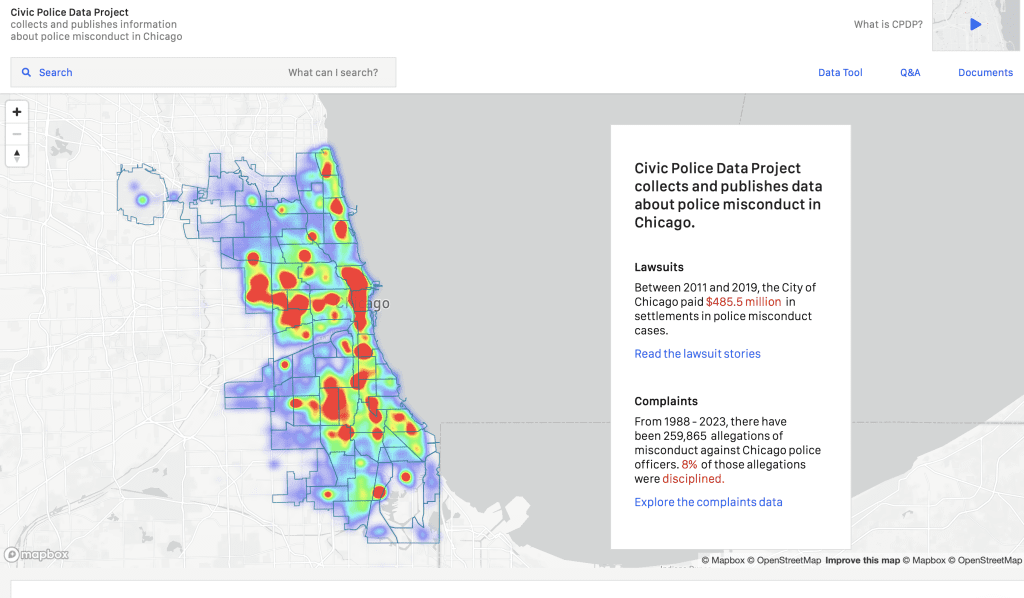
According to the CPDP, there were 259,865 allegations of misconduct made against Chicago police between 1988 and 2023, only 8% of those allegations were disciplined.
For populations on the receiving end of police misconduct, a pressing concern arises: who watches the watchmen, and how? I personally believe a multi-tiered and systemic use of the Civic Police Data Project allows us to begin having this conversation.
As it presently stands, we blow a larger portion of our budget on police PR than police departments in comparable large cities such as New York City and Los Angeles. In fact, the portion of the budget Chicago pays for PR salaries (.084%) is nearly double the portion budgeted in LA (.050%), and more than eight times the portion budgeted for NYC (.010%). Rarely do we fire our violent cops, but we’ll definitely pour millions of tax dollars into hiding their abuse from the eyes and ears of the public!
The stark reality is that complaints — the primary means of documenting police misconduct — are virtually useless in ensuring meaningful discipline. One study by law professor Craig Futterman, following the dissolution of IPRA, found that a mere two in every 1,000 accused cops faced effective punishment.
Yet, it remains absolutely critical that our communities continue submitting complaints and analyzing police misconduct data, both independently and systemically.
From the data-driven alderperson seeking to request underlying documents for complaints lodged against police in their district, to the local social scientist identifying patterns of misconduct within a particular location or population, to the civic-minded student looking to learn more about the cops in their own lives, the Civic Police Data Project’s applications vary as widely as the allegations raised against CPD. Whether fighting for police reform, or for the abolition of police as an institution, this misconduct data must be used to guide further investigation and problem solving.
The uncomfortable truth is this: Sean Grayson — and thousands of others — should not have been employed as enforcers of the law. Sonya Massey — along with thousands of others — may still be alive if this was the case.
As we begin to imagine technology as more than a gift of convenience, we must ask ourselves, how can tools like the Civic Police Data Project help us win the war on police brutality?
How do we defend ourselves with data as rigorously as our data has been weaponized against us?
And what are the possibilities for police accountability with a tool as accessible, comprehensive, and truly independent as the CPDP?