

The People is our section for opinions and perspectives. Submit your opinion to info@thetriibe.com.
The announcement blared over the intercom: “Darryl Hamilton — a former classmate at Hyde Park High School — was shot and killed last night following a foot chase with law enforcement.” I felt overwhelming guilt and despair. I couldn’t escape the sense that this wasn’t just Darryl’s tragedy, it was ours. Just months earlier, he and I were engaging in spirited rap battles in the school cafeteria and arguing passionately about politics and religion. And now, shortly after dropping out of a school that didn’t work for him, he was dead.
Darryl’s experience mirrors that of many Black boys on Chicago’s South Side, where poverty, unstable housing, under-resourced schools, and community violence shape daily life. Like many others, he struggled to see any connection between school and the realities he faced. Disengaged and in desperate need of money, he left school and started selling drugs to support himself.
Darryl died over 20 years ago, but his story remains central to why I became an educator. Far too many Black boys still view school not as a doorway to opportunity, but as another institution that fails to meet their most vital needs. And the data bears this out: in the 2022 NAEP results, only 16% of Black students demonstrated reading proficiency, and Black male college enrollment has fallen by 22% since 2010. Black boys also face far higher suspension and expulsion rates than their white peers, deepening the isolation they already feel.
If we hope to change this, we must build stronger ecosystems that support their academic, social, and emotional development long before they reach a breaking point.
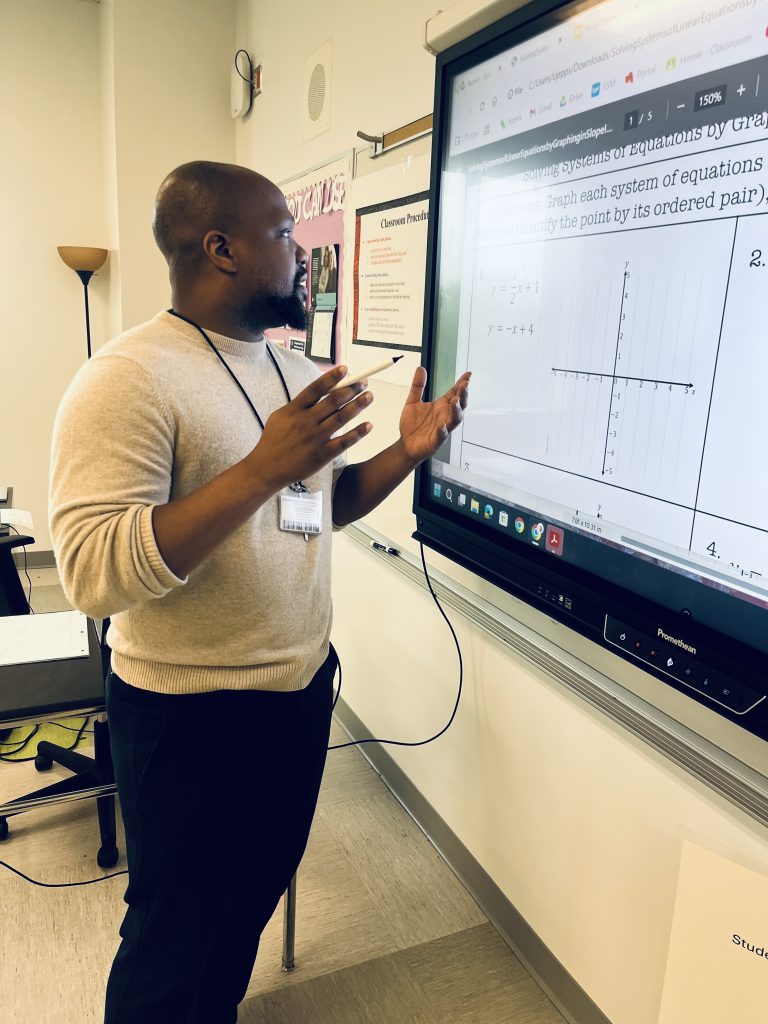
When one of my students, Emmanuel, transferred to our campus after being expelled from his previous school, he carried deep anger and mistrust. Within three months, he accumulated more than 15 disciplinary referrals for cutting class, arguing with teachers, and fighting with classmates. One afternoon, after he repeatedly disrupted my lesson and struggled to complete his work, I pulled him aside for a talk. What he said stopped me cold: he hated our school and wished he could drop out. His words brought me back to Darryl—long before he dropped out, long before his name sounded over the intercom. In that moment, I resolved that I would not allow Emmanuel to head down a similar path.
Fortunately, our campus has built an ecosystem to assist students like Emmanuel. Staff met with his mother, referred him to our Behavioral Health Team, connected him with a male mentorship group, and brought him into restorative circles that shift discipline from punishment to repairing harm. The results, while imperfect, have been meaningful. Emmanuel is less combative, improving academically, and has even expressed interest in joining a sports team, which is an important step toward feeling connected to the broader school community.
Seeing his progress, I can’t help but wonder how many more Black boys we could reach if systems like these existed in every school. Across the country, districts are recognizing this need and developing initiatives centered on Black male students. Seattle Public Schools and Oakland Unified School District have been at the forefront of this work for years. Both districts established an Office of African American Male Achievement that implements system-wide interventions focused on discipline reform, enrichment opportunities, culturally grounded coursework, and literacy development.
The impact of these measures has been significant. A 2019 report found that participation in Oakland’s programming reduced dropout rates by roughly 43 percent and increased on-time graduation for ninth and tenth-graders, proving that Black boys can thrive when support systems are strategic, targeted, and robust.
To be clear, an education ecosystem is not a single program; it is a coordinated network of schools, families, and community partners working in alignment. Seattle and Oakland demonstrate what happens when districts embed the needs of Black boys into their priorities and budgets, making the systems mandatory rather than optional. Districts must follow suit by building strong ecosystems that champion culturally grounded instruction, restorative practices, sustainable community partnerships, robust mental-health supports, and leadership opportunities that elevate Black male voices and allow them to live out their full potential.
Of course, there is no guarantee that a stronger ecosystem would have altered Darryl’s fate 20 years ago. And while progress is being made, Emmanuel still struggles to feel fully connected to school. There are no easy answers or silver bullets in the deeply human work of connecting with young people, but stronger systems can certainly prevent more from slipping through the cracks. Given the stakes, it is not just an idea worth pondering; it is a responsibility we owe to our students and to ourselves.