

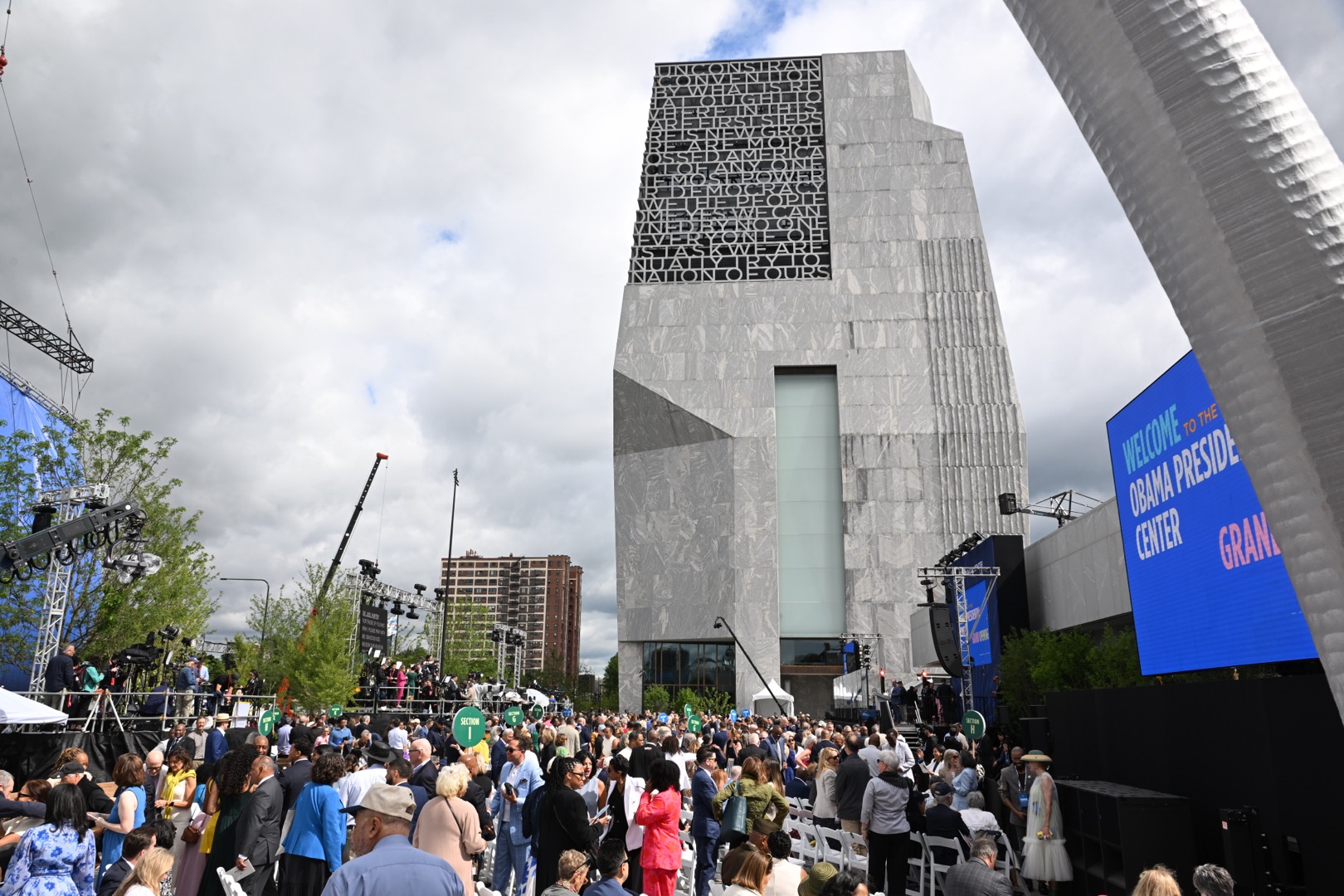
When I went to the press preview of the Obama Presidential Center earlier this month, I toured the 19.3-acre campus, thinking that, just like the existing presidential libraries that came before, Obama’s stalwart, eight-story building is nothing less to our nation than what pyramids were to ancient Egyptians. Valerie Jarrett immediately dismissed my theory without giving it a second thought. At that moment, I figured that’s what Jarrett, Obama Foundation CEO, was supposed to do.
“It’s a tribute to the thousands and thousands of ordinary people who made his presidency possible and successful,” Jarrett said. “It’s a bold, audacious building nestled in a beautiful campus, I think quite fitting of his presidency. As I said, the spotlight you see throughout the museum isn’t all about him. It’s about all those folks who made what he did possible.”
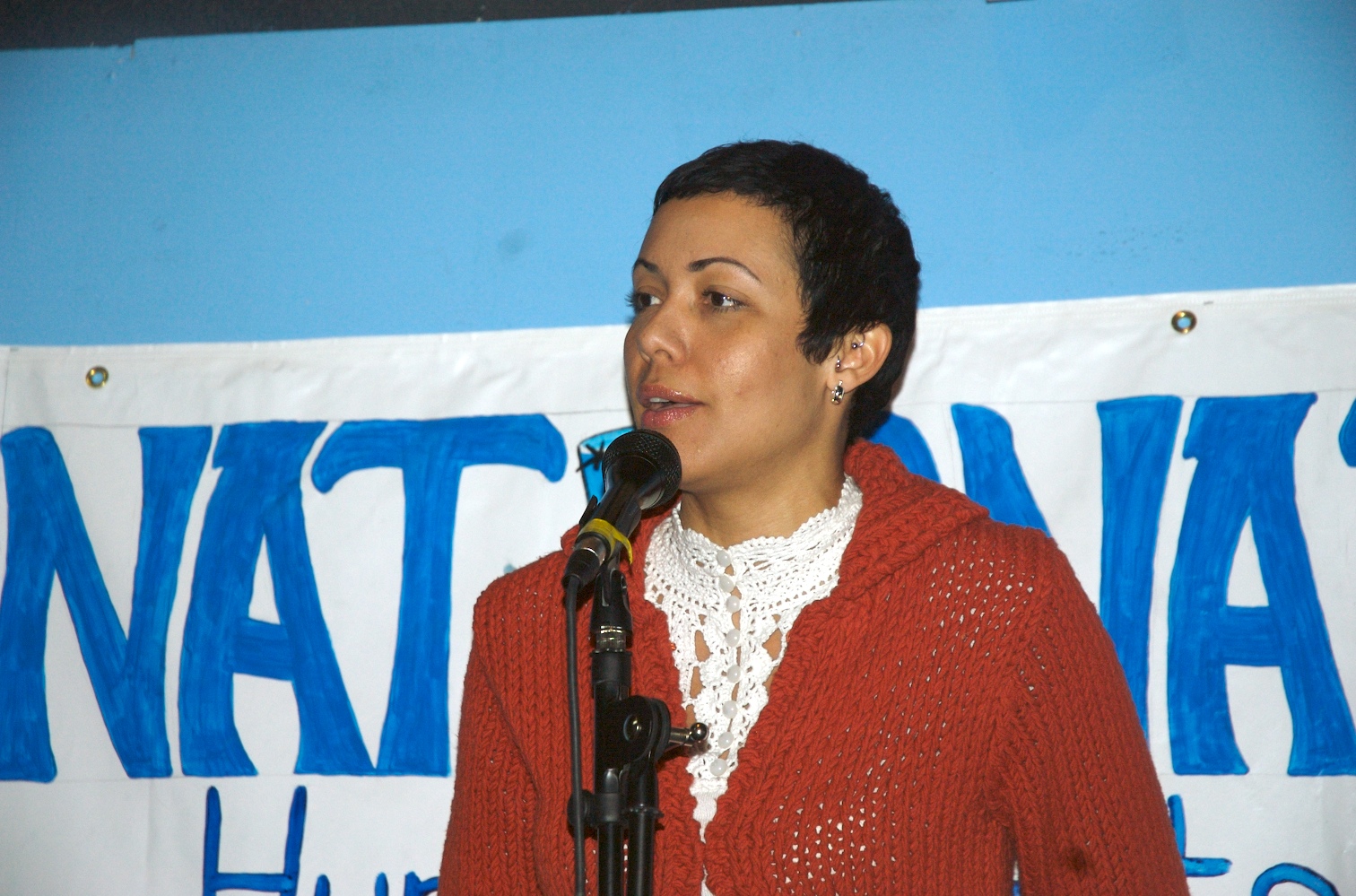
Reporter Monroe Anderson during the press preview of the Obama Presidential Center on June 3, 2026
Then, on June 18, the Center’s star-studded grand opening ceremony happened. The day that put my initial pyramid theory to rest.
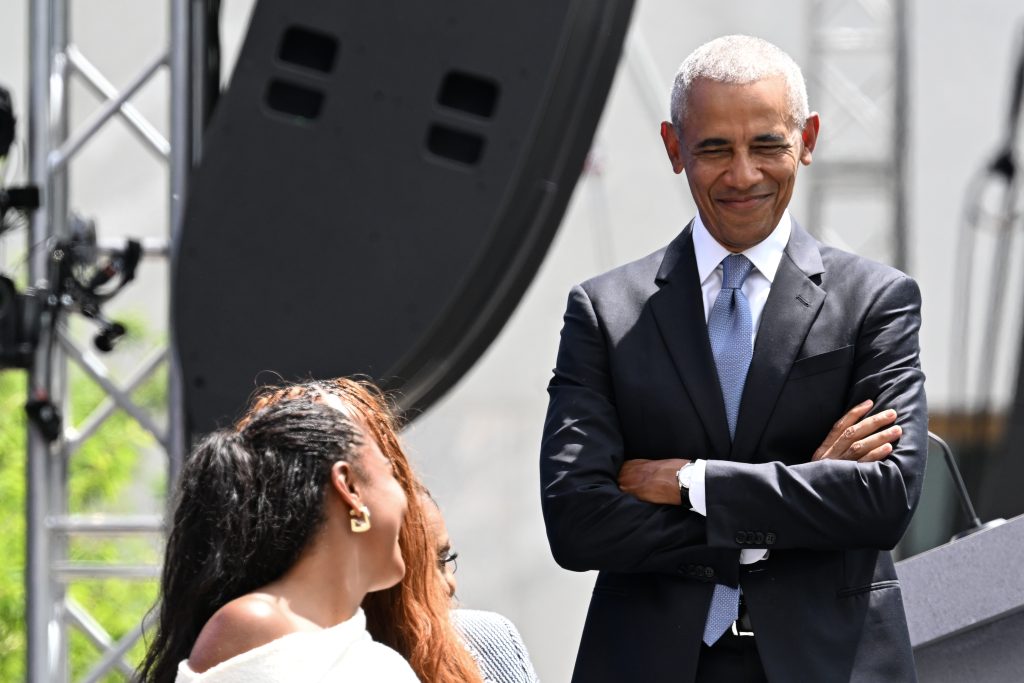
The Obamas stood before an adoring crowd of dignitaries, celebrities, community leaders, and the press in the John Lewis Plaza outside the museum. The former first lady summed up what the Center represented: “This is not a monument to the Obamas, you guys. This is a tribute to all those who made their journey possible,” she said.
The 44th president explained that, at 64 years old, he is too young for a mausoleum. His Obama Center is tailor-made for the living, reflecting the energy of someone who started out as a community organizer in Chicago.
Rather than being a mausoleum for books, presidential papers and records, and artifacts, the Center is unabashedly a people’s place. Obama’s Center is definitely not for the dead, but it is, for sure, a monument for the living. In addition to the Museum Tower, three buildings stand on the sprawling campus: a forum with auditorium seating and a restaurant, a branch of the Chicago Public Library, and a regulation-sized basketball court and event space named Home Court.
The 225-foot Museum Tower, with its striking Brutalist architectural design, is where some of the typical presidential library standards are housed. In there, you’ll see a full-scale replica of what the Oval Office looked like when Obama was in the White House for two consecutive terms, before President Donald J. Trump gaudied it up with gold trim and other tacky touches.
You’ll see an unwhitewashed history of America’s march to a more perfect union from slavery to the Civil Rights Movement to the 2008 election of the nation’s first Black president. For the ladies, there is a full-blown display of Michelle Obama’s wardrobe from her first lady era. And, at the top of the museum, through those gigantic letters that you see from the outside of the building, you’ll get a bird’s eye view of Chicago’s skyline, South and West sides and Lake Michigan. Except for Tuesdays when it’s free to the public, the museum in the tower will set you back $30 for adults and $23 for kids ages 3 to 11. There’s a cheaper option for Illinois residents.
The rest of the Jackson Park campus is free to enter, including the gift shop and cafe in the atrium on the bottom floor. So are the activities inside, and out, of the other buildings. There’s also the Eleanor Roosevelt Fruit and Vegetable Garden, complete with a beehive and barbecue pits, a children’s playground, and a water feature terrace named after Obama’s mother, Ann Dunham.
All that non-library activity underscores some of the reasons why Obama’s space is not designated as a presidential library. In 1955, the Presidential Libraries Act was passed. It established a formal system of privately built and federally maintained facilities to preserve and make presidential papers available to the public. Under this framework, former presidents raise non-federal funds to construct their libraries and museums before turning them over to the National Archives and Records Administration (NARA). Obama’s Center, however, doesn’t have an NARA-run research facility on the campus. And his presidential papers are not stored at the Center. His papers are “born digital” with the hard copies stored remotely in College Park, Maryland; researchers can access them online. Therefore, Obama’s Center technically isn’t a library.
Since President Herbert Hoover, presidential libraries have been established in each president’s home state, or states they have significant ties to, housing documents, artifacts, gifts of state, and museum exhibits. The materials maintained relate to the former president’s life and career, both political and professional.
The already established presidential libraries are pretty much legacy projects. Texas has three presidential libraries, one for President George H.W., another for President George W. Bush, and the other for President Lyndon Baines Johnson. California houses two former presidential libraries, Richard M. Nixon and Ronald Reagan. The Dwight D. Eisenhower Presidential Library and Museum is in Kansas, the William J. Clinton Presidential Library and Museum is in Arkansas, the Harry S. Truman Presidential Library and Museum is in Missouri, and the Jimmy Carter Presidential Library and Museum is in Georgia. Iowa has the Herbert Hoover Presidential Library and Museum, and Massachusetts has the John F. Kennedy Presidential Library and Museum. The Franklin D. Roosevelt Presidential Library and Museum is in New York and the Gerald R. Ford Presidential Library and Museum are in two separate locations in Michigan.
Predictably, Trump wasn’t about to let Obama get the limelight for his presidential building. This month, he released a picture of what his library would look like in the future — after he’s done with the dismantling of America. Of course, Trump’s will be taller than Obama’s eight-story building, have a hotel in it, and no doubt it will be gaudier as well.
On July 4, America’s 250th birthday, the Theodore Roosevelt Presidential Library will open in North Dakota. It, like Obama’s, is cutting-edge and non-traditional. While Obama’s Center celebrates the community, Roosevelt’s library — which includes an AI-generated archive feature that allows attendees to speak directly to him — celebrates nature.
The pyramids erected during Ancient Egypt’s 3,000-year-long empire principally honor their most important leaders — so do many of the existing presidential libraries that came before Obama’s Center. Definitely not a pyramid, not even a traditional American Presidential Library, Obama’s Center in Chicago boasts a monument overflowing with life, history, and purpose, intent on existing for those in the community where it stands and extending from sea to shining sea and the world beyond.
Enjoy, all.