

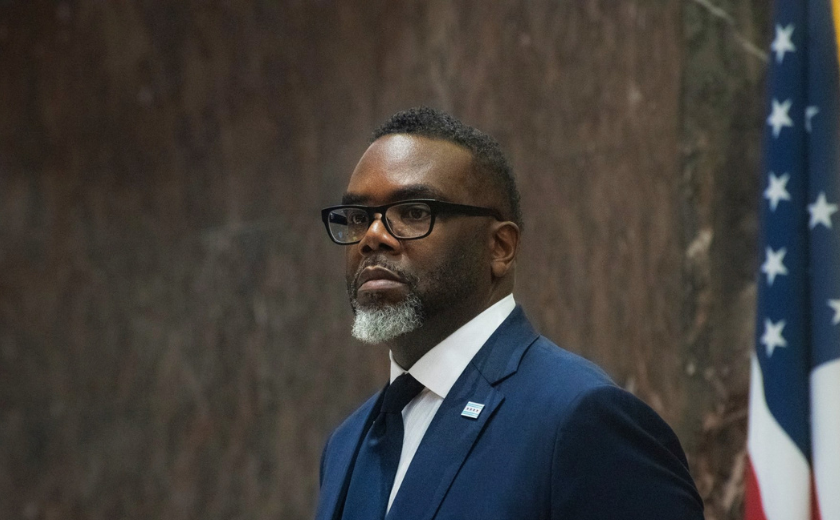
Last December, 29 mostly moderate and conservative-leaning Chicago alderpeople voted for an alternate budget that largely relied on selling city debt to outside collectors instead of Mayor Brandon Johnson’s plan to reestablish a corporate head tax.
Chicago’s first Black mayor, Harold Washington, struggled with his own 29 — a mostly white majority caucus led by former Alds. Ed Vrdolyak and now-convicted Edward Burke. Washington famously vetoed the 29’s alternate budget in December 1985.
“I have no choice but to veto the council’s budget,” Washington said, as reported in the Chicago Tribune. “The changes made… would undermine many of our important social programs, our public safety initiatives, our attempts to place this city on a sound financial footing and our efforts to make city departments work efficiently and professionally.”
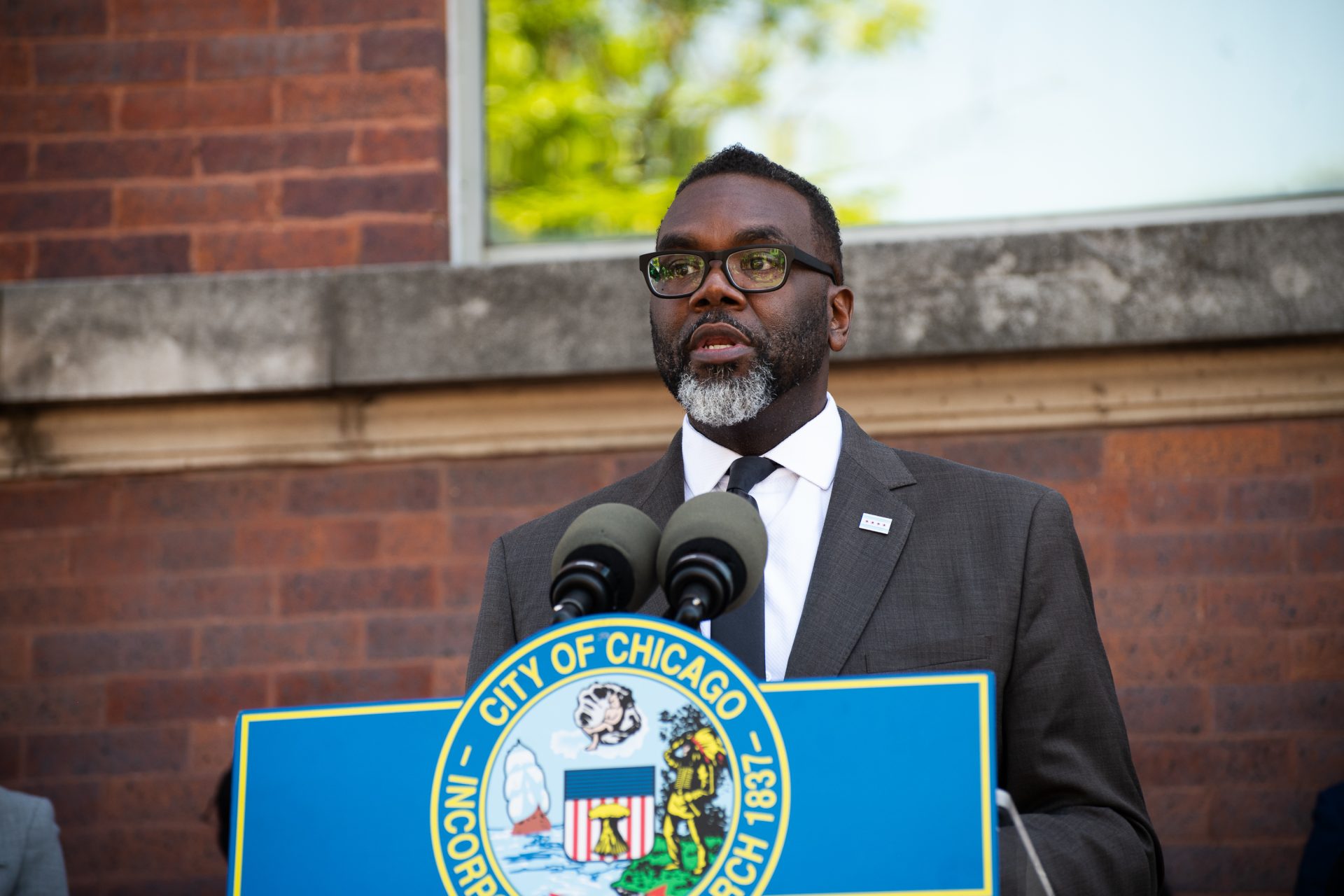
Last December, Johnson did not sign nor veto the revenue portion of the alternate budget, but will he this year? The mayor, who is up for reelection next year, still faces the same struggle; 29 alderpeople — known as the alternate budget caucus — have already published a letter listing their three nonnegotiables, including no head tax.
“Chicagoans know what their communities need, and as we have been drafting our next budget, we’ve been listening to them,” Johnson said in an October press release introducing his administration’s 2027 Budget Engagement Report. The report found the majority of survey respondents want to increase taxes on large corporations as a revenue source.
“Hundreds of participants told us they want us to protect the services they rely on, invest in neighborhoods that have been left behind, and ask corporations to pay their fair share to support the city we all call home. We’re taking that input seriously as we address the City’s fiscal realities in the 2027 budget.”
At 10 a.m., Johnson will present his “Chicago’s Fair Share” fiscal year 2027 budget to the City Council. The TRiiBE will update this story as the meeting unfolds. Stay tuned.
10:16 a.m.
The TRiiBE just received an exclusive look at the draft of Johnson’s upcoming remarks for his FY27 budget presentation.
He recalled the history of Washington introducing his own Fair Share Budget in 1986 during the era of then-Republican President Ronald Reagan.
“That budget included many of the things I am fighting for today,” Johnson says in his remarks. “It called for investment in mental health care, and investment in the neighborhoods that had been too-long ignored and deprioritized. And it did so while the federal government, led by Ronald Reagan, was slashing taxes on the wealthiest Americans and corporations, and slashing investment in everyday people.”
After Washington’s untimely passing in November 1987, just a few months into his second term, Johnson says Chicago reverted to prioritizing corporate profits and measuring success by the numbers of cranes in the Loop.
“Now as then, across America, local governments are confronted with challenges that reach far beyond their city limits. Growing wealth disparities, endless wars overseas, and rising costs are placing enormous pressure on families and communities,” Johnson says in his remarks.
10:30 a.m.
The council meeting is getting started. You can tune in on Facebook.
10:38 a.m.
More from the draft of Johnson’s remarks:
“My 2027 budget ensures every Chicagoan receives their fair share of the investments, services, and opportunities that define our city, funded by responsible spending cuts that protect essential services and by asking wealthy corporations to pay their fair share,” Johnson says.
- The Fair Share Budget “doubles our investment in the Department of Streets and Sanitation’s Quality of Life program. That means growing the teams working across our city to clean vacant lots and clear debris.” Adding 10 forestry crews to trim 15,000 more trees.
- “The Fair Share Budget invests in infrastructure that addresses the root causes of flooding and helps communities recover from severe weather events, while focusing that investment in the neighborhoods most vulnerable to climate change.”
- The Fair Share Budget expands Smart Streets citywide: “We are keeping bike lanes clear, buses moving, and bus stops accessible—so working parents can get home to their children, seniors can travel safely, and young people can get to school without fear.”
10:47 a.m.
More from the draft of Johnson’s remarks:
The mayor mentions the ongoing federal funding cuts by President Donald J. Trump’s administration. Despite those cuts, he says, Chicago is seeing record lows in homicides. Johnson points to his administration’s creation of the Department of Community Wellness and Safety and the Office of Gun Violence Reduction as critical violence reduction efforts.
“But we can’t take that progress for granted,” Johnson says. “Behind every number is a person, a family, a community. One shooting is one too many. One homicide is one too many. No family should have to bury a loved one because of gun violence.”
- The Fair Share Budget “prioritizes funding community violence intervention, to stop violence before it starts. We are making a historic $40.6 million investment in CVI, activating 390 street outreach workers and over 800 peacekeepers across Chicago, including on the CTA.”
Johnson points to last year’s investment in street outreach and CVI teams across Chicago communities. He said those teams have resolved nearly 2,600 conflicts that could have escalated into violence.
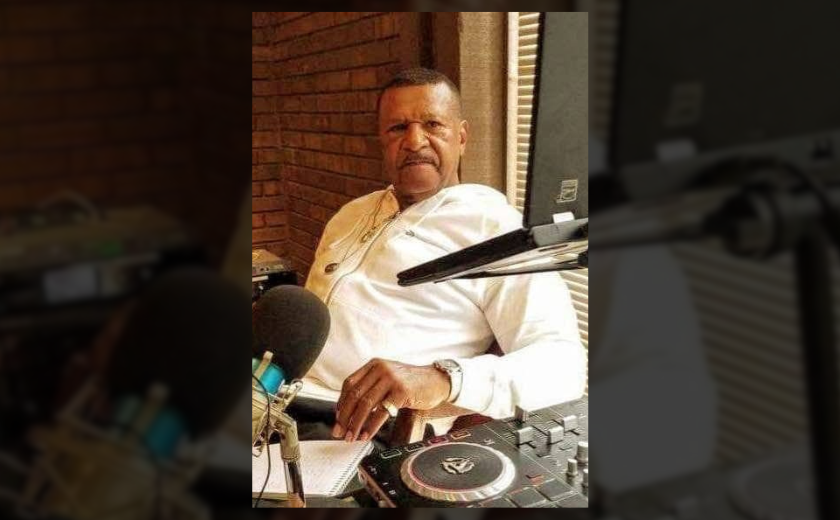
He highlights Bo Deal, who was released from prison in 2004 and has now worked in CVI for over a decade. Deal is a senior manager of field operations at one of the city’s partner organizations, Metropolitan Peace Initiatives.
The mayor quotes Deal’s description of the ripple effect of CVI investment. “Who better to touch the people in the community than the people who have been a part of this community and actually made it out to change?” Deal said. “Nobody is more effective than a person like that.”
10:58 a.m.
Though the meeting is still going, we’re still digging through Johnson’s remarks, so we may be ahead of where the mayor is in his speech.
The Fair Share Budget expands his campaign promise to increase youth jobs. He points to the decline in shootings and homicides in the five community areas with the highest number of youth jobs.
“To keep building on that success, this summer we hired over 33,000 young people, a city record. But the demand far exceeded our funded spots. There were 56,000 applications for
Chicago Youth Works positions,” Johnson says. “And so, the Fair Share Budget will invest an additional $24 million, empowering the city to hire 40,000 young people next year.”
11:00 a.m.
Other important notes from the mayor’s Fair Share Budget speech:
- The Fair Share Budget invests an additional $15 million in homelessness services, $13 million in rental assistance, and $2 million in the Flexible Housing Pool.
- The Fair Share Budget invests $2.5 million in the Jackson Park Property Tax Relief Pilot to help longtime homeowners stay in their homes as property values rise.
- The Fair Share Budget continues building on the investment into the CARE emergence response program that sends trained mental health professions to people in crisis.
- The Fair Share Budget continues investing in small businesses, revitalizing nearly $20 million from the Catalyst Fund “that sat unused for years.”
“And in the last year, organizational improvements to debt collection practices resulted in a $500 million increase in recouped debt. We did not resort to predatory practices or selling residents’ personal information to third parties. We used data-driven strategies to collect debt from those who are most able to pay, and to provide relief programs to help people who are already stretched thin settle what they owe, because that is the fiscally responsible approach,” Johnson says.
11:10 a.m.
As for the corporate head tax, Johnson says corporate profit margins increased by $384 billion. He added that the share of business revenue going back to workers fell to a record low of 52.9%. He points to Trump allowing massive corporate tax breaks while also cutting Medicaid and SNAP food assistance.
“So when people talk about how Chicago needs to address poverty and build hospitals but refuse to acknowledge the only pathway to doing so is by asking giant corporations to allocate a drop in their ocean of resources to make that investment possible—I would politely ask those people to be fiscally responsible,” Johnson says.
- The Fair Share Budget requires the largest corporations “located outside of Socio-Economically Disadvantaged Areas” to pay $25/month for each Chicago-based employee: “To help invest in our neighborhoods, our people and our long-term financial health, and to incentivize economic development in Chicago, particularly in historically neglected communities.”
- The Fair Share Budget refers to this as the Equitable Employer Tax
“While our Equitable Employer Tax challenges large corporations to put more skin in the game, our new tax credit, the SEED credit, allows those same corporations to receive a monthly credit for each Chicagoan that they employ in historically disinvested Neighborhoods,” Johnson says.
11:15 a.m.
Other revenue-generation proposals include, according to Johnson:
- A new Packaging Waste Tax of 15 cents for each single-use, mailer, or package used for deliveries in Chicago, exempting medicine and food take out, to not only raise a projected $9 million, but also to encourage people to shop local and reduce waste.
“By making adjustments to the Personal Property Lease Tax, we will ask big tech companies like Amazon profiting from Chicagoans to contribute more to City services while tailoring its reach to preserve outside investment and growth in Chicago as much as possible. These increases alone are expected to produce an additional $234 million in 2027,” Johnson says.
11:40 a.m.
Mayor Johnson closes his speech with a message about past leaders who challenged systems that concentrated wealth and power in the hands of a few.
“We do not have to accept the way things are simply because that is that the way they have always been. We know what happens when inequality deepens and when we abandon our responsibilities to one another. And we should never accept the notion that asking those with the greatest means to pay their fair share, and that somehow that will come at the expense of economic growth,” Johnson says.