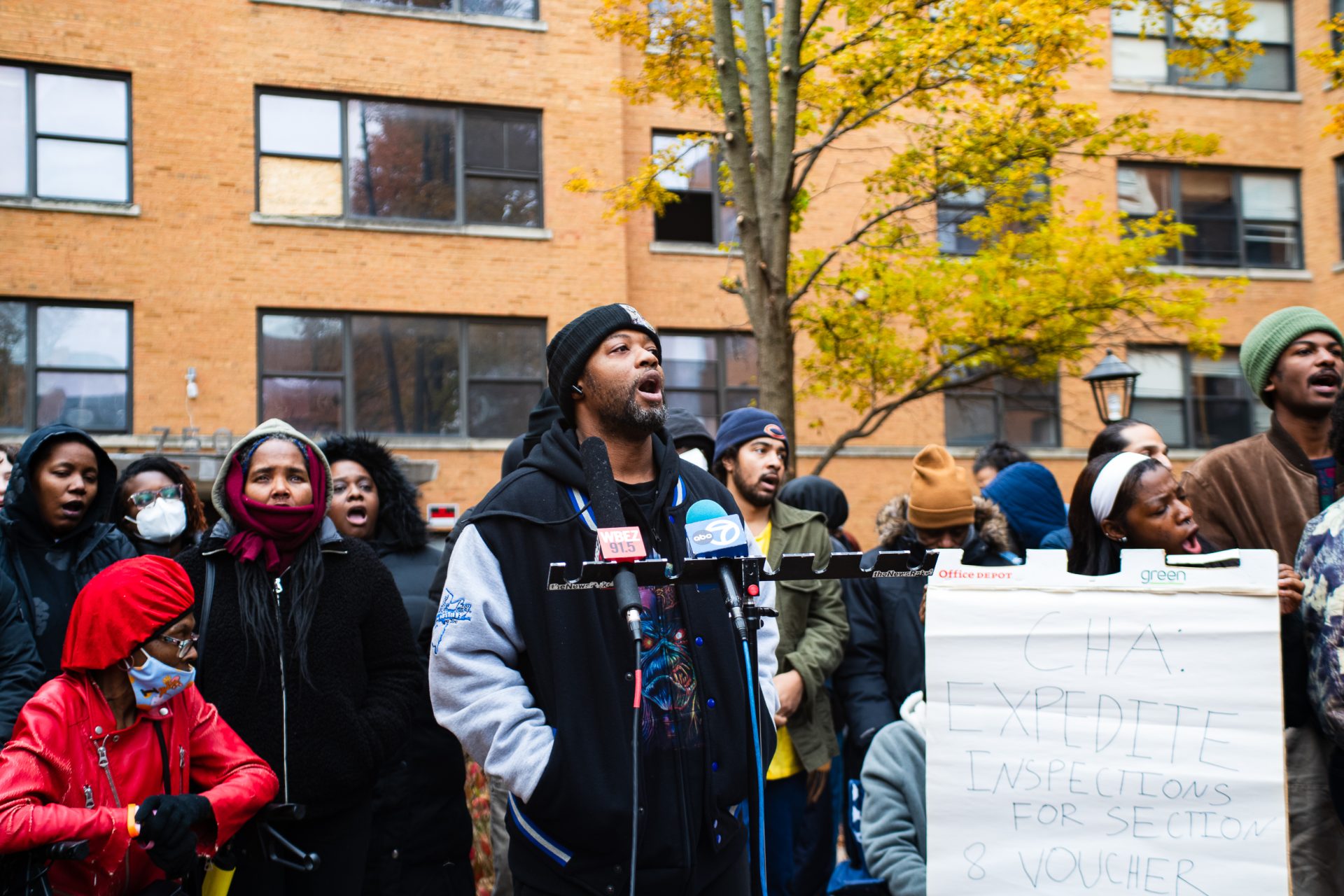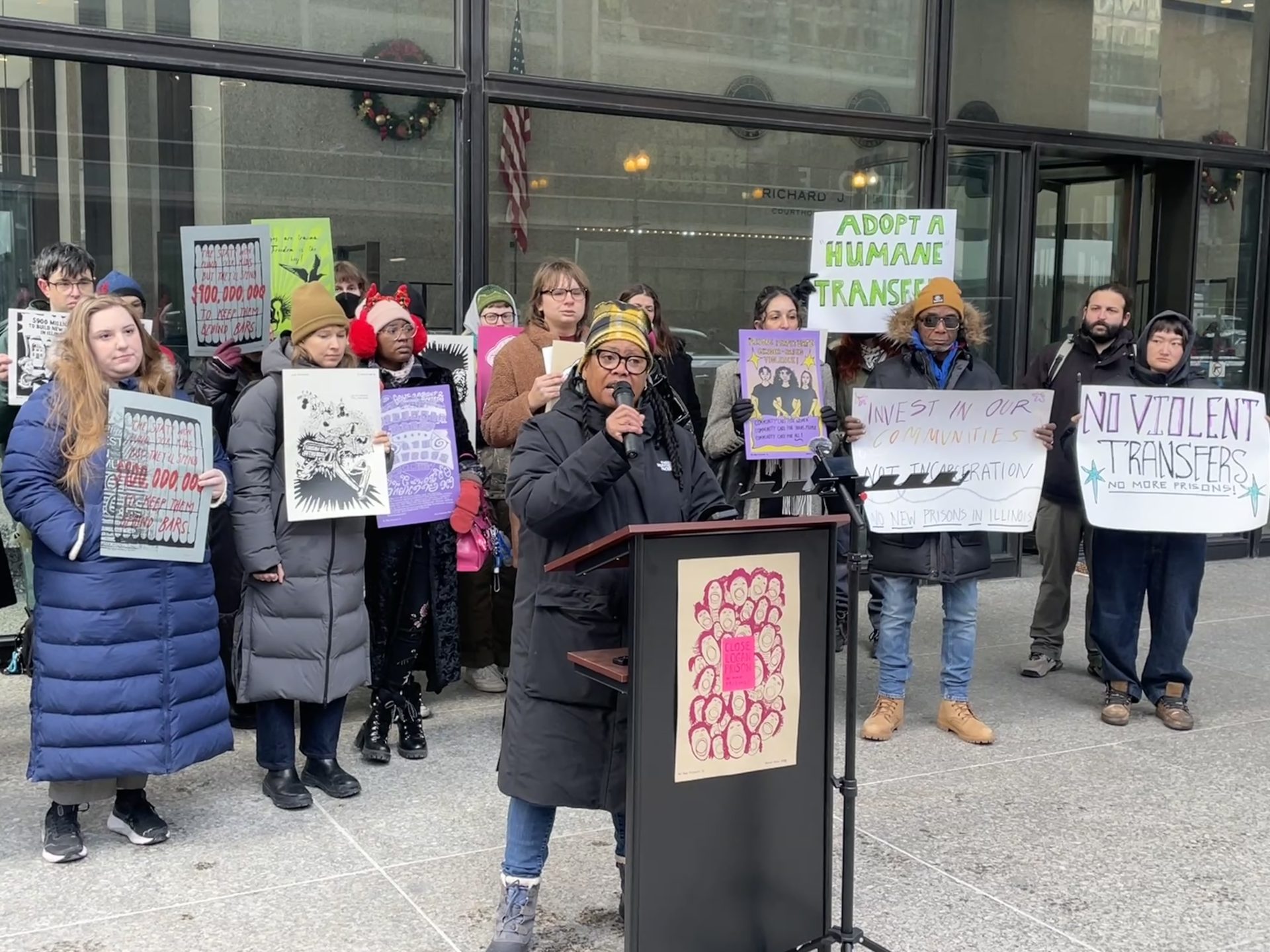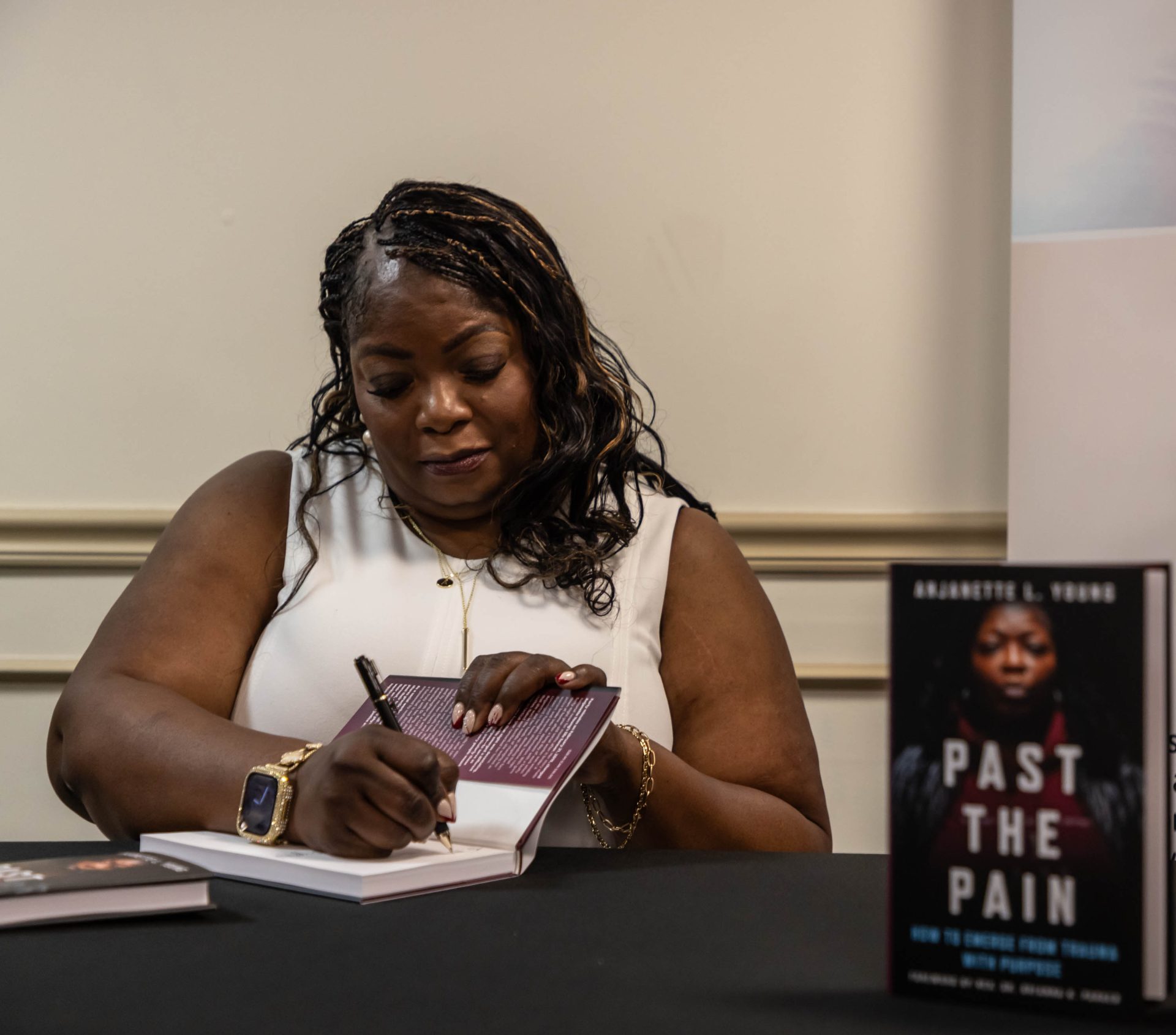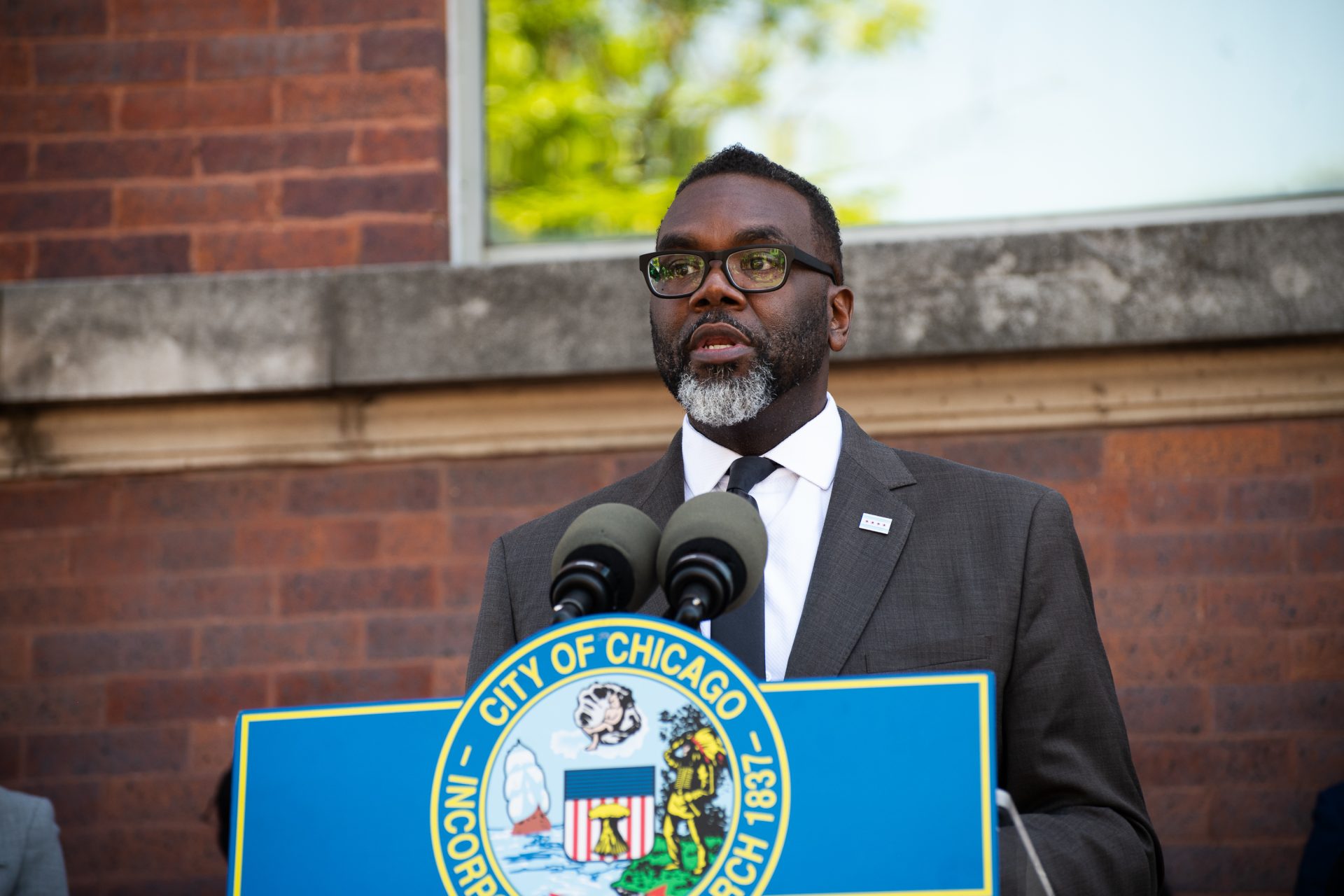
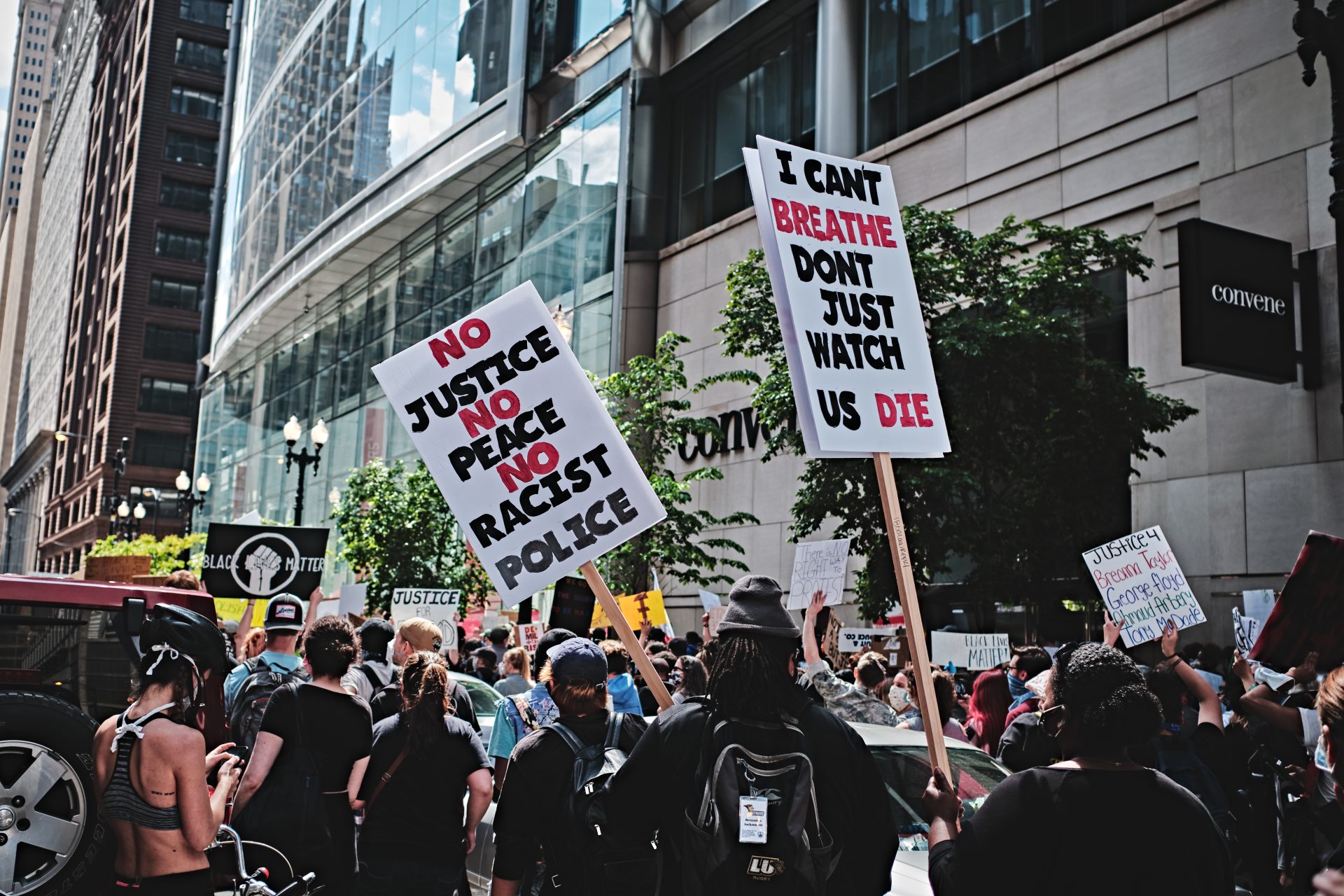


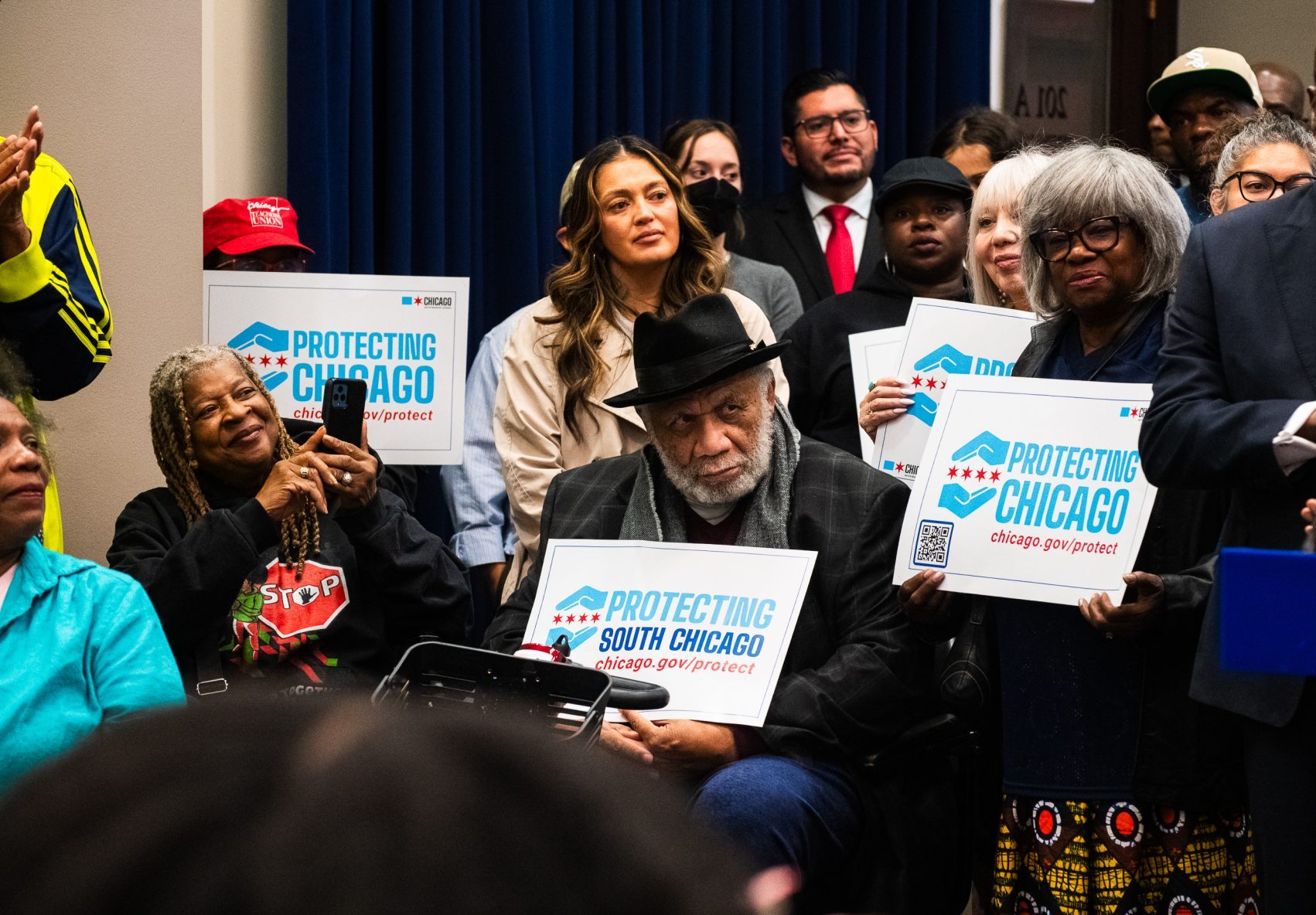
A citywide and multicultural coalition of grassroots organizers, namely the People’s Unity Platform (PUP), stood outside Chicago City Hall on Sept. 23, listing out their demands for the upcoming fiscal year 2027 city budget. Of the demands is one that sparked much debate and tension within City Council chambers last fall: making big rich corporations pay their fair share through a head tax on businesses with 500 or more employees.
“We want to see a tax on big corporations and our hope is that the caucus of alders that shot it down last year see that their speculative revenue did not pan out,” Ishan Daya, founding co-executive director of the Institute for Public Good, told The TRiiBE. During FY 2026 budget talks, a caucus of mostly moderate and conservative-leaning alderpeople pushed back against the corporate head tax and, instead, came up with an alternative budget that largely relied on selling city debt to outside collectors as a revenue-generating option. The council voted 29-20 in favor of the revenue proportion of the alternate budget.
“But this [corporate head tax] is a recurring revenue that we know does work,” Daya explained. “So our hope is that they’ll make the fiscally responsible choice and employ this tax.”
Five days later, on Sept. 28, the alternate budget caucus published a letter with their own demands. They anchored theirs on three nonnegotiables: no property tax increase, no head tax or tax on job growth, and no reliance on Springfield revenues that have not been approved.
“Reduce the cost of government. Protect essential services. Collect what is already owed. Determine the true remaining structural deficit. Then, and only then, decide what new revenue, if any, is truly necessary,” the letter reads. Twenty-nine alderpeople signed and sent it to Mayor Brandon Johnson’s budget team:
Ald. Brian Hopkins (2nd Ward)
Ald. Pat Dowell (3rd Ward)
Ald. Desmon C. Yancy (5th Ward)
Ald. Greg Mitchell (7th Ward)
Ald. Michelle Harris (8th Ward)
Ald. Anthony Beale (9th Ward)
Ald. Peter Chico (10th Ward)
Ald. Nicole T. Lee (11th Ward)
Ald. Marty Quinn (13th Ward)
Ald. Raymond Lopez (15th Ward)
Ald. Stephanie Coleman (16th Ward)
Ald. Derrick G. Curtis (18th Ward)
Ald. Matthew J. O’Shea (19th Ward)
Ald. Ronnie Mosley (21st Ward)
Ald. Silvana Tabares (23rd Ward)
Ald. Monique L. Scott (24th Ward)
Ald. Felix Cardona, Jr. (31st Ward)
Ald. Scott Waguespack (32nd Ward)
Ald. Bill Conway (34th Ward)
Ald. Gilbert Villegas (36th Ward)
Ald. Emma Mitts (37th Ward)
Ald. Nicholas Sposato (38th Ward)
Ald. Samantha Nugent (39th Ward)
Ald. Anthony Napolitano (41st Ward)
Ald. Brenden Reilly (42nd Ward)
Ald. Timmy Knudsen (43rd Ward)
Ald. Bennett Lawson (44th Ward)
Ald. James M. Gardiner (45th Ward)
Ald. Debra Silverstein (50th Ward)
Grassroots Collaborative senior organizer Rocio Garcia, a member of PUP, said it’s incomprehensible to see these 29 alderpeople continue to ignore the overwhelming amount of Chicagoans who want to tax the rich; a move, she said, is in the interest of protecting the wealthy and powerful over everyday working residents.
“As families struggle to pay their rent and their bills pile up, many are experiencing mental challenges brought on by economic hardship and pressure. We must ask ourselves: who do these alderpeople actually work for? Why are they siding with billionaires and corporations when we know there is zero evidence of a negative impact to job growth” Garcia said. She pointed to a December 2025 WBEZ analysis that found a lack of evidence that Chicago’s previous head tax, or its repeal, is to blame for job loss or growth in Chicago.
Chicago had a head tax that was established under the Mayor Richard J. Daley administration. Years later, then-Mayor Rahm Emanuel labeled the head tax a “job killer” and got rid of it in 2014. In November 2025, veteran political consultant Delmarie Cobb told The TRiiBE, “And one of the reasons he got rid of the head tax was because it was an outreach to the business community that I’m going to be a pro-business mayor.”
Johnson is the first mayor to try to bring back the head tax since Emanuel removed it. The mayor’s office sent a response letter Monday to the alternate budget caucus, which they refer to as the corporate caucus.
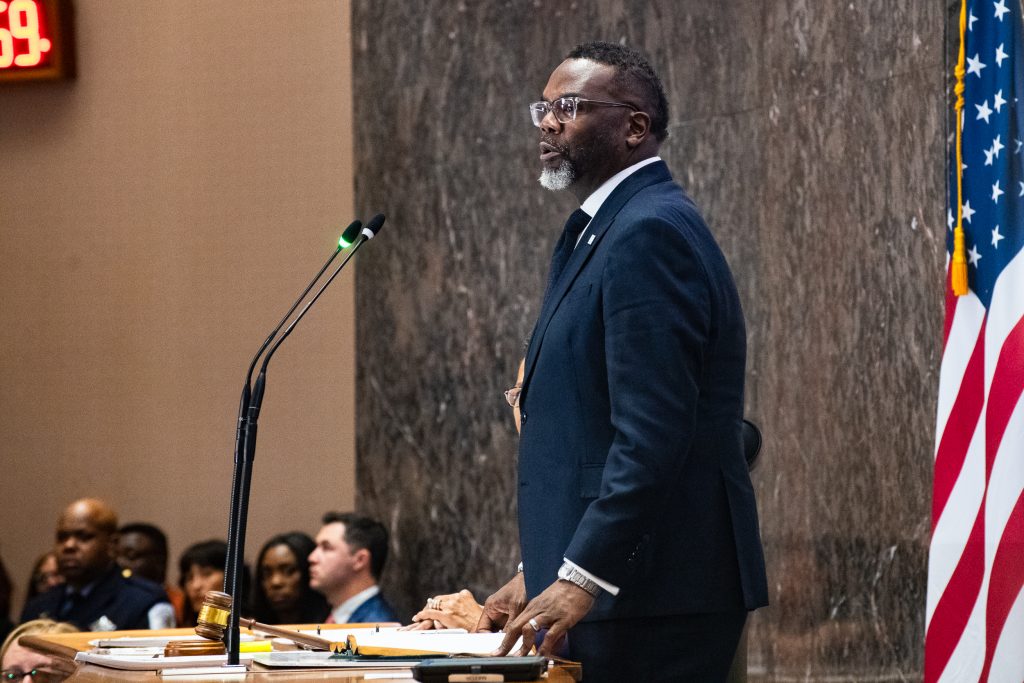
“We welcome all ideas, but they need to be grounded in revenues and savings that can be realized. We have seen the consequences of relying on speculative revenue proposals in the past, such as the vehicular debt sale,” the letter reads. “The corporate caucus also pursued selling Chicagoans’ medical debt to private debt collectors as a source of revenue, an approach Mayor Johnson blocked through executive order. We should be mindful of those lessons as we consider new revenue.”
Going into FY 2027 budget talks, the city is facing a projected $882.4 million deficit in its corporate fund, which is the main operating budget. That number is down from the estimated $1.2 billion in the 2026 forecast, according to Daya. Historically, the mayor gives the budget address sometime in mid October. A balanced budget must be passed by the end of the year.
Right in the middle of the budget cycle, organizers will see the result of several ballot questions in the 2026 General Election, asking residents if they want to tax the rich. Garcia specifically pointed to the question for residents in certain wards about a “500+ employee Corporate Tax for Youth Jobs and Social Services.” The ballot question reads: “Shall our Alderperson vote to pass a tax on big corporations that have 500 or more employees (would not apply to grocery stores or non profits), in order to fund youth jobs, public mental healthcare, and violence prevention services.”
“The budget is a moral document that must be used to critically change the material conditions across poor and working-class communities,” Garcia told The TRiiBE, “especially in Black and brown neighborhoods — the same ones that have historically been disinvested.”
Ahead of the budget address, we spoke to five PUP organizers about the demands they want to see addressed this cycle. Daya said PUP organizers work year-round on preparing for the budget.
“We’re knocking on doors. We’re having listening sessions. We’re having meetings with our bases at different parts of the city. We are understanding what the needs are and how the needs are shifting, especially when we’re in this moment where state supports are shifting, federal supports are shifting, and understanding where does the city need to step up to be able to make sure that they’re meeting the needs of our people,” Daya said. “It is a year-long fight. We’re working off of years of organizing that’s been happening in the city.”
The following quotes have been edited and condensed for clarity.
Youth jobs
Ishan Daya, founding co-executive director of the Institute for Public Good: “We’re fighting for this continued expansion of youth jobs that we’ve seen the Johnson administration continue to grow.”
Rocio Garcia, Grassroots Collaborative senior organizing director: “We have seen a decline in violence and we attribute that [to] youth jobs. As a coalition, we fought really hard to keep them in the budget last year. We want to protect those.”
Natalie Wade, a community leader within United Working Families: “Youth jobs help bring income to the family, believe it or not. When we go out and we poll, [the community] wants youth jobs for the teens. Putting youth on track to where they can gain skills, get independence and have employment to bring income to themselves and their family is a big part of community building and [taking] a lot of stress off the families.”
Affordable housing and permanent supportive housing
Don Washington, executive director of the Chicago Housing Initiative: “The biggest concern that we have right now is the Keep Chicago Housed campaign, and to make sure that we’re actually funding the programs that directly help people make up for the cuts President Donald J. Trump’s administration has made. We got to find $13 million somehow because the Chicago Low Income Housing Trust Fund has been cut, and we need to find $2 million for the flexible housing pool. [That’s for] people who have serious mental health [and] serious physical conditions that can only be housed in special units. And then we need to come up with [an additional] $20 million for all of our homeless services across the board.”
Carlos Fernandez, executive director of Grassroots Collaborative: “According to the Chicago Coalition to End Homelessness, 3,000 people could lose their housing because of federal cuts. That’s an important demand that comes out of the federal threats.”
NW: “If a landlord chooses to charge $5,000 for a two-bedroom, they have the right to do that. So what we’re asking for, like with rent control and affordable housing, is that there is a cap to where landlords can’t [make] rents so high that working people just can’t afford. Because what eventually happens [is] they are building new homes and trying to bring back the middle class family that was lost. So we want to make sure that they are affordable for the residents that are already living and staying within those areas.”
DW: “Until people are willing to charge $300 a month for rent, we’re not gonna have a housing market that houses people. The only solution to housing is to have safe, affordable, clean public housing. We tried to build public housing initially in the 1930s and 40s. We built public housing with the idea that this was a place where [people] can lay their heads as an anti-Great Depression solution that would be temporary and was mainly built for white people. We did not start disinvesting in public housing until Black people started moving in. [The lack of] public housing is a reflection of our racism and our commitment to not helping people we don’t like.”
Living wages for childcare workers
RG: “There was an investment made last year of $7 million that we are [keeping] an eye on. We want to make sure that investment remains in the budget.”
NW: “We have been fighting for childcare for all. If you’re very low income, you might be able to get some childcare subsidy, but if you kind of fall within that middle class of $50,000 or more, and that’s not a lot of money these days, you’re kind of caught in the middle where you are not getting any tax credit. So we are fighting for childcare for all where working Americans can get some type of discount or assistance, even if they are not below the federal poverty level.”
ID: “We recognize that this is not entirely on the city. This should also be on the state and also on the federal government.”
Mental healthcare services
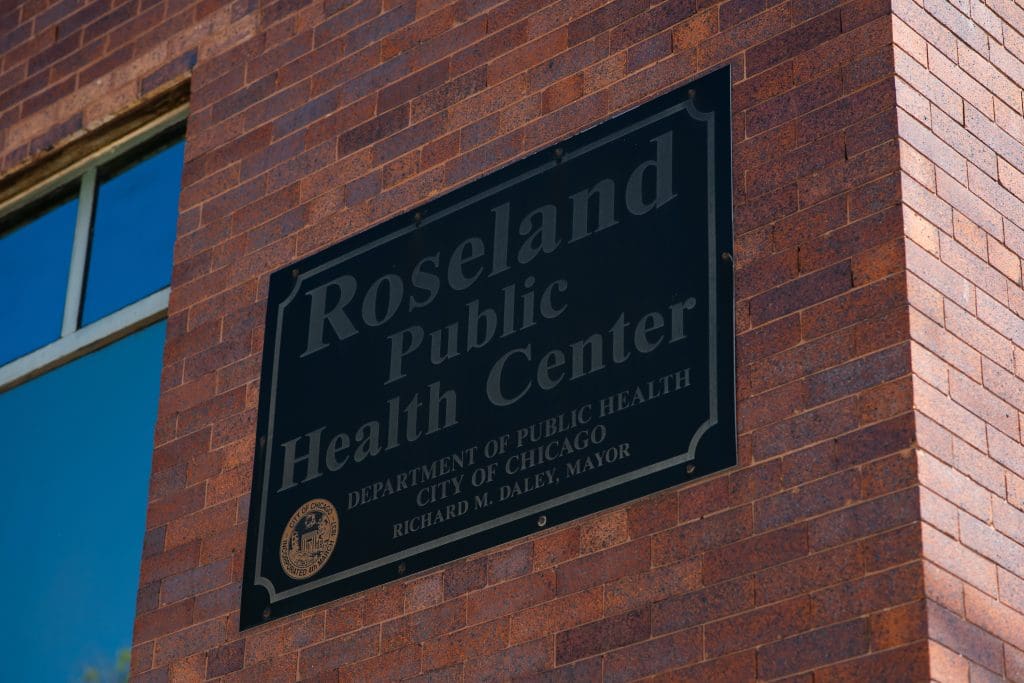
NW: “Mental health clinics were closed under Rahm [Emanuel] and [Richard M.] Daley. Mayor Brandon Johnson has opened three mental health clinics. Mental health is what we need with so much trauma going on within our communities and with our young people — just as far as people losing their lives so young, and [the youth] are expected to go to school and pay attention and pass their grades. We need those services, whether they come in the [form] of peer support, group therapy circles, or going out to green spaces.”
Violence prevention and support services, including gender-based and domestic violence
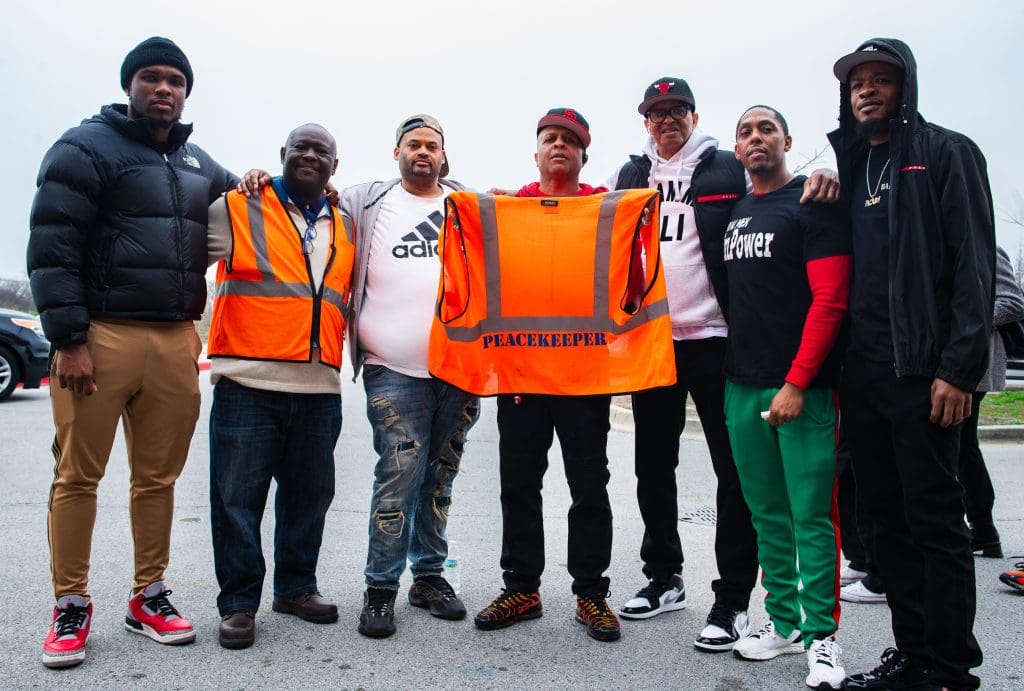
ID: “We’ve seen a reduction by more than 40% in gun violence and violence prevention hotspots, and a part of that is fighting for the Peacebook and the expansion of the Peacebook and year-round violence prevention jobs for young people.”
RG: “We also care a lot about protecting CVI (Community violence intervention) dollars. All of these go hand in hand with ensuring that we have greater community safety and public safety across all communities.
Reallocate Chicago Police Department budget to fund public health and safety
CF: “Everybody can see that [the CPD budget] is the biggest part of the city budget, and the demand that vacant positions be closed is just part of bringing that under the same discipline that other departments have. It’s a pretty moderate demand. If there are vacant positions that aren’t being used, those funds should be directed back into the city budget — not used for unplanned expenses in that agency. If [CPD] was more disciplined about its budgets, then that would give the rest of the city’s budget more room to make investments in community safety.”
Recurring revenue: Taxing big corporations
ID: “What we’re pushing for is to see a big corporation tax passed. We know that the state actually hinders our city’s ability to be able to do progressive taxation at the city level because of the state constitution. So with that, there’s only a few different measures that we have the ability to actually run at the city level that taxes corporations — and the big one is passing a head tax. Because it’s really the only direct corporate tax that the city is allowed to employ, we want to see a big corporation tax that raises at least $100 million. We are supportive of having a sunset clause on that big corporation tax; if and when the state allows the city to employ a corporate income tax at the city level, similar to how New York has it, that will raise at least $100 million.”
NW: “Illinois has a flat tax rate. Corporations do big business here. We’ve also found that in other states, like Massachusetts, it’s been successful. We have won some of our wins in taxing rich corporations, such as the social media tax. We really do believe that corporations paying their fair share will help bring vital resources back to our communities: from mental health support all the way to affordable housing.”
Recurring revenue: Using the largest TIF surplus to pay for free public services
ID: “We’re fighting for a city budget that invests in a thriving public school system, libraries, and support for our parks and park district workers. We do that through the city giving the biggest Tax Increment Financing (TIF) surplus possible, returning those property tax dollars back to those systems.”
CF: “With property values continuing to go up, we can expect that our TIFs are collecting more funding. So I think it is right to continue what we’ve done over the past couple of years: release more of the TIF surpluses and fund some of those needs. We’re talking about hundreds of millions of dollars.”
RG: “We know that historically TIFs have been used for developments that don’t end up supporting families.”
ID: “We want to continue to allocate funds to things like continuing to build and reinforce bridges. We don’t want those collapsing. Making sure that there are still funds for economic development and housing, and then bringing dollars back to our public schools, to our libraries, to our parks and those sister agencies.”
Buzzwords to listen out for:
Corporations will leave Chicago
RG: “That is untrue. There is zero data to back that corporations will actually leave Chicago as a result of implementing a corporate head tax, which Chicago has had [before].”
NW: “We’re talking about corporations with 500 or more employees. Trump gave big corporations one of the biggest wealth transfers of this time, as far as taxes are concerned. We have a flat tax. That means the working class and the millionaires pay the exact same percentage. I don’t need working people or our seniors to be scared about that because corporations [have the money] and they can afford it.”
Where’s the money gonna come from?
DW: “What they mean is, ‘We’re not interested in looking for any more revenue.” They’re not interested in finding the money or working with you to find the money.”
Fiscally responsible
RG: “Historically, Chicago has paid pension payments with loans, and then people will talk about being ‘fiscally responsible,’ which means cutting down programs. Conservatives in City Council who are backed by billionaires like Michael Sacks will say things like, ‘We are overspending. We need to be fiscally responsible.’ But what they’re saying is, ‘We don’t care about working-class people. We don’t care about poor people.’”
DW: “Usually ‘responsible’ means we’re about to take something away from you. We’re about to cut something from the budget that was already there. We’re going to deprive you of something because it’s not responsible for you to continue to receive it.”
We’re gonna hurt businesses
DW: “What they’re really saying is, ‘We are protecting the interests of people that have the most money in the city of Chicago.’ They’re not talking about moms and pops. They’re not talking about a small restaurant on the corner. They’re not even talking about a big restaurant. They’re talking about the guys who own, like, the Trump Tower; they’re talking about major real estate developers. They’re talking about the kind of guys that ‘invest’ in the city, which often means buying some of the public trust from the city.”
What can Chicago residents do to be heard this budget season?
RG: In the Nov. 3 election, there will be a question on the ballot that asks voters if they want to tax rich corporations. That will be proof of concept, right?
ID: “If you’re reading this and you’re like, ‘I want to see large corporations pay their fair share instead of seeing additional fines and fees and taxes on working people,’ then you should call your alder, show up to their office, tell them that you want to see a big corporation tax. Tell them you want to see the biggest possible TIF surplus. Tell them that you want to see a reallocation of inefficient CPD funds to real forms of public health and safety on your block.”
NW: “Attend your local town halls. When people are out in the community canvassing and coming door-to-door asking your opinion, we need you to get on board because we are helping your voice be heard. We want to know what the people want and need so that we can fight for the working people. [Also,] get out and vote. Now is not the time to turn a blind eye. Now is not the time to be exhausted. Get your young people registered to vote.”