
The Chicago Sky have gotten off to a quick start to their 2026 season and Skytown is impressed with the team’s early success.
The Sky managed to impress observers with a 3-1 start to their season, though they currently sit at 3-3 after a 85-75 loss to the Minnesota Lynx on Saturday. In spite of more recent struggles, the Sky have seemingly re-installed a certain winning energy through Wintrust Arena, one echoing the championship aura of the 2021 team that temporarily took over the city in their march to a title.
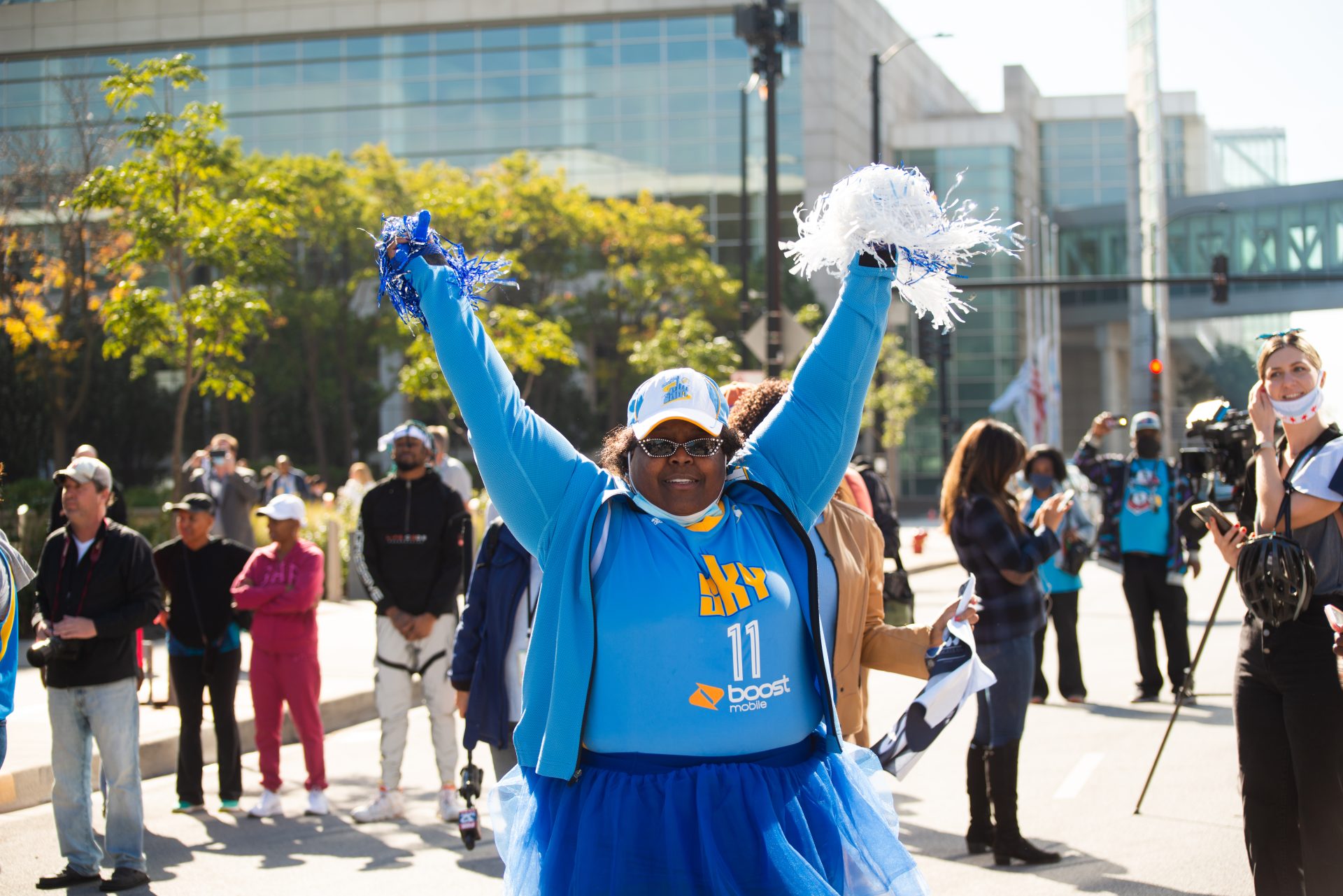
To see Wintrust rock again, as it did for last Wednesday’s home opener, made one thing abundantly clear: the heartbeat of this franchise belongs to a foundational, yet frequently overlooked group.
Every legendary Chicago basketball player, from Candace Parker to Derrick Rose, had a matriarch figure in their village and in the stands who knows the game like they are professional commentators. Long before Parker and Rose were Chicago icons with career highs, they were someone’s little sister in suburban Naperville and someone’s nephew in Englewood being reared by the older women around them.
Those elders are not influencers nor often are they visible to the casual passerby, but they form the invisible infrastructure and die-hard backbone to the city’s way of life via basketball. Often referred to by the colloquial term “auntie” in the African-American community, these women are leaders and anchors in the world around them.
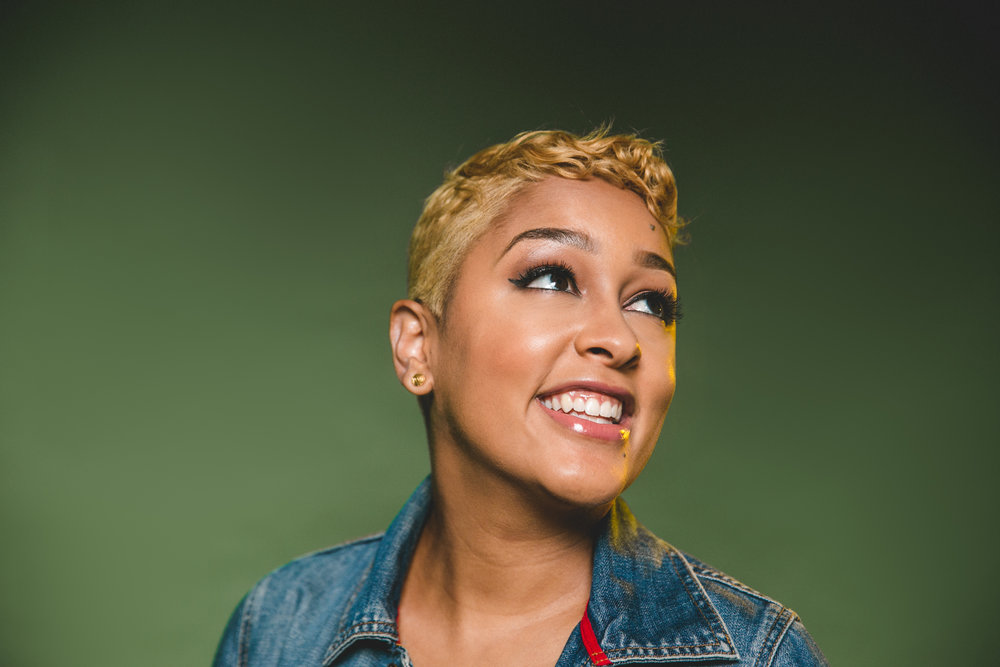
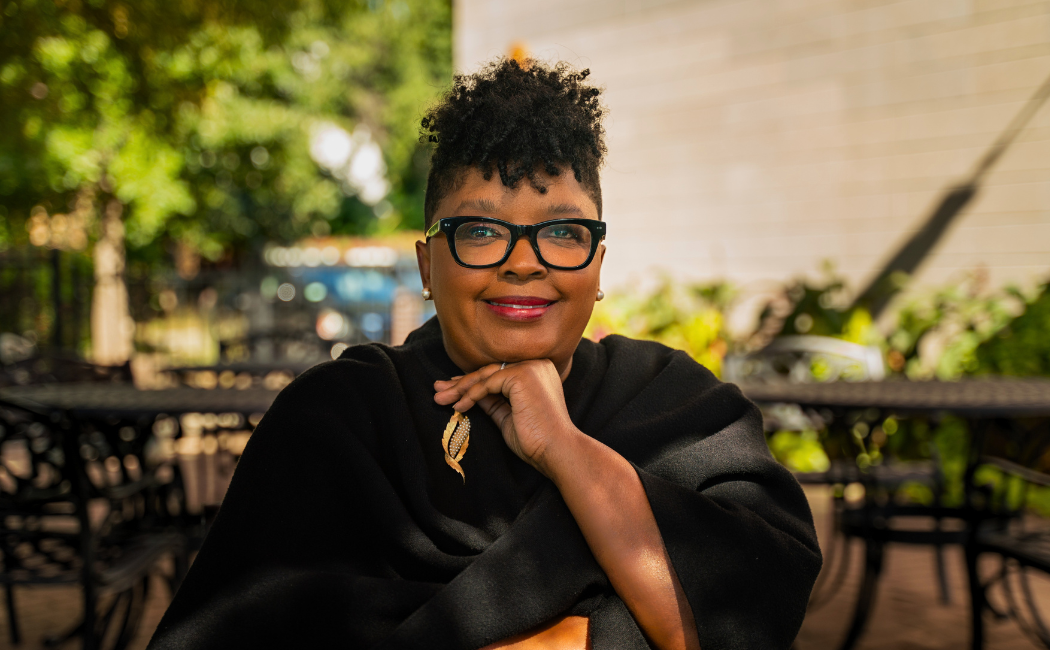
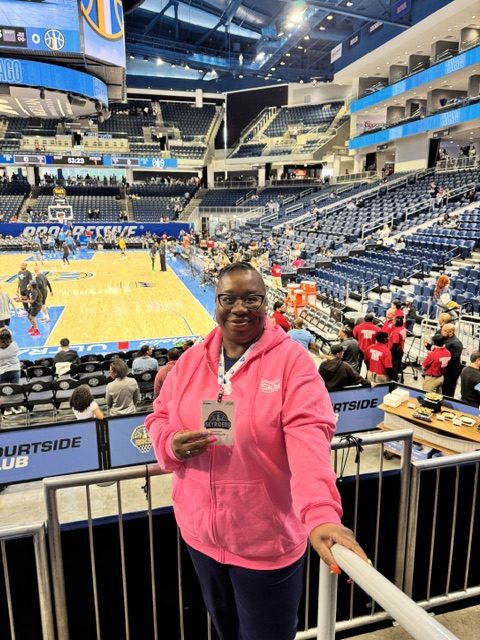
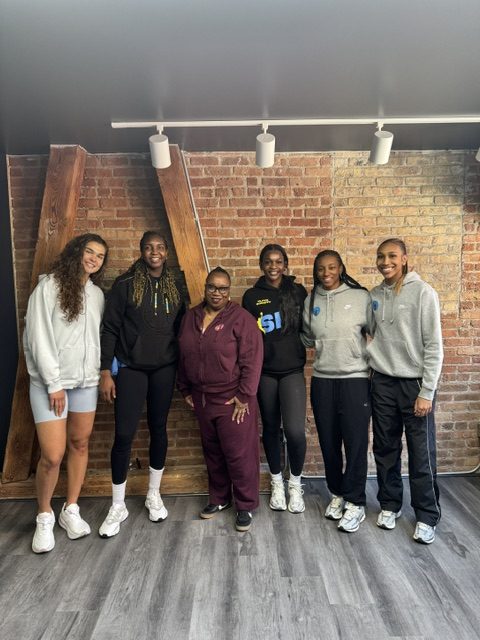
Dr. Sharice Bradford, a certified life coach who holds a doctorate in counseling psychology, said the auntie title can be actively earned or distinctly performed within Black culture. By setting intentions to pour into younger women — who she refers to as ‘little sisters’ — at Sky games, she believes watching women’s sports with them can inspire more value than the sole treasure it is to be at a WNBA matchup.
“I absolutely identify as an auntie because I pour into others,” Bradford told The TRiiBE. “Some women pretend they talk the talk and walk the walk that they’re pouring into others, but most of what they’re doing is lifting themselves up and not lifting somebody else up. They want the notoriety, but they don’t want the work this role takes because the work is heavy.”
Having come of age alongside the birth of professional women’s basketball in the mid-to-late 1990s, older millennial and Generation X Black women hold their own oral history of hoops. Industries are paying attention to the WNBA as it celebrates three decades of existence, with numerous national broadcasts and campaigns to diversify the landscape of fans far and wide. But in Chicago, is the Sky’s inevitable evolution designed with aunties in mind?
The stakes are stamped in history: “Black girl magic has existed since the beginning of time and it will never go away,” Bradford said. “If you remove us from the equation, what would you have left? It’s like not putting sugar in the cake.”
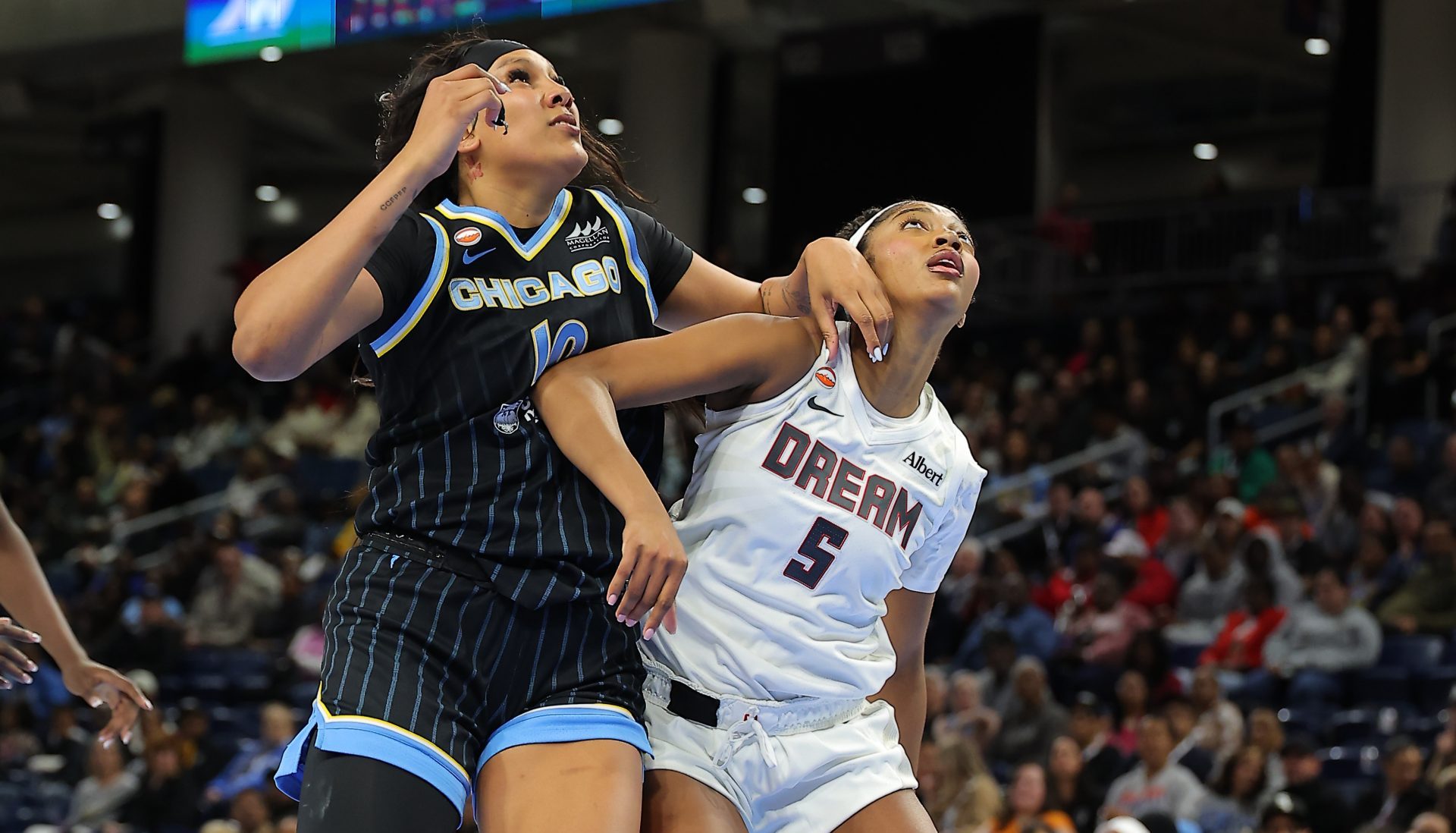
For Bradford, this cultural essence extends directly into her protection of players, pointing to when Sky forward Rickea Jackson suffered a season-ending torn ACL during a recent road win over the Lynx as a prime example of how being a Skytown auntie is an intersectional experience.
“Black women are nurturers by nature, and the nurture versus nature theory comes into play when I’m watching the Sky,” she said. “My husband was trying to figure out if what Jackson experienced was a contact or non-contact injury, but I was instantly like, ‘I hope she’s OK.’”
As a South Side native who acknowledges her Skytown experience is unique compared to younger fans, Bradford spoke highly of her professional network that includes Sky franchise employees and noted how important it is to exercise boundaries in her support of the team.
“I’m not going to reach out right away to people I know at the organization and ask what happened if something like a serious injury occurs during a game,” she said. “But I may check in and ask if everything turned out OK the next time I see them because there is a fine line between professionalism and fangirling.”
The Sky won less than half of their games during the last two consecutive seasons, a particularly disappointing era for the franchise that thought it was off to another effective rebuild with their drafting of “Twin Towers” Angel Reese and Kamilla Cardoso in 2024. Bradford said she noticed the team played with a ‘defeated’ spirit on the court during these seasons, but she also saw it as a moment when Skytown aunties shined.
“You just want to go grab them and say, ‘Girl, let’s win this game,’” she said. “You want them to be able to hear you when you say, ‘Girl, it’s OK you missed the shot, just get back down there, you’re going to get another chance before the game is over.’ It is innate in us.”
And something has to fuel all that encouragement and positive energy in the Skytown aunties — letting them guide you through a home game at Wintrust is a confectionary masterclass in sports culture. The sensory markers of the environment hit all at once: spicy popcorn, a tequila sunrise and an entourage coming together for a spirited “Alright, girls!” call to the players. This ritual is the quintessential construction of community — a sacred space where sports and sisterhood collide.
Mainstream media often relies on a pervasive stereotype that paints Black women in sports fanbases as “loud” and “rowdy,” but perhaps to the surprise of many, they are among the most sophisticated analysts inside of Wintrust.
“Chicago is a sports town,” longtime Sky fan and local finance professional Joy Sinegar Munoz said. “If you don’t root for some form of sports, even as a woman, then you’re not from here or haven’t been here long enough. You either know hockey, baseball and you’re going to be a North Side or a South Side person. Chicago women overall have some knowledge of sports.”
Fandom as strategy
The sound of a Black woman’s fandom is a groove built upon the underlying backbeat that greatness takes time to cultivate, whether the rest of the world pays attention or not. For those graced with the opportunity to sit in close proximity to Skytown aunties, passive cheerleading is not in their DNA. Their support dates back to previous, inglorious earlier days of low attendance at UIC Pavilion and Allstate Arena — before moving to the Wintrust Arena in 2018.
“Just because everyone is not there to see it does not mean magic isn’t happening,” Sinegar Munoz said. “When they didn’t televise the WNBA games as widely as they do today, it just never seemed like this could be a reality. I’m blessed to have been able to witness some of the earlier players do their thing, but I knew eventually the masses would see it.”

Skytown aunties possess the ability to evaluate the team’s roster on a cellular level, while remaining highly critical of front-office instability, which has led to the movement of three head coaches in a five-year span. There has also been the on-the-fly approach to securing a location and overall planning for a two-week preseason training camp that unrealistically expected a new roster of brilliant, complex Black women with highly individualized personalities to instantaneously mesh under pressure.
In spite of an off-season that at times was worthy of criticism, particularly when the Sky traded fan-favorite Reese to Atlanta, they have still managed to maintain good feelings due to several smart personnel moves in the days approaching the season, such as the trade for Jackson and signing veteran Natasha Cloud. Those administrative adjustments quickly translated into a raw, competitive energy that left no doubt about the Sky’s limit — or the lack thereof.
“Our girls can play their asses off,” Sinegar Munoz, a former basketball player, said. “When you don’t go to the game, you get a lot of negative opinions on social media about how they really don’t know how to play and watching girls play is so boring. But in the arena, you can see the actual ability these women have, the way they move the ball and maneuver on the court. You can’t analyze the game the same way as watching it on TV.”
But a Skytown auntie’s technical eye for basketball never compromises the human element associated with their loyalty. These are the same fans quick to pivot mid-game and call out, ‘Hey babe, are you OK? Can you see?’ while possessing a Wonder Woman-like capacity to hold space simultaneously for the cold metrics of the game and the wellbeing of the women at play — honoring them as an extension of Chicago’s culture and neighborhoods.
“I’ve seen Sky players in Harold’s Chicken on Cermak and Michigan ordering chicken,” Bradford said. “I’ve also seen a number of WNBA players leaving Wintrust after a game, and I don’t know if they were figuring out where they wanted to go eat or if they just wanted to walk back to their hotel, but I wanted to be like, ‘Where y’all going? Do you need a ride?’”
And while male fans might experience a distinct separation from local legends like Rose and Michael Jordan, Black women look onto the WNBA court and see a mirror. Sinegar Munoz, a mother to two daughters, aged 7 and 14, said this is the tether that creates possibility for all Black women.
“When you see a woman, especially a Black woman, play, our cheers are a little bit more than just, ‘hey, good job,’” she said. “It’s ‘you’re advancing and making history for all of us’ because they are showing us what can be achieved and reminds us basketball can be a woman’s career too.”
The depth of this representation drives Skytown aunties to reclaim their active role as the infrastructure of the team’s support. They regularly embrace and make room for new fans, understanding players deserve maximum backing, but always hold close the truth that their allegiance has always been a factor keeping the franchise afloat.
“Us aunties are going to throw ourselves into the mix anyway,” Sinegar Munoz said. “We don’t have to be represented to support. Whether you market to us or not, we show up and show out consistently. That’s just how Black women are. It doesn’t matter whether you’re winning or losing, we’re going to be there. We’re going to support you. We’re going to buy the shirts. We’re going to wear them. We are just very loyal.”
A path forward
During the 2020 NBA All-Star weekend in Chicago, Bradford identified a turning point in her support of women’s basketball. She attended an event where retired WNBA players were present, and her conversations with them took her by surprise as they revealed they were working full-time jobs for survival. This inspired Bradford’s decision to become a Skyrider — a franchise season-ticket holder — as economic activism.
“I started researching and looking at WNBA players’ salaries and I was appalled since I made more money than these women who travel constantly and experience wear and tear on their bodies,” Bradford said. “If I’m going to support a cause, I have to put my money, power and privilege where my mouth is.”
The revenue generated by a booming ticket base helped provide the socioeconomic leverage players relied on when negotiating agreements to advance their financial station — namely the 2026 Collective Bargaining Agreement (CBA) agreed between the WNBA and its Players Association — proving a fan’s monetary commitment is directly tied to the fight for better salaries and access to resources.
Gen X and older millennial Black women are among those with the ability to sow substantial seeds into the league’s upward trajectory. They are business professionals pulling from their own budgets to sponsor team initiatives, flashing their logos on the Jumbotron and buying out sections.
Yet, Skytown pride spoken in a distinct language of commercial power creates a striking tension. Sinegar Munoz said a glaring contradiction exists between the Sky’s eagerness to accept corporate backing from legacy community members and its modern branding strategy routinely sidelining the very demographic investing in its generational vision.
“South Side and Bronzeville are places where working women reside,” she said. “Women who have kids they’re taking to and from basketball practice, especially girls, with all sorts of leagues located on the South Side is where the Sky marketing is needed.”
This hyper-local focus is deliberately diluted as it chases a bigger and broader audience in Gen Z social metrics. Appealing to older Black women is a vital strategy, Skytown aunties say, for building institutional longevity.
“We are the ones getting sponsorships and who are doing the advocacy for players to be seen and heard the right way,” Sinegar Munoz said. “The younger generation’s priority is being a fan first. As older women, we have a more sustainable and elevated understanding of what this means to our communities, not even just in Chicago, but nationwide.”