



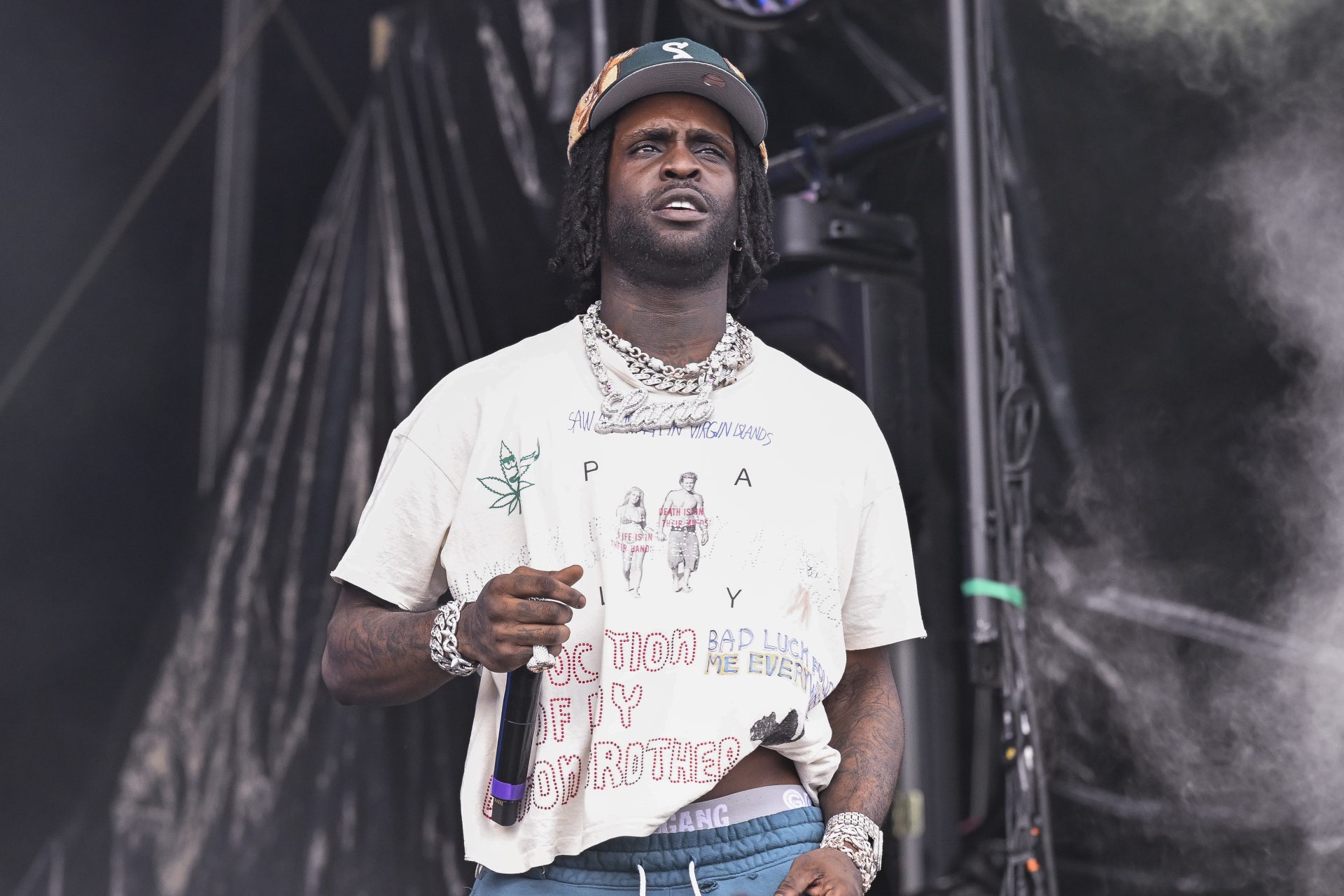
Some people liken Chief Keef to the prodigal son.
In the Bible, Jesus tells the story of two brothers. The youngest squanders his inheritance living wild and free, then hits rock bottom and returns home seeking his father’s mercy. The father instantly rejoices, embracing and forgiving his foolish son.
That story in the Gospel of Luke is one of forgiveness and repentance. Unlike the prodigal son, though, Chief Keef ain’t asking for nobody’s forgiveness. Now at 31 years old, he’s returning home to Chicago on Sept. 12 to headline his Northerly Island concert as nothing short of a cultural icon. At 16, he helped push Chicago drill music from the city’s South Side to the world. His image helped make fashion brands like True Religion a part of the drill aesthetic, later partnering with the brand. He’s done all that while remaining authentic to himself and his fans.
Everybody’s always had a lot to say about him.
Chief Keef, born Keith Farrelle Cozart, was controversial enough that city officials viewed his music as something that needed to be controlled. Attributed with popularizing Chicago’s drill music, the rapper was viewed as a threat to public safety and the city’s image. Back in the 2010s, Chicago officials worked hard to keep Chief Keef — and even his hologram — off any stages in the surrounding area.
Basically outlawed in the Chicagoland area, city officials, politicians, religious leaders and adults attributed music like his to rising violence on the South and West sides during the early 2010s. Then-Mayor Rahm Emanuel and the Chicago Police Department blocked any planned performances within city limits, and Emanuel even used his influence to have a 2015 hologram concert at Chicago’s Red Moon Theatre canceled. The show was supposed to be a benefit concert for 13-month-old Dillan Harris. The toddler was tragically struck and killed by a car while sitting in a stroller parked on a sidewalk. The car was fleeing from a shooting that killed Chicago rapper Marvin Carr, known as “Capo.”
Carr was a friend of Chief Keef, and proceeds from the concert would have gone to his family as well.
At the time, the young rapper already had a history of run-ins with the law. At 15, he was arrested on a drug charge. At 16, he was arrested on gun charges, with police saying he pointed a gun at officers. That case resulted in house arrest. His legal troubles continued into his late teens, including arrests for speeding, probation violations and a 2014 DUI case. After completing a court-ordered rehab in 2014, Chief Keef made the decision to move to California. He has lived in Los Angeles since then.
In a 2024 interview, Apple Music’s Zane Lowe asked Chief Keef if he really understood himself at 16, when he first launched onto the scene: “Nah, I was just young and young. I was just doing stuff. The street life had me,” Chief Keef said. “Everything that came with that, it had me in, like, a hold, especially in Chicago. So when I moved to L.A., I started getting better as a person. It took for me to go to L.A. to actually grow out of what I was and who I was and how I was.”
With last week’s guest appearance at Kanye West’s “Ye Live Concert Tour,” Chief Keef gave the world a quick appetizer before his main course. His fall tour “Chief Keef Live” kicks off this Saturday at the Huntington Bank Pavilion at Northerly Island.
CHIEF KEEF DIDN’T NEED THE INDUSTRY TO START A MOVEMENT
In 2011, Keef was still a teenager from Parkway Gardens on Chicago’s South Side. His breakout single, “Bang,” was beginning to circulate, and videos coming out of Chicago looked nothing like the polished rap videos of the time.
Marques “MeRk” Elliston, a Chicago-born marketing strategist and music executive, was there when that started happening. He was instantly captivated when he saw the short music video’s innovative use of raw visuals.
“I knew it was something special because it was so unapologetic for the time,” Elliston told The TRiiBE. “Like, everything up until that point was polished. Even what a music video meant: A music video meant an outfit, a scene, a scene, a scene. It meant a video girl. It meant all of that prior to that moment.”
“For it to be so captivating, for that two, three minutes, whatever the run time was, and it to not have any of those ingredients, I knew that it was something that not only birthed a new genre of music, but it kind of redefined what self-production is,” he said.
Capturing raw and gritty content became part of the recipe. Chief Keef and the Glory Boyz were showing artists that you don’t need the industry to create things.
“We looked at that video probably like 200,000 times,” said Elliston, who now provides support to the Midwest division of Chief Keef’s management team. “And did everything we could to get next to him, talk to him.”
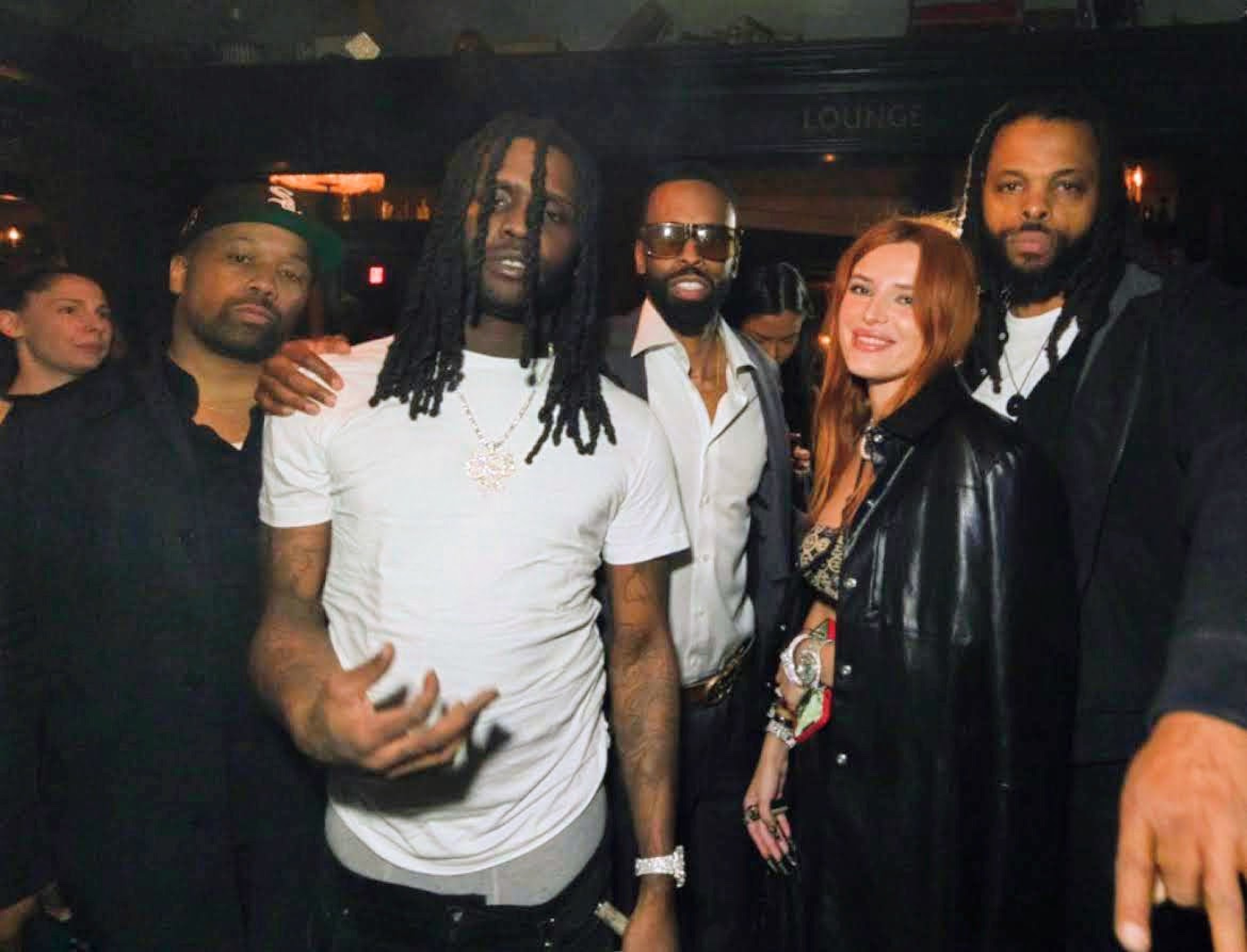
Provided by Marques “MeRk” Elliston
“People don’t recognize that they’re looking at a genius,” Marques “MeRk” Elliston (left) said about Chief Keef.
Elliston credits videographer A Zae Productions and director DGainz for revolutionizing how music videos were shot back then: “Salute DGainz and Zae and all the guys that were filming this stuff. And shout out to the 7D [camera] because I think the 7D is the most critical element to that whole movement. That’s the camera that you needed to have at that time. None of this happens without the 7D and a 50 millimeter lens.”
There was also a sense of brotherhood around Chief Keef and the Glory Boyz that people had not seen before. The music, the clothes, the slang, the videos and the way Keef carried himself, all felt like it just worked. It was undoubtedly Chicago.
Some liked what the music was: very straightforward, at times repetitive, yet memorable and catchy lyrics with an outstanding beat to match. Others criticized Chief Keef for what they thought to be simple lyrics. Some people even tried to throw a young Chief Keef in the mumble-rap category. But one thing was for sure, he had the city listening.
At the time, DJ Nehpets was working at Power 92. He remembers how the music caught on like a virus. To him, he saw youth using music as a form of therapy. A reflection of what young people were actually going through. The stories Keef was telling mattered and existed, whether people wanted to hear them or not.
“It was music, and music is how you communicate and relieve stress,” Nehpets said. “I think all of us have our hood PTSD. It’s a level of therapy to be able to get it off your chest.”
THE MOMENT “BANG” BROKE THE MOLD
DJ MoonDawg remembers breaking “Bang” on WGCI-FM (107.5) in 2011 when radio executives and city officials believed Keef’s music promoted violence.
“I was the DJ at WGCI at the time that took that risk,” MoonDawg said. “I got in so much trouble for that shit back then.”
“My argument was, it’s not that I’m promoting it. I’m just showing the reality of this truth of our city that people want to brush over,” MoonDawg said. The radio introduced Chief Keef to a larger audience, meanwhile, MoonDawg was working on helping him roll out his first major project.
In March 2012, Chief Keef released his next project, the mixtape Back from the Dead. Moondawg co-hosted the project alongside DJ Victoriouz and also arranged the mixtape, featuring songs like “I Don’t Like,” “I Don’t Know Dem” and “Save That Shit.” The project instantly caught wind, and Keef was crowned as Chicago’s next big thing. A raw, gritty project, depicting the life of a teenager who lived in Parkway Gardens’ “gated” community, the mixtape put a national spotlight on Chicago drill music, giving a blueprint for others to follow for the next decade.
Simultaneously, sites like FakeShoreDrive, DatPiff and LiveMixtapes were leading the charge in how listeners consumed new rap music.
“I leveraged my relationships to get front-page release countdowns, the whole f–cking rollout, and they didn’t charge a dollar,” MoonDawg said. “They did it off the strength of my relationship, and I was advocating for him because I knew what I was sitting on.”
And just like that, Chief Keef’s music went from the streets of Chicago, to the furthest corners of the world; he was an “overnight” viral sensation. Not too long after, Interscope Records was knocking at Keef’s door.
“It’s almost unheard of at that point for an artist to drop a mixtape and within that same year get signed to a multimillion dollar deal,” MoonDawg said.
Not everyone saw Keef’s newfound fame as beneficial to the city.
In July 2015, Emanuel’s office issued a statement calling Keef “an unacceptable role model” whose music “promotes violence.” Meanwhile, the sound he was creating would go on to shape hip-hop globally, a defining part of Chicago’s cultural identity. Songs like “I Don’t Like,” “Love Sosa,” and especially “Faneto,” have become drill anthems, and have inspired a generation of rappers.
“There’s something deeply coded in that song between the drums, all the elements of the production, and then with Keef and the way he’s rapping, it taps into every human’s primal instincts,” said DJ Moondawg about “Faneto.”
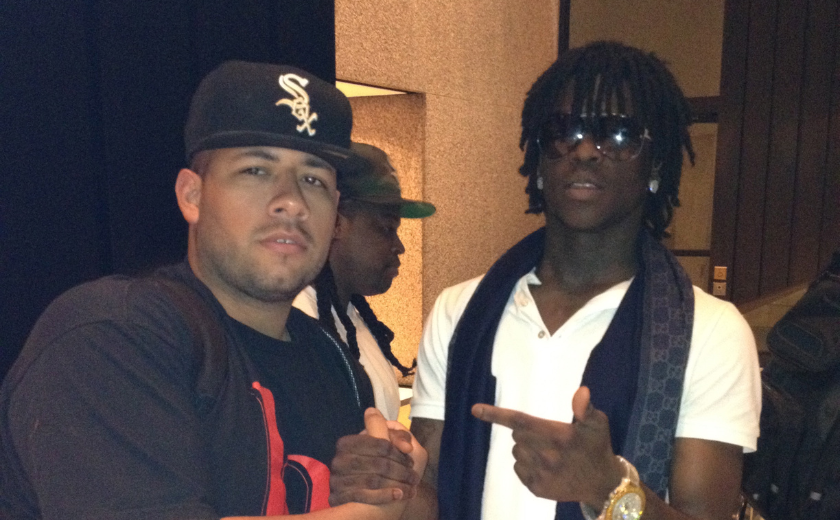
Photo provided by DJ MoonDawg.
“[This photo is] from Chief Keef’s first radio interview ever. I brought him on my show at the time.” — DJ MoonDawg
Elliston watched this influence spread way beyond the music. Chief Keef had entrenched himself into the culture, becoming a trendsetter in many different arenas: “He is an artist at heart, and his most popular channel to deliver his art was music. We see his influence probably even more across fashion than we do music.”
Whether it was the dreads, the lingo and Chicago slang, or the True Religion jacket and white sunglasses. Keef had a confidence, look and sound that resonated with youth.
“He introduced a certain level of courage for young people,” Elliston told The TRiiBE. “Sometimes that courage gets misconfused for arrogance, when in fact, we weren’t used to seeing young people be so sure. He’s largely responsible for that.”
“CHIEF KEEF BELONGS TO CHICAGO, AND CHICAGO BELONGS TO HIM”
Chief Keef was reflecting Chicago’s reality and sparking a cultural revolution while doing it. Although Keef wasn’t the lone architect of the subgenre, he still gets the lionshare of the credit for popularizing it.
Ultimately, Chief Keef filled a need in Chicago’s rap scene.
“We didn’t have our identity,” Nehpets said. “We were kind of, like, all over the place. Do we want to be kind of like the West Coast or East Coast? Nah. We Chicago.”
“It goes right back to being unequivocally yourself,” Nehpets said. “Not having to follow the rules of what somebody else told you you had to do. Keef broke those rules, and it inspired others to break rules too.”
Now, what Chief Keef was doing did not come strictly out of thin air. Examples of his recipe for success could authentically be compared with Atlanta rapper Gucci Mane and his 1017 Brick Squad Label.
Following the viral success of his breakout hit “I Don’t Like,” Chief Keef signed with Interscope Records in 2012. As part of that major-label deal, Glory Boyz Entertainment was officially established as a corporate subsidiary and imprint in 2012, making him one of the youngest artists given their own label at age 16.
“There’s a pathway from Gucci and Waka [Flocka Flame], and he took it and made it Chicago,” Elliston said.
This, along with handling other factions of his career hands on, is why Elliston sees Chief Keef as much more than a rapper.
“People don’t recognize that they’re looking at a genius,” said Elliston, noting that Chief Keef designed the Glory Boyz logo himself, while also making most of his own beats and producing his own music.
But even while being so talented, most know Chief Keef to be a shy, somewhat stand-offish personality. That energy, knowingly or not, seems to translate on stage, as Chief Keef isn’t necessarily known for giving the most electrifying or captivating performances. While fans clamor on every word he raps, waiting for him to address the crowd might be a lost cause. He portrays almost an innocence on stage. It’s almost as if big crowds still make him noticeably nervous.
Did those early years of being virtually banned from performing in his hometown and other major arenas around the country, stunt his development as a performer?
Elliston pushed back on the idea.
“He’s kind of proof that the ship he came in on with this direct‑to‑consumer approach, the show is less about what he does on stage and is more about being in his presence for his fans,” Elliston said.
“He’s not an artist that went through some artist-development thing, [learning] vocal training and breath control and spacing it out. Not saying that he can’t do those things, but I think that the load he was tasked with carrying was the introduction of a genre to the ethos, and that genre wasn’t meant to live along those same guidelines,” Elliston told The TRiiBE.
Now, years after he last performed his own show within the Chicago city limits at Lollapalooza in 2012, Chief Keef will finally get to headline in front of his hometown again. And for the first time, Keef has the support of the Mayor’s Office.
“Safety is this idea of belonging,” Deputy Mayor Emmanuel Andre said. “You don’t make a city safe by just exiling its youth and its voices. So Chief Keef belongs to Chicago, and Chicago belongs to him.”
Mayor Brandon Johnson said far too many of Chicago’s youth are frustrated that their emotions and lived experiences are invalidated by society at large. He remembered the moment The Clarks Sisters hit the scene in the 1970’s with a style of gospel so different from the conservative artists of the previous generation.
The five sisters revolutionized gospel with chilling harmonies, while bringing a new groove to the gospel scene. Their music often mixed elements of gospel with secular jazz and R&B — controversial for the time. One of their biggest hits, 1981’s “You Brought The Sunshine,” is directly influenced by Stevie Wonder’s “Master Blaster (Jammin’),” his 1980 chart-topper with a reggae feel to it. The Clark Sisters’ song crossed over to secular stations, and is still played today.
“I’m not in any way comparing The Clark Sisters to Chief Keef,” Johnson said. “What I’m simply saying is that I can point to every generation [where] the young people brought in a new experience that I believe speaks to our evolution, and I think it’s imperative that we hear what they are experiencing, what they’re going through, whether we agree with it or not, whether we believe it’s justified or not.”
Andre, who oversees Johnson’s community safety office, likened Keef’s journey to that of the late acclaimed writer and Black thought leader James Baldwin who, at age 24, left New York in 1948 for a self-imposed exile in France to escape racism and the limitations of being a Negro writer in America. “I think my exile saved my life,” Baldwin later said.
Andre ended his reflection with this. “If we truly believe in belonging and restoration, we have to love the whole story—not just the comfortable parts,” he said. “Displacement and exile may be common features in traditional public safety strategies elsewhere, but a native son cannot be displaced from the soil that made him.”