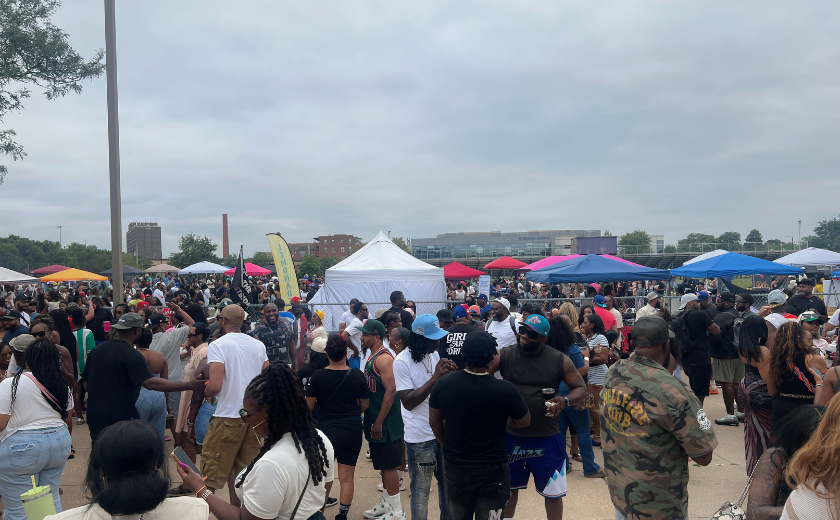




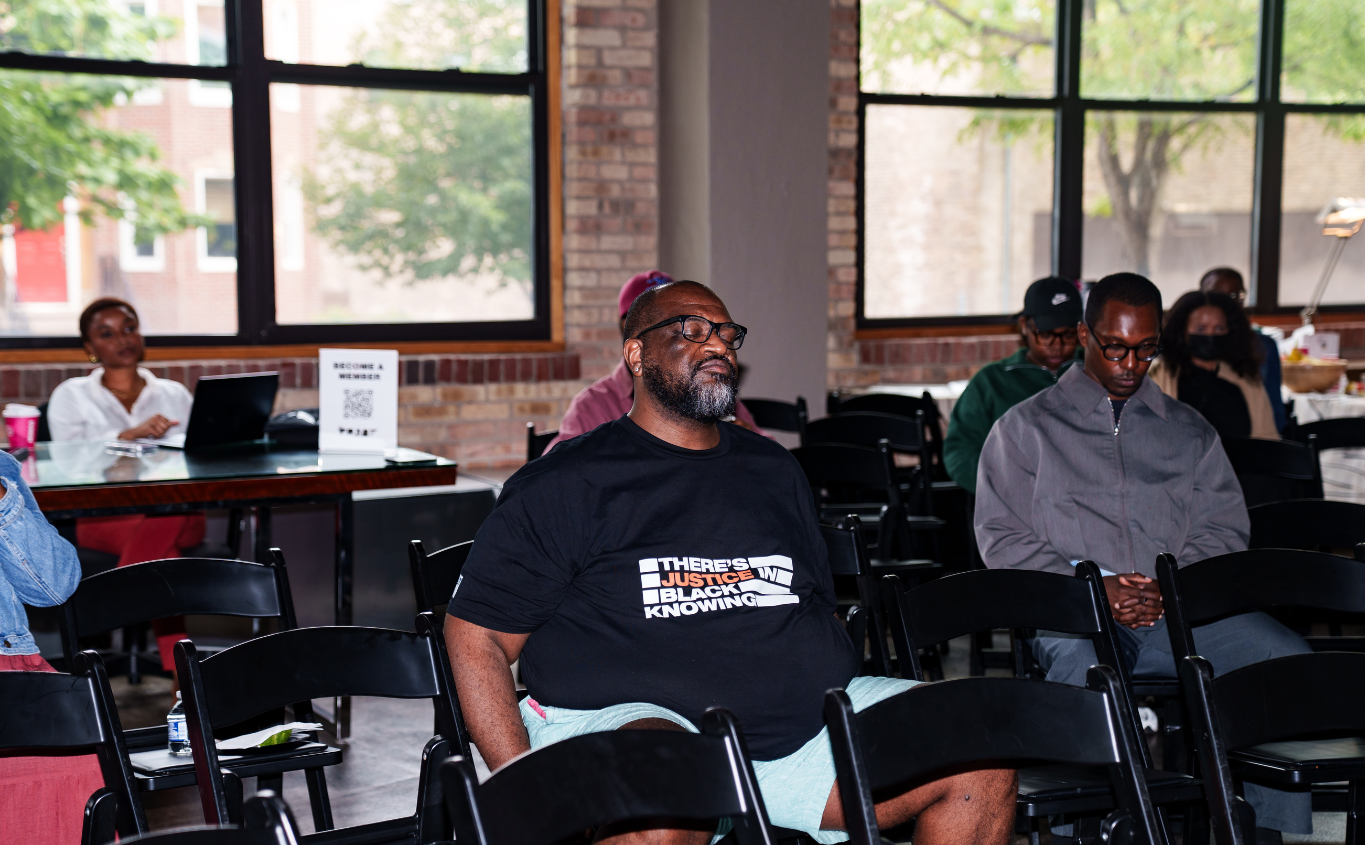
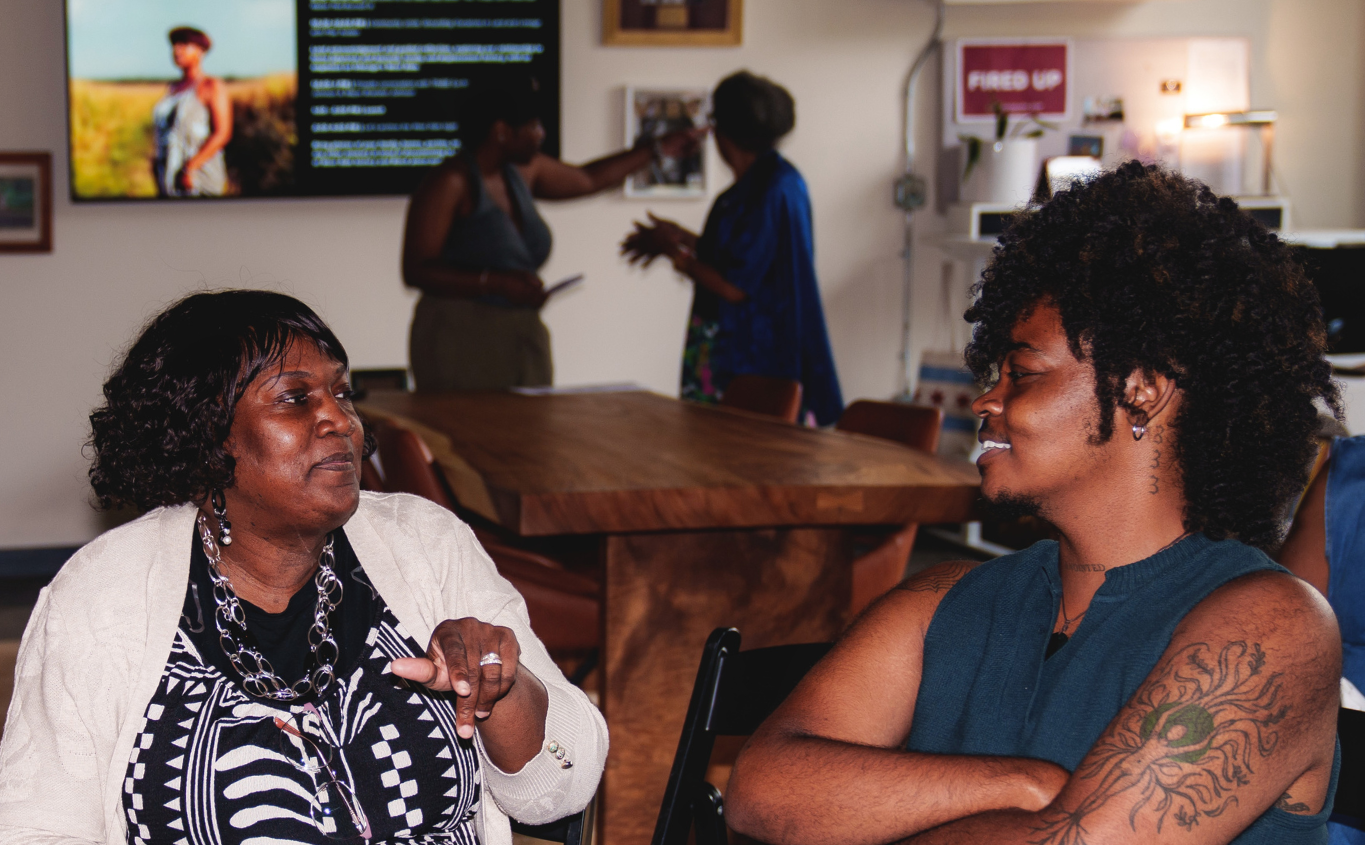
The TRiiBE’s new studio in East Garfield Park became a gathering place this last weekend for conversations about ancestral memory, the Great Migration, land ownership and Black futures on Chicago’s West Side during the publication’s first community summit, Rooted Out West. The event was supported by URL Collective and John D. and Catherine T. MacArthur Foundation.
The free two-day event, held Aug. 29-30, grew out of “Out West,” a three-part literary series by TRiiBE Co-founder and Editor-in-Chief Tiffany Walden that explores the West Side’s connection to the American South. Part three of the series, “Out West: In search of my ancestral home,” was released on July 28.
The summit featured conversations and workshops focused on healing, preserving West Side history, and preventing gentrification.
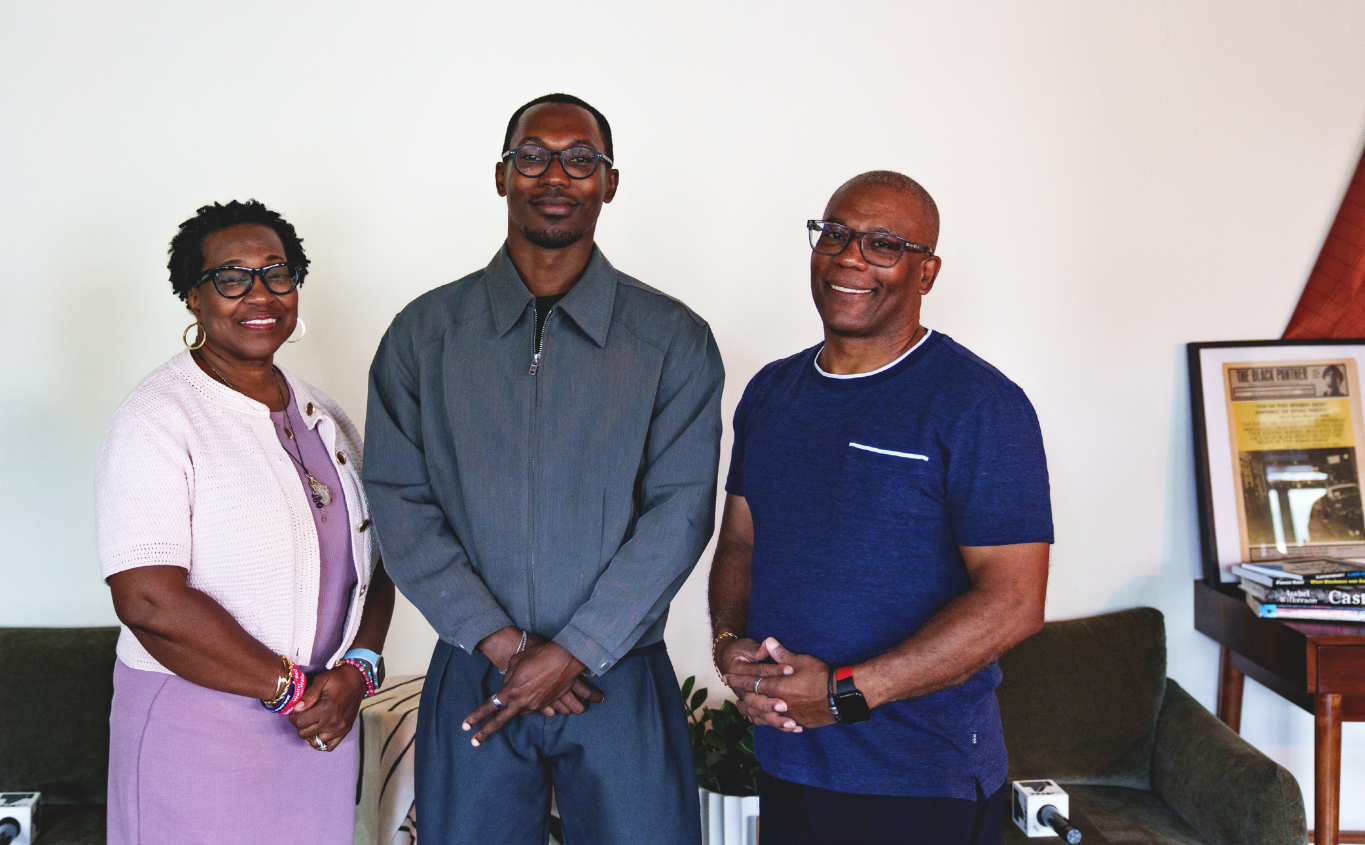
Saturday’s programming opened with 27th Ward Ald. Walter Red Burnett III sharing the migration story of his mother from Mississippi to Chicago; both his mother and father, former Ald. Walter Burnett, Jr., was in attendance.
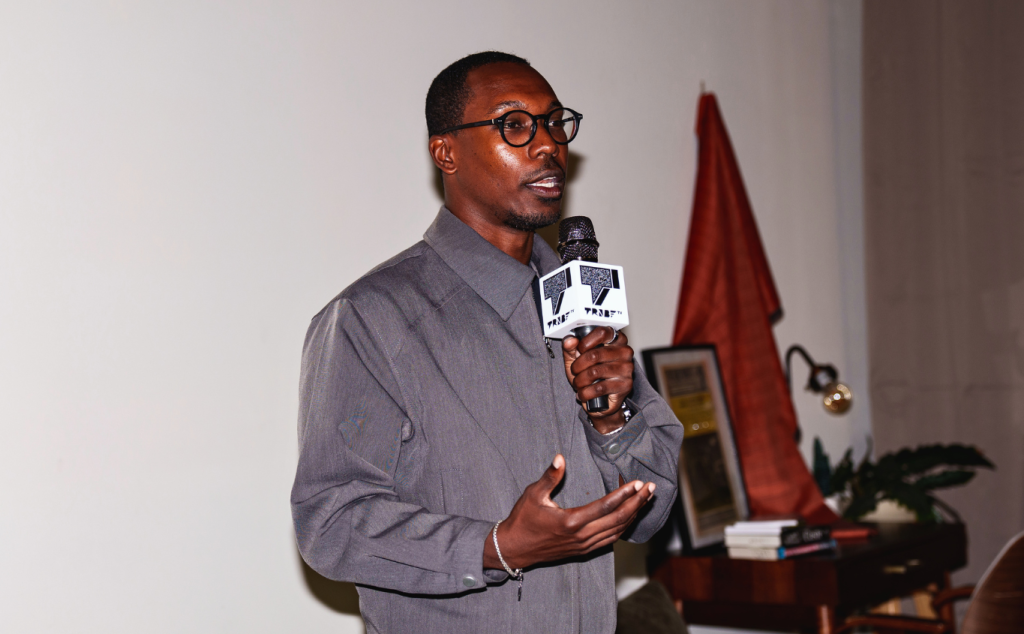
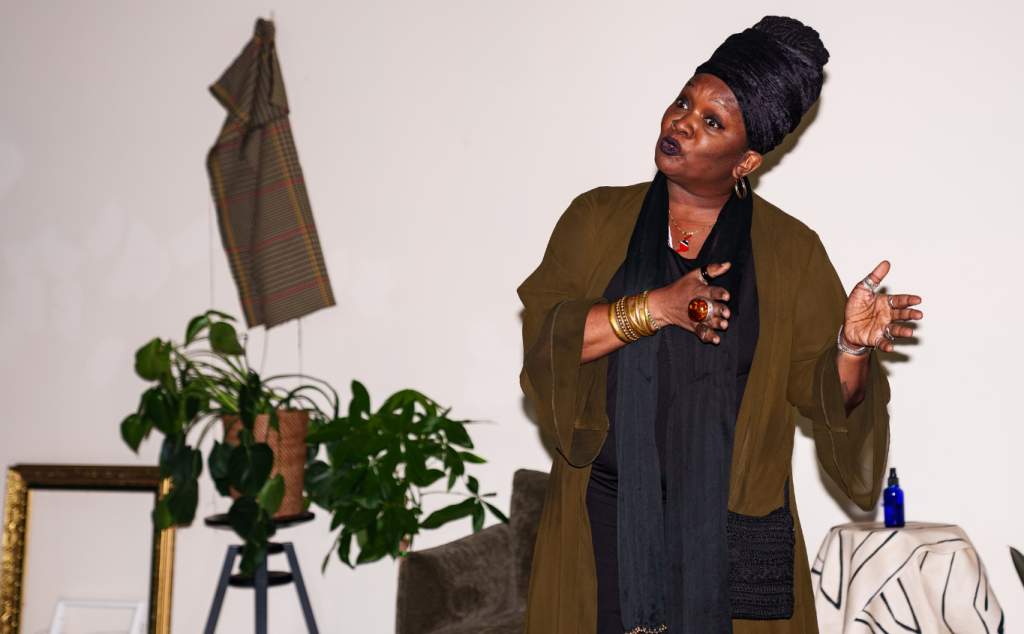
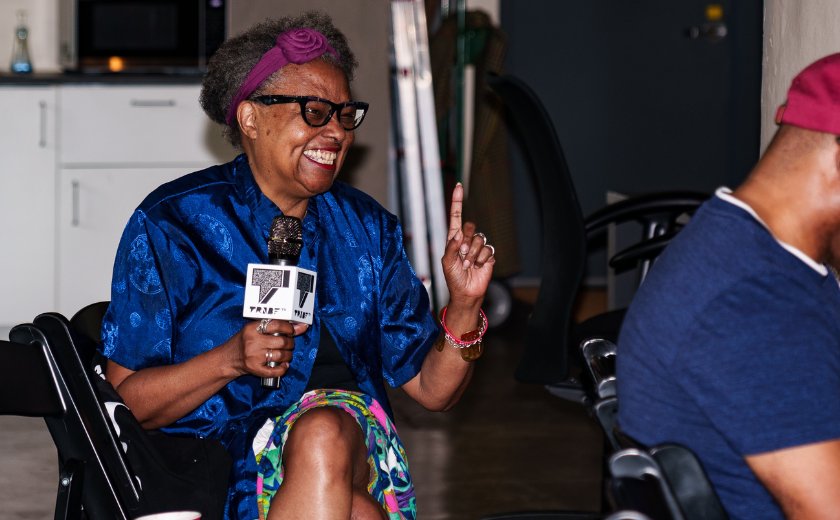
“Grounding Ourselves in Land and Lineage,” a community circle led by Pilar Audain, the executive director of Truth, Racial Healing & Transformation Greater Chicago, rooted attendees in remembrance. Audain opened the floor for attendees to share their favorite memories about the West Side.
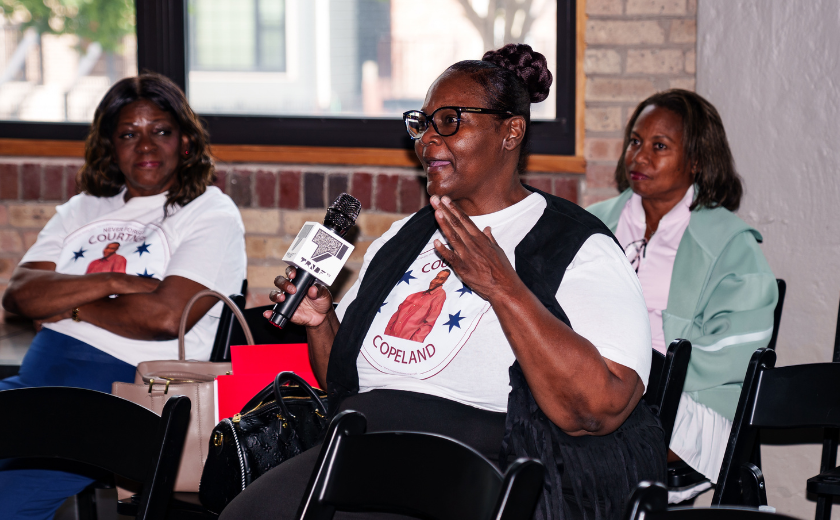
West Side native Julie Davis, 50, attended the Rooted Out West summit. She said the West Side is often left out of conversations about Black history in Chicago. “When people talk about the Great Migration, they often talk about Black people settling on the South Side, but like, ‘How did Black people get to the West Side?’ she said. “We respect people that went to the South Side or wherever they might have gone, but we also need to tell the story of how people got to different parts of the city — one of those places being the West Side.”
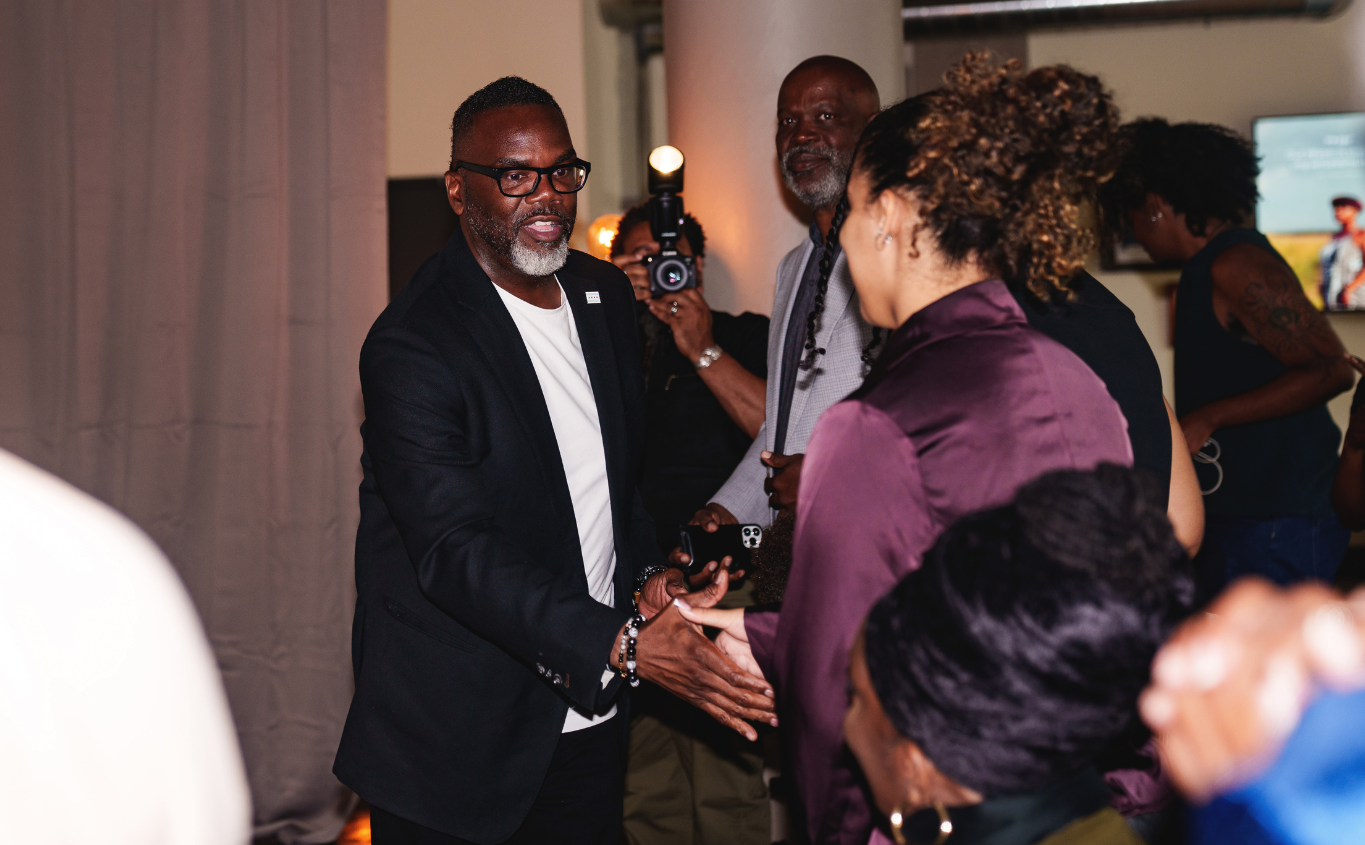
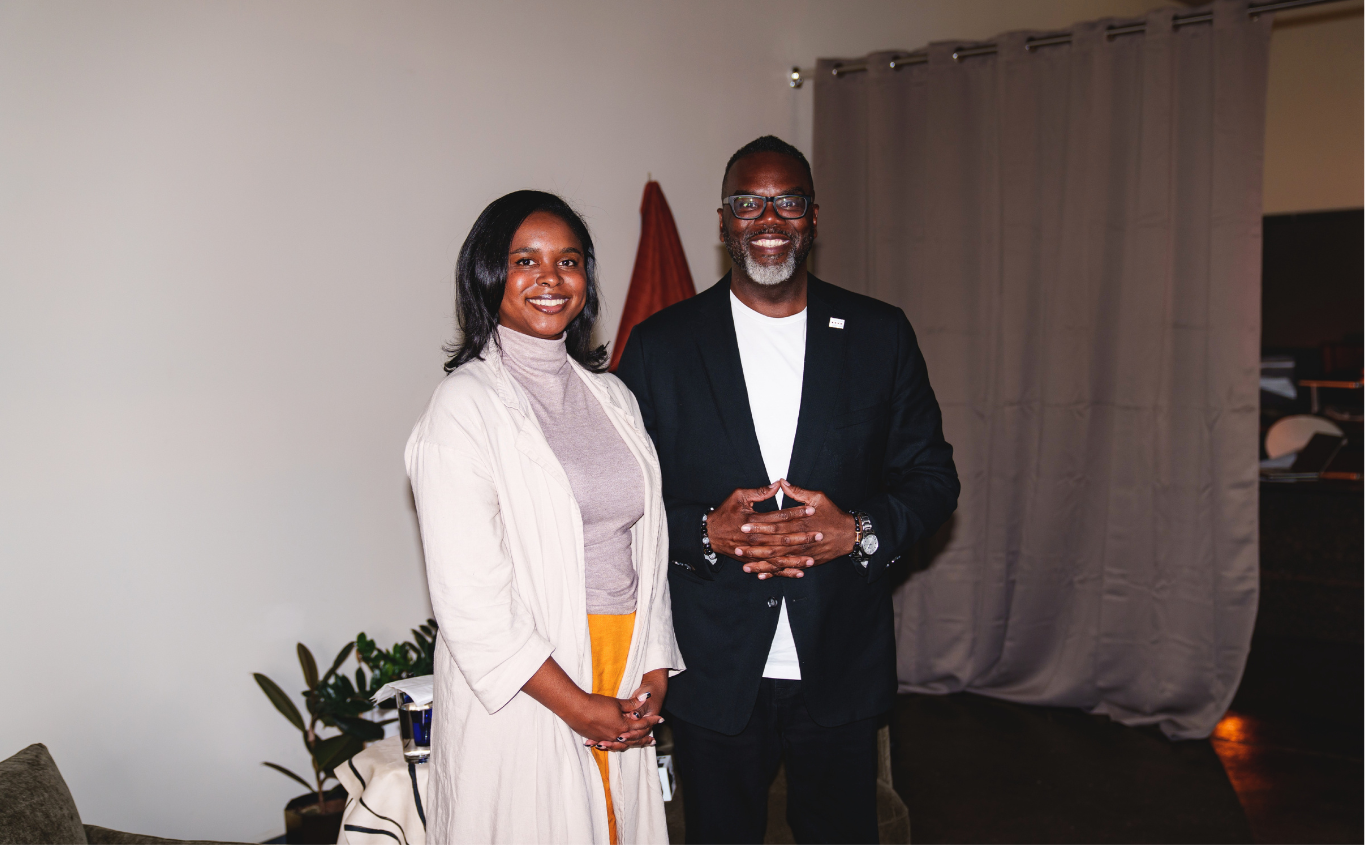
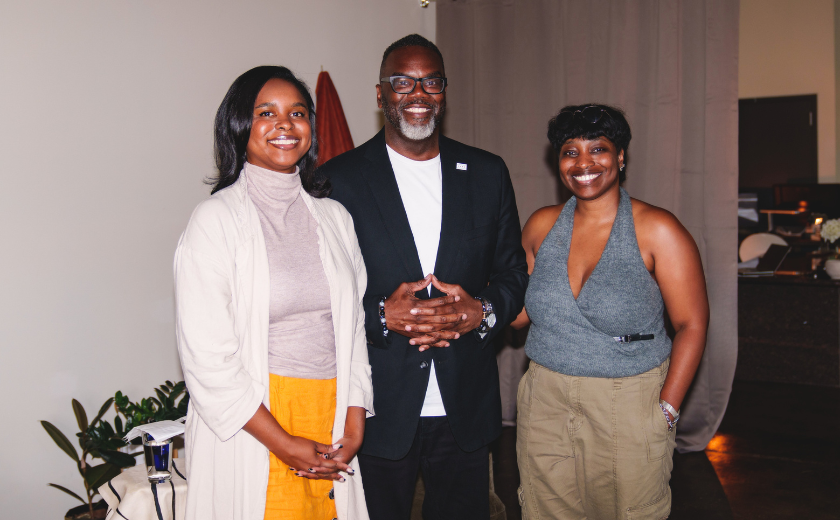
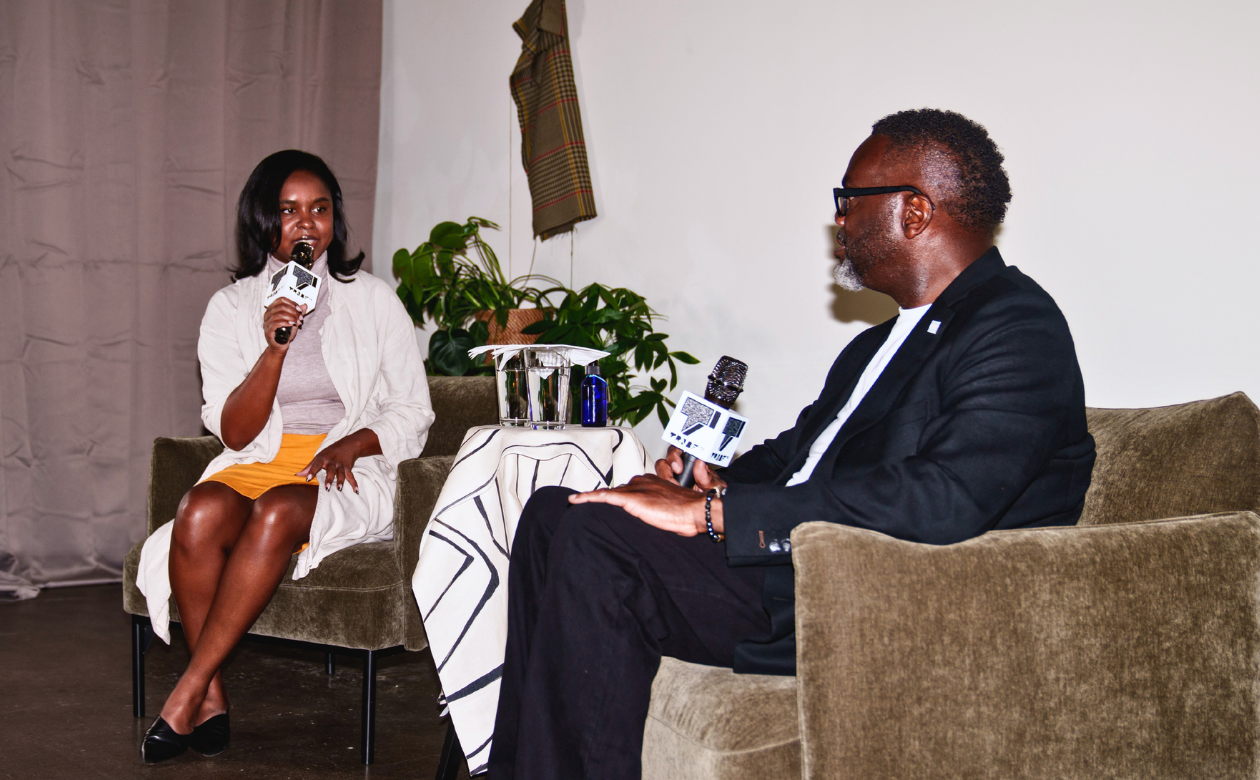
The keynote conversation began just after 12:30 p.m. with the arrival of Mayor Brandon Johnson. He sat down with TRiiBE Co-founder Morgan Elise Johnson for about 30 minutes, discussing his family history, faith, and how the city can begin to heal from the harms Black communities have experienced.
To start the conversation, Johnson asked the mayor to call on an ancestor to join the space. He called on his mother, Pastor Wilma Jean Johnson, who passed away at the age of 50.
Johnson then called on her late brother, Jimmie, who would have turned 50 that week. He passed away in 2018.
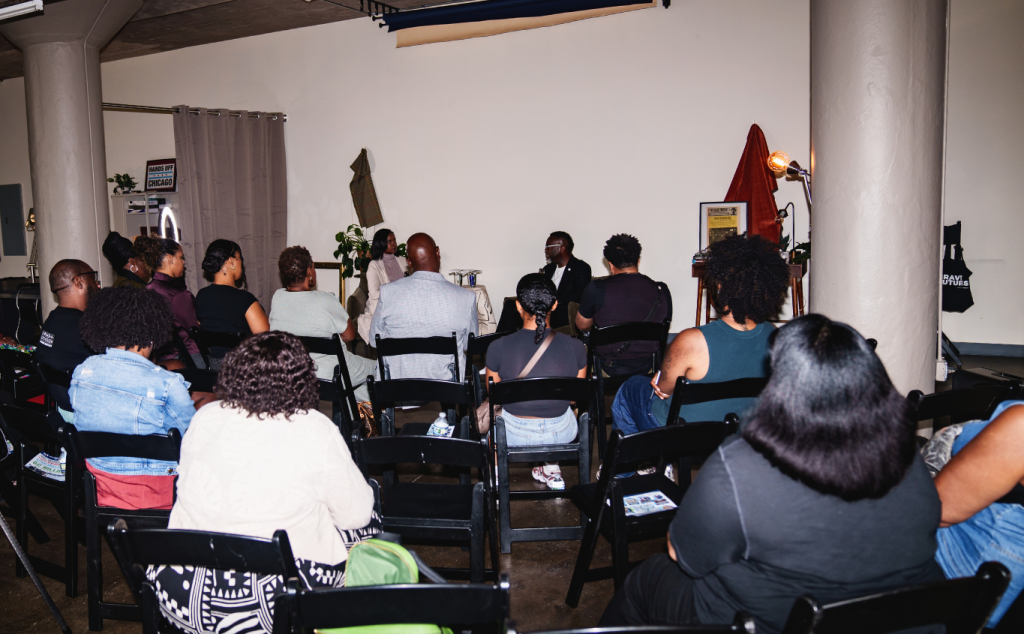
“I always start with Wilma Jean Johnson,” the mayor said. “My mother, she was my age when she became an ancestor. [She] died 50 years young, and was and still remains one of the key figures in me and my siblings’ life.”
Johnson reminisced about his mother, remembering how she used to organize the church food drive, and what she said to him the last time they spoke. “[To] take care of myself,” he said. “Because a healthy Brandon will allow for me to deliver healthy experiences for the people that would inevitably become my constituents.”
Johnson traced his family’s roots to Sallis, Mississippi, a small town about 70 miles northeast of Jackson. His father’s family lived there before joining the second wave of the Great Migration. His paternal grandmother established roots on Chicago’s South Side, specifically around South 79th Street and Ashland Avenue, before his father eventually moved the family to northwest suburban Elgin.
Faith was also a big part of Johnson’s upbringing. His father and grandfather were pastors. Additionally, his father was involved with the NAACP. Growing up in the church, Johnson said, taught him how to organize and serve his community.
“I don’t believe there’s a better way to develop as an organizer than being raised in the church, especially if you’re a pastor’s kid,” he said.
That upbringing eventually informed Johnson’s decision to raise his own family in Austin, a working-class Black neighborhood on Chicago’s West Side. Johnson said he and his wife of 28 years, First Lady Stacie Johnson, wanted to establish roots in a neighborhood that reflected the community-centered values they grew up with.
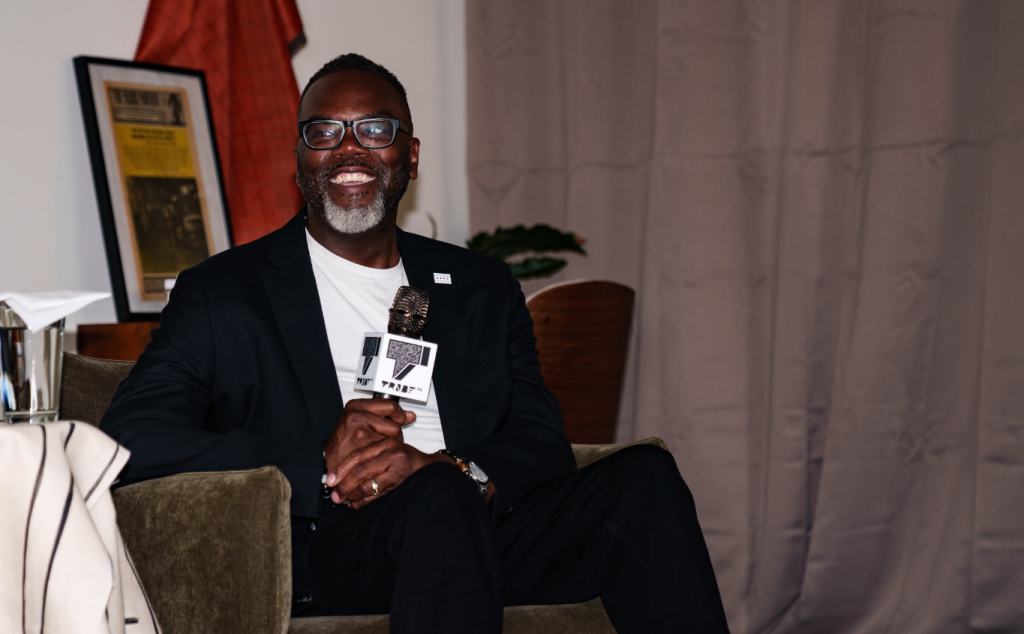
The mayor rattled off some of Austin’s best accolades. It’s the largest predominately-Black neighborhood in the country, he said. “Once upon a time, Austin had 100,000 residents. I believe we’re down to about 80,000,” he said.
“A community that once upon a time had a 100% employment rate. A community that has all of the main arteries that run through it, whether it’s Chicago Avenue, Madison, the Blue Line, the Green Line, 10-15 minutes to downtown, 10-15 minutes to the western suburbs,” Johnson continued. “I just believe [Austin is] the welcoming, the entryway, into the soul of Chicago.”
The conversation connected Johnson’s familial history to some of the systemic issues plaguing the West Side, including food access and environmental justice. Johnson recalled growing up in a large family where food was stretched across multiple meals.
“If we had spaghetti that lasted two days, I mean, we hit the jackpot,” he said. “I think those habits do speak to just the scarcity that we had, and like food was not just meant for living or eating to live, it was about survival.”
He pointed to efforts to expand access to healthy food and support Black-owned grocery businesses, like the new and Black-owned 40 Acres Fresh Market in his Austin neighborhood. The mayor also mentioned initiatives they’ve implemented to help people grow food: his administration launched The Good Food Fund in 2025, supporting food entrepreneurs in communities with inequitable access to food. They also just launched the Neighborhood Market Grant Program, which will provide up to $10,000 one-time grants to eligible food entrepreneurs and farmers market operators serving in communities with inequitable access to fresh food.
Given the stormy summer Chicago’s had this year, the conversation shifted to environmental harms such as flooding and the city’s aging infrastructure.
“The environmental justice nature of Black folks is just so innate,” Johnson said. “It comes from Black existence and survival.” His solution to the changing weather patterns include reestablishing the Department of the Environment, expanding the tree canopy through the Our Roots Chicago program, and building new and large underground drainage tanks, starting in the 37th ward, to keep intense rains from backing up into homes.
Public schools were another major part of the discussion, as Chicago is entering the election for its first fully elected school board. Johnson argued that schools should be viewed as community anchors rather than simply buildings measured by enrollment. With his Sustainable Community Schools Model, he plans to re-establish schools as the positive presence that communities need.
“It’s not just about simply thinking about how many children are in the building; it’s about how that building is being utilized as an anchor of the community,” he said.
The mayor also addressed police violence and the dark legacy of torture stemming from the Homan Square “black site,” uncovered in a 2015 Guardian investigation, that is used as an interrogation location by the Chicago Police Department.
“I have not visited this site. What I can tell you is that community safety through the lens of repair and harm, that’s a guiding principle for me.”
The conversation closed with a discussion of the city’s future and Johnson’s work as mayor. Asked whether he plans to seek reelection in 2027, Johnson joked, “OK, that’s all the time we have.” The crowd laughed. He then continued.
“I made a commitment to build the safest, most affordable big city in America, and the way we do that is by investing in people,” he said. “Do I believe there’s more work to be done? Absolutely.”
Sunday’s programming continued with workshops on archiving and digitizing Black Chicago with the Westside Cultural Archive, and estate planning with Westside Justice Center.
Acclaimed Chicago photographer Kenn Cook, Jr., an Austin native and founder of the Westside Cultural Archive, has been documenting and preserving the West Side’s history and culture. He recently published a coffee table book of photographs titled, From the Westside, With Love.
For Cook, the West Side is a beautiful, family oriented place filled with culture. “I think people are really rooted in wanting to help one another, build each other up,” he told The TRiiBE. “I want to really push back against some of the negative narratives. Mainstream media shows one story, and I lived there, so I see so much more.”