


The People is our section for opinions and perspectives. Submit your opinion to info@thetriibe.com.
Caregiving is Black America’s new health crisis. However, with proper planning, the stress and the financial tolls are completely preventable. Like many caregivers, podcast host, attorney and Westside Justice Center Executive Director Tanya D. Woods often went to bed dry crying softly into her pillow with the responsibilities of caregiving while struggling to make sense of her mother’s dementia diagnosis. Her mom, who transitioned May 2026, needed assistance walking and bathing, and fought to obtain the dignity she carried in earlier years. Attorney Woods was clear that the term caregiver was too sterile, too kind, too genteel, too civilized and too pristine. Black families are at an immediate disadvantage; given the myriad of professionals, support groups, neurologists, oncologists and social workers designed to help, many don’t look like us nor have expertise in culturally appropriate modalities. In Black families, caregiving is often a love letter — but is it also a burden that’s too heavy for one person to carry?
World Alzheimer’s Day was observed on Sept. 21. Chicago prepares to honor the day this Saturday, Oct. 3 at the 2026 Walk to End Alzheimer’s in Lincoln Park, where thousands of caregivers throughout the region will walk to bring awareness to the unique and specialized care dementia patients need and deserve. Among Black Americans ages 70 and older, 21.3% are living with Alzheimer’s, a type of dementia that affects memory, thinking and behavior. Black Americans are more likely than their non-Hispanic white counterparts to provide care for a family member and the constantly improving research, care plans, legal strategies, safe housing tools and facilities are becoming more and more complicated. Twice A Child Podcast was created to navigate the dark and shark-infested waters of caregiving with special sensitivities to Black families. The professionals and actual caregivers that are guests on the podcast share real-life stories and tactics to ensure our communities understand new tools and programs that are available and are prepared earlier in life to plan and save for family and self-care.
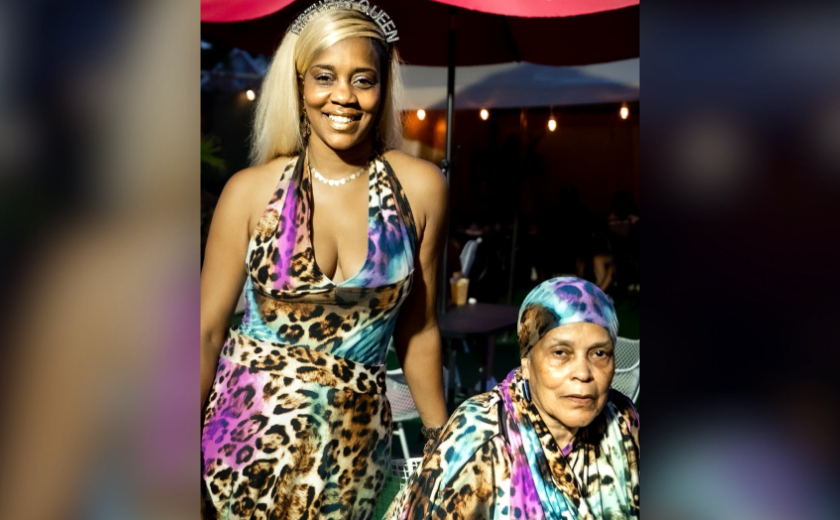
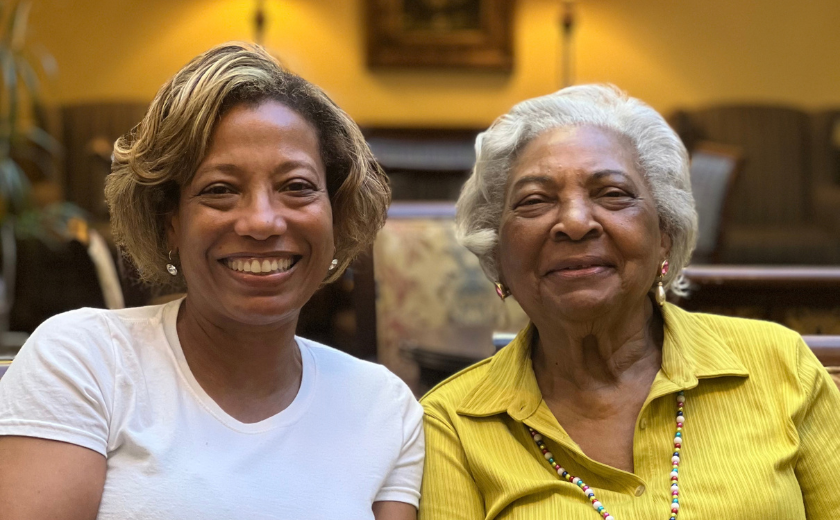
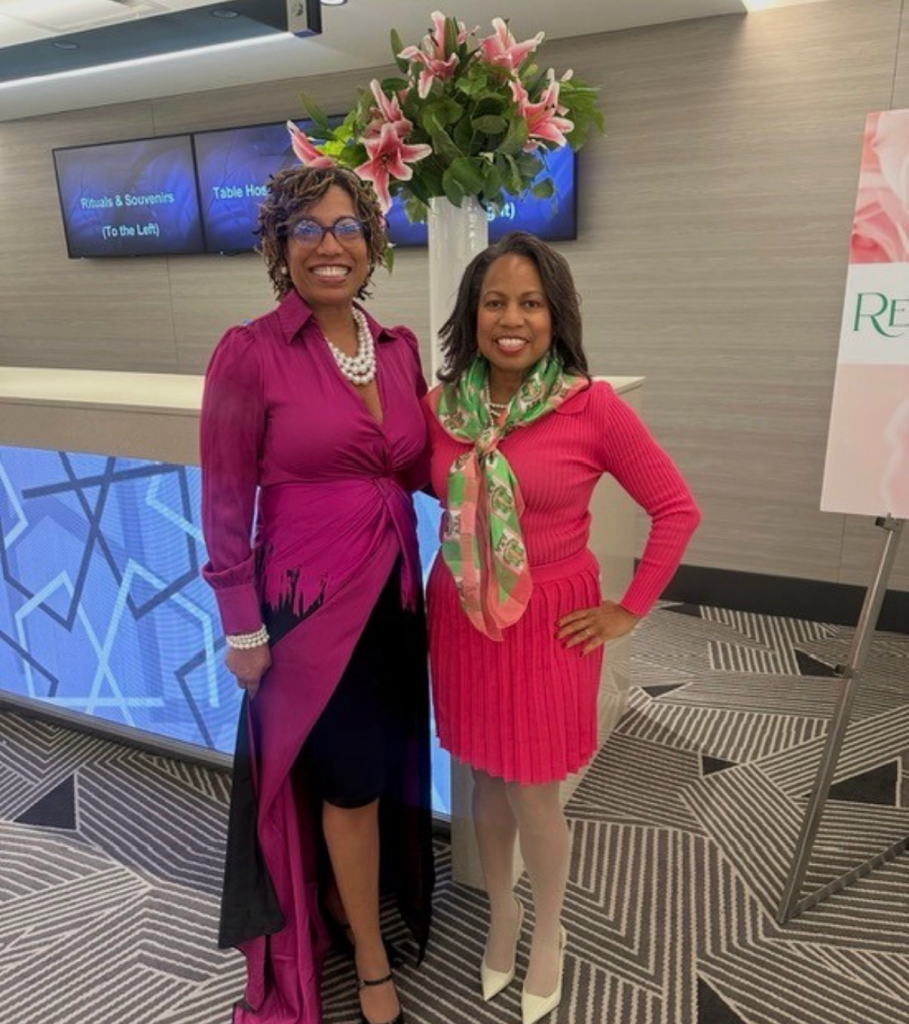
Twice A Child Podcast is created and hosted by former caregivers Attorney Tanya D. Woods and Real Estate developer Lauren Lowery who recognized the need for an outlet to transform the anxiety, frustration, and grief related to caregiving, into advocacy for themselves and others who they would soon learn were experiencing the same frustration.
Black caregivers often share that many caregiving-related expenses are not covered by insurance, including skilled and unskilled care, housing, consumable medical products, and durable medical equipment (DME). Some research even suggests that Black caregivers spend 34% of their household income on caregiving costs, highlighting the economic burden they face in comparison to the national average of 26%. Black caregivers are also more likely than non-Hispanic whites to quit a good paying job to care for loved ones, citing a dearth of affordable and quality care options as the reason. This outlook only worsens when we consider the current threats on Medicaid and other government supports.
Medicaid often supports family caregivers through long-term services and supports (LTSS) programs that allow kith and kin to be paid for the care they provide to family members they know, love, and trust. As of 2024, 47 states and Washington, D.C. allow payment to family caregivers for personal care services under various Medicaid-funded LTSS programs. These services typically include assistance with activities of daily living (ADLs), such as bathing, dressing, and eating, and some instrumental activities of daily living (IADLs), like meal preparation and medication management.
On Twice A Child Podcast, the hosts have intimate discussions with caregivers from the community who share their stories of what it was/is like for them caring for parents and loved ones with Alzheimer’s at different ages and stages of their lives. Our guests are men and women, spouses, children, and siblings of adults who suffered from various forms of dementia, maladies associated with old age, and cancer. Many of their loved ones also claimed co-morbidities which made caring for them that much more complex. Some families cared for family in their own homes, in the caregiver’s home, facilities, and various combinations in between. What is learned in these intimate settings is that most caregivers experienced, at one time or another, a sense of isolation, lacking information, having to manage relationships with health care professionals who lacked cultural sensitivity, plus had to cope with their own tenuous mental health.
A joint report by AARP and the National Alliance for Caregiving (NAC), considered the most comprehensive of its kind, concludes roughly 1 in 4 American adults are caregivers, with 59 million caring for adults and 4 million for children under 18 with an illness or disability. The report exposes the complex harsh realities of caregiving and takes it even further by highlighting the racial and gender disparities that plague our communities. For example, 66% of Black caregivers are women, providing an average of 31.2 hours of care per week and on average caregivers are 51 years old.
Nearly every American is touched by caregiving either directly or indirectly. Of course, many educated African Americans have legal and long-term planning in place to tackle family care. However, Twice A Child Podcast season one guests include attorneys, financial planners and physicians who confirm they, too, were caught ill-prepared for the responsibilities of caregiving. It is the latest in a long line of health crises that beset Black America. But this is an epidemic we can actually do something about.
Twice A Child Podcast encourages its listeners and viewers to plan for the future now. Learn and understand housing strategies, including both in-home and external care facilities. Study and implement the legal tools to protect yourself and your loved ones including guardianship, land trusts and health-care power of attorney. Know the differences, understand why it is important and discuss with loved ones as a team.
Join Twice A Child Podcast at the Walk to End Alzheimer’s on Oct. 3rd in Chicago and encourage donations for more research for Black Americans. Also, like, subscribe and share Twice A Child Podcast where episodes drop on all podcast platforms Tuesday mornings, and can be watched on our YouTube and Facebook pages.