

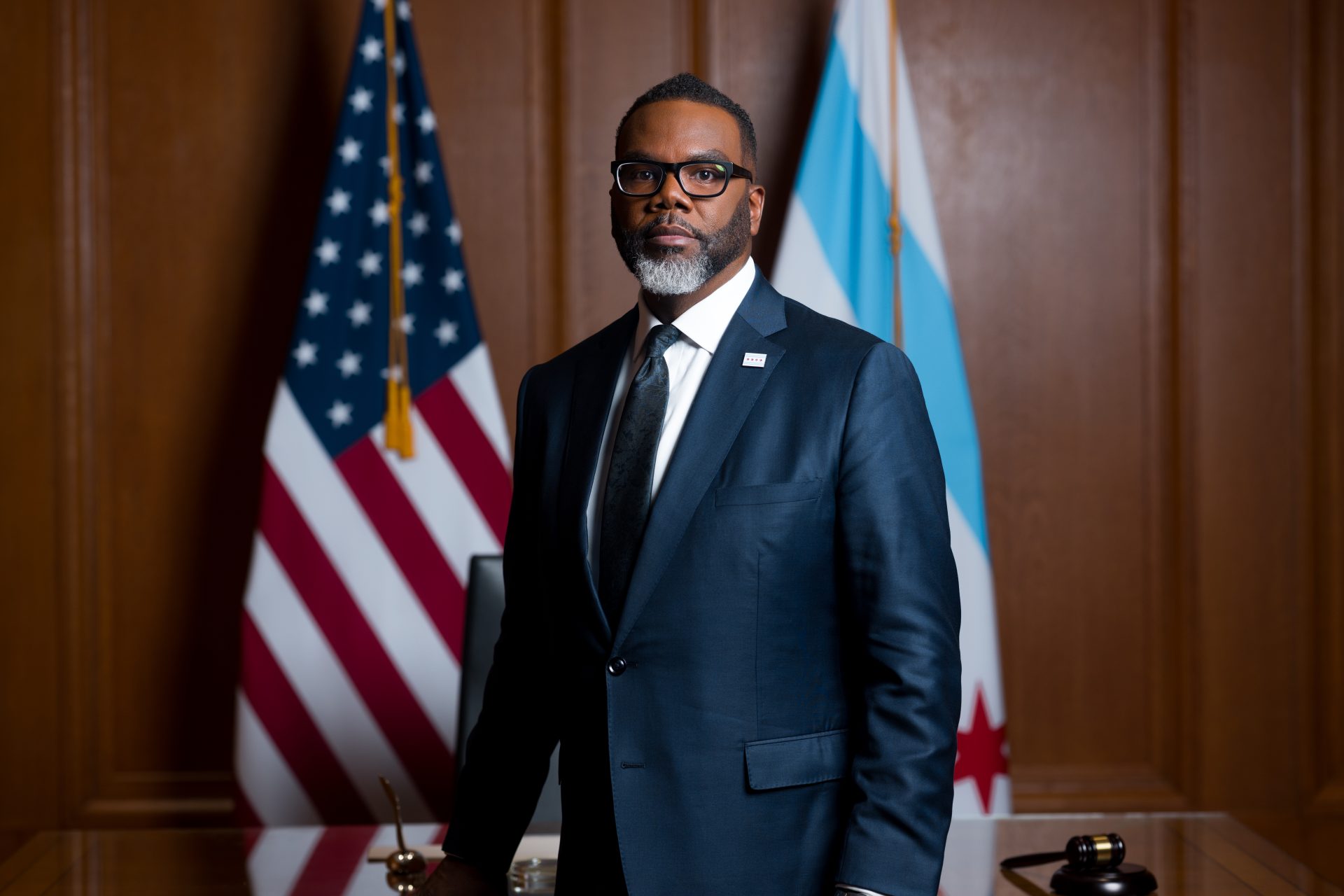
Angela Davis popularized the saying “freedom is a constant struggle.” In Chicago, we’re getting a first-hand look at how progressive governance is a constant struggle, too. Let’s go back to spring 2025, just before Mayor Brandon Johnson’s midterm anniversary. The mayor faced off against the Republicans of the House Oversight and Government Reform Committee, while being threatened with federal funding cuts — and even jail — for defending Chicago’s sanctuary status. The testy congressional hearing became the precursor for a fall season overwhelmed by President Donald J. Trump’s militia of masked and unhinged federal immigration agents raiding, teargassing, shooting and disappearing an incalculable number of people, U.S. citizens and immigrants alike.
Also, remember when Johnson warned Black Chicagoans about the “Elon Musks of Chicago?” They include the ultra-wealthy and their beneficiaries who, according to the mayor, dislike that he’s an anti-establishment politician looking to redistribute wealth and resources to some of Chicago’s most vulnerable communities. Then, sure enough, the city underwent a fiery 2026 budget cycle where Johnson and his supporters fought for a measure to tax the rich, a corporate head tax. Some of Chicago’s wealthy elite and business class fought back — and even some Black alderpeople voted in opposition.
Now, the mayor is reflecting on his three years in office. Because he was out in Los Angeles for a speaking engagement on May 19, he and I spoke on the phone. With only 25 minutes for the interview, the mayor talked up his accomplishments: historic lows in crime, new economic developments on the South and West sides, and youth jobs. He also shared some insight into challenges he’s facing in his fight for working people.
This interview has been edited and condensed for clarity.
Tiffany Walden: Mr. Mayor, how are you doing? It’s your three-year anniversary.
Mayor Brandon Johnson: I’m doing well. Thank you very much. Yes, I’m here in Los Angeles, about to make a public address with organizers and leaders across the country, describing how we stood up to authoritarianism and how we can continue to protect working people across our country.
Tiffany Walden: Los Angeles, Minnesota, Washington, D.C., and a few other cities experienced the same thing Chicago did last fall with the influx of Trump’s authoritarian immigration operation. What are you hoping to convey today in your message to Los Angelenos and Chicagoans, too?
Mayor Brandon Johnson: ––And to people across the world. Our movement is built on the backbone of organizers and coalition builders, grassroots organizations and understanding essentially that the government has to serve the many. That our movement is rooted in the belief that our collective struggle is bigger than a single election or a candidate. Our movement is built to endure. That’s the motivation that I’m hoping to drive [home], so that people remain committed as well as determined to protect working people across the country.
Tiffany Walden: Now, I’m curious. Are you anticipating another wave of federal immigration agents coming back to Chicago this summer and fall?
Mayor Brandon Johnson: For me, it’s about preparing. We can’t predict what this administration will do, right? But what we can control is making sure that people have access to the ballot [despite] the Voting Rights Act being gutted, as well as many of the dollars that help provide safe and affordable communities. We have to do our part to ensure that we’re challenging the ultra rich and big corporations to pay their fair share in taxes and again, continue to drive this message that our collective movement is built with a very firm belief that organizers and grassroots community-based organizations [are] the ones who drive power.
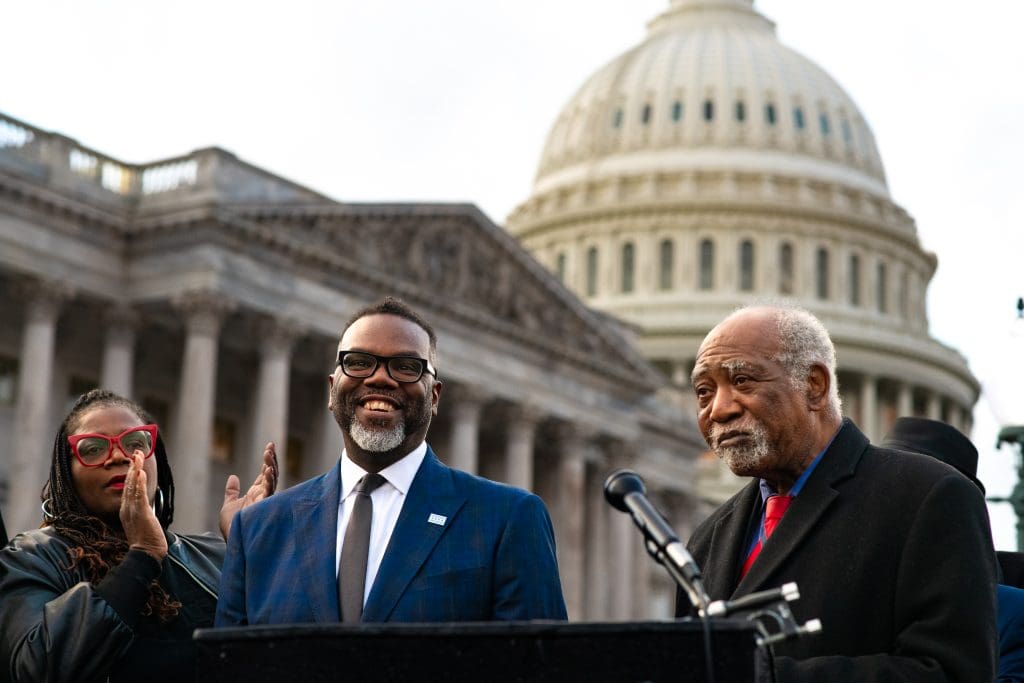
Tiffany Walden: One of the last times that we spoke, you were warning Black Chicagoans about the “Elon Musks of Chicago,” only for us to then go into the 2026 budget cycle where we saw some of Chicago’s most privileged and wealthy, like Michael Sacks and even Gov. J.B. Pritzker, stand in opposition to your proposal for the corporate head tax. What did that period teach you about this fight?
Mayor Brandon Johnson: I have a fundamental belief that government should work to protect working people, not the interests of corporations. I believe what this season has taught us is that the interests of corporations, they’re organized. They’re all in alignment and in agreement around protecting their wealth and their privilege. Whether it’s a digital ad tax, a millionaires’ tax, a billionaires’ tax, a corporate head tax, we’re talking about taxing the same entities that received the largest tax break from Donald Trump. So the Trump administration is protecting corporate interests. We have people, unfortunately, in the state of Illinois who are doing the same.
That fight has to remain vigilant and determined to prevail because it is most certain that the corporate elite will see past their own ideological differences if it means protecting their pocketbooks.
Tiffany Walden: Are you speaking about folks who typically have aligned with the Democratic Party and may be wealthy but they just forgo all of that to move in the interest of protecting their money and their wealth?
Mayor Brandon Johnson: Well, what you see is that those with means and those who have, they want more, even if it means the rest of us suffer.
Tiffany Walden: One of the most challenging things out of that 2026 budget season was watching some of our Black leadership vote in alignment with protecting those interests. What would you say, as mayor, are some of the most challenging parts of trying to get the votes and allies needed to overcome this issue? How do you get everyone on the same page?
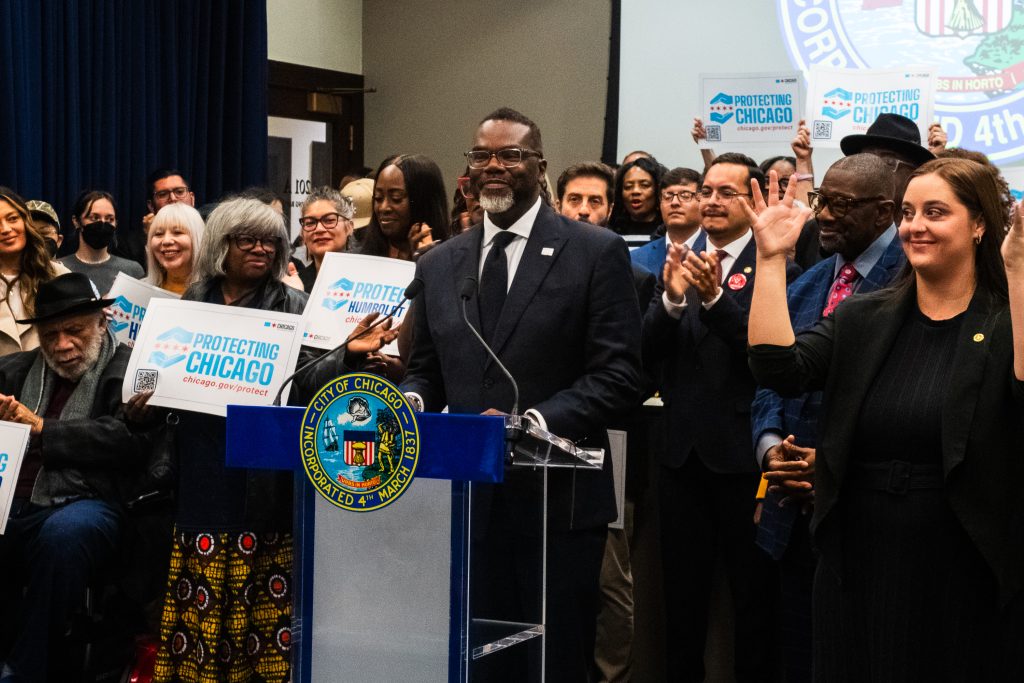
Mayor Brandon Johnson: That is the work, right? The first thing that I have to do is to establish a vision, and my vision has always been clear that Chicago is trying to work for working people. Period. Building the safest, most affordable big city in America really requires us to infuse historic investment. We’ve done that.
I’m working with City Council and elected leaders across [all] levels of government with this idea that we have to reject the politics of division. The politics of division work overtime to pit communities against one another, while the wealthy continue to consolidate their power. We have to help people see who the opposition really is and who benefits from our divide. That is the work — and that’s not something that’s unique to my time in office. I mean, this is an historic challenge.
Tiffany Walden: You went down to Springfield recently to lobby for a similar progressive revenue from a payroll expense tax on large businesses. Can you share more about what that is and particularly why Black people need to pay more attention to what’s going on in Springfield? That’s something we’ve been talking about at The TRiiBE for a few months now.
Mayor Brandon Johnson: Yeah, and thank you for that work. The State of Illinois has one of the largest budgets in the world. The amount of revenue that comes through the state to our municipality, it’s not feeding families, it’s not housing families, it’s not addressing fragility the way it needs to, quite frankly. This is a challenge all over the country. Every single state, every single city, county will have to look at ways in which we can drive revenue and not burden working people.
So it’s a couple of ideas: the billionaires’ tax [and] the digital ad tax. We passed, as you may know, the Social Media Amusement & Responsibility Tax (SMART). It’s a tax on big tech companies. It’s been well-documented that these big tech companies have created a great deal of pain with our young people by causing addiction on social media, and so that revenue will go directly to mental and behavioral health. I’ve worked hard to expand mental [and] behavioral healthcare across the city. The governor has proposed a similar tax, so he is following my lead.
With the particular tax that you referenced, the best way to tax corporations and businesses is on their revenue, and this particular [payroll expense] tax would assess the revenue that these corporations secure and create a more equitable structure for taxing that revenue.
Tiffany Walden: You mentioned in your answer that Gov. Pritzker is following your lead for SMART. I peeped that when I went to Springfield for Pritzker’s 2026 budget address. I don’t see the governor give you credit when they may be working on something similar in Springfield to what you’ve done in Chicago. Do you want credit for what you’re achieving in Chicago? Do you want people to know when you’re leading progressive revenue ideas that influence others in the state and country?
Mayor Brandon Johnson: It’s a great question. I mean, first and foremost, I want Chicago to win. Here’s the thing. Whether it’s the governor or other state electeds, they’re bragging about Chicago. That’s a good thing, right?
Rev. [Jesse] Jackson said something [like] this years ago. Politicians like to take credit, but leaders take responsibility. It’s more about me taking responsibility because building safe and affordable communities across our city, particularly on the West and South sides, that is my focus. People say, “Well, why do you focus so much on the West and South sides of Chicago?” Knowing the role that Black voters play in securing labor rights, civil rights, immigrant rights, taking Black folks out of the equation undermines healthcare, education, housing, transportation. The Trump administration knows that. Right-wing extremism knows that.
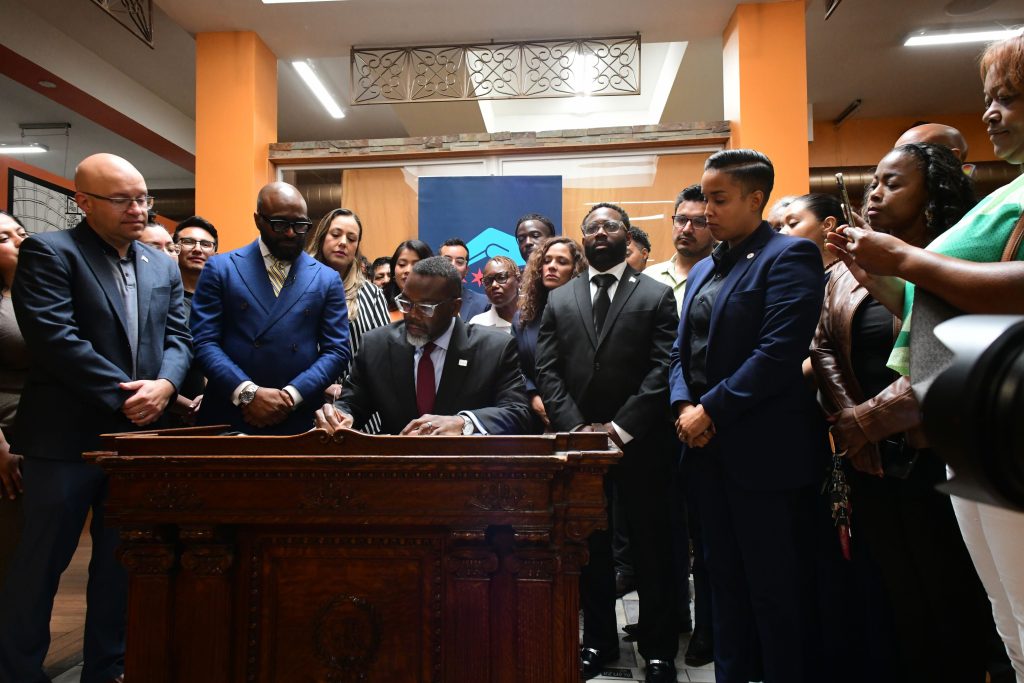
Tiffany Walden: On that note. There’s a lot of Black leadership in Chicago and in Illinois right now. You’re a Black mayor who lives on the West Side. That’s historic on its own. In your three years in office, what do you see as the barrier to redistributing wealth to Black communities, rebuilding and restoring our communities?
Mayor Brandon Johnson: Honestly, and I’m just being perfectly frank here, it’s fear. That fear of our success from those who have had unfettered access to power, that’s something that we have to confront and deal with. Folks will lash out. They will accuse me of things, right? They will come across defensive and angry. They will make accusations that really are more of an admittance of their own insecurity, right? And they will raise money to try to undermine me or dog me out, even though there’s no mayor in the history of this city that can say that they oversaw the city with historic violence being low, and with more people visiting our city than any other time in the history of Chicago. We should walk in that power — and that’s not just my power, that’s our collective power. Right now, Black political power is overseeing the city at a time in which more people are visiting. We have not had population reduction in the last couple of years. Our [O’Hare airfield] is the busiest in the world.
We have economic development happening on the South Side of Chicago, where we are building a hospital [Advocate Health Care] that hasn’t happened in 100 years. That’s a $300 million investment. The 1901 Project on the West Side, which is guaranteeing at least 20% of homes to be affordable. The 78, that land sat desolate through multiple administrations, and now we’re building a brand new [Chicago Fire FC] soccer stadium. Lincoln Yards, that sat desolate for multiple administrations: [thousands of] units are being built there, Foundry Park. And our young people are receiving jobs through my administration.
You’re seeing economic development all along Madison Street, all along Chicago Avenue. If you just drive down Chicago Avenue, you’re going to see multiple projects with Black developers and Black contractors. Same thing on Madison Street, same thing in Englewood. Our people are advancing in this moment.
Tiffany Walden: One of your biggest accomplishments since inauguration is that crime is down. And something I’ve noticed is that you’re being really intentional about being around not only other Black men but Black boys as well. Can you talk to me about what you’re doing as mayor to reduce crime in Chicago?
Mayor Brandon Johnson: It’s the full force of government. It’s not policing alone, right? We did revamp our detective bureau so that all of our departments were communicating with one another inside the police department. As a result, we have seen a clearance rate that has reached 72-75%. So we’re solving violent crime. These families who’ve experienced violence, to get some level of closure, we have to hold the people accountable that wreak havoc in our community.
The second thing, though, is investing in our young people. Young people have to know that they are loved and seen and valued, and if we don’t help them find their purpose, they’re going to go seek it somewhere else. We’re [seeing] the largest investment in our public schools with the TIF surplus — half a billion dollars [for] building sustainable community schools.
We’ve also invested in mental and behavioral health care. We just expanded the Crisis Assistance Response & Engagement (CARE) program for when there’s a mental health crisis in this city. No matter where you are, there is a paid behavior mental-health crisis professional that can show up.
And then, it’s our community violence intervention (CVI) workers. These are individuals who’ve been justice-involved, and now they are giving back to their communities that they took from. In areas where you’ve seen CVI operate, we’ve seen [crime] reduction as high as 45 to 50% and then violence going down overall.
It’s policing and mental-behavior healthcare. It’s policing and investing in our young people. It’s policing and investing in our public schools, building affordable homes and making sure that our CVI workers are fully supported. That’s why we’re able to see some of the success that we’ve experienced — that other administrations were afraid to do. We can be the solutions for problems that’s been created by failed systems. If you actually trust and allow our people to lead, you’ll see great results, and so far we’re moving in the right direction.
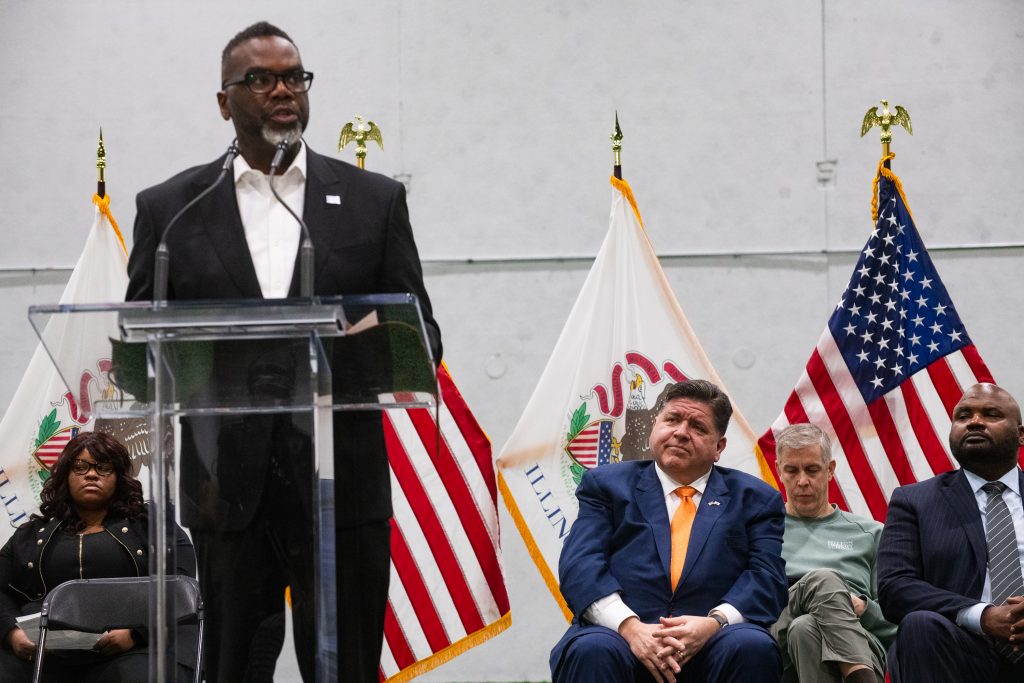
Tiffany Walden: I know you’ve got to run, but I would be remiss if I didn’t ask about the Chicago Bears. You’ve been down in Springfield lobbying to keep them in Chicago. Gov. Pritzker is acting like you haven’t been trying to keep the Bears in Chicago from the get-go. What is he doing when he says things like, “The mayor has no plan,” to the media, and then that becomes a soundbite that’s running viral on social media right now?
Mayor Brandon Johnson: The Bears belong in the city of Chicago, right? That position has been very clear, so much so that they believe that as well. That’s why the Bears invested $20 million into developing a plan that would have a publicly owned stadium [in Chicago]. We’re the only city, I’m the only mayor in this state that has presented a plan in which it would be a publicly owned stadium. That’s the difference. What’s being considered elsewhere, it would be detrimental to taxpayers.
There’s a lot of concern about the fact that, at a time in which affordability is the No. 1 issue in this country, certainly in the state and city of Chicago, that right now the General Assembly is contemplating giving property tax relief breaks to a big corporation. Right now they don’t pay property taxes because the stadium that they play in right now is publicly owned.
So what we’ve said from the very beginning, there should be a public benefit and a public use. Bears were committed to putting 72 to 75% of their own money into a stadium in which the taxpayers would own, and that other 20 to 25% will be paid for through the hotel tax, which is through a mechanism called ISFA [Illinois Sports Facilities Authority], which was put in place by Mayor Harold Washington. The only thing that that tax revenue does is build stadiums. Essentially visitors and the billionaires would pay for a stadium that the people of Chicago would own, and that is the only viable plan.
Tiffany Walden: Mayor, last thing. What do you want to say to Black Chicago specifically about this period we’re in. I know you haven’t announced if you’re running for mayor again in 2027, but what do you want Black Chicagoans to know, to understand, and to pay attention to right now?
Mayor Brandon Johnson: Let’s own our power, collectively. The late, great Rev. Jesse Jackson always reminded us that when we’re united, we can’t be denied.