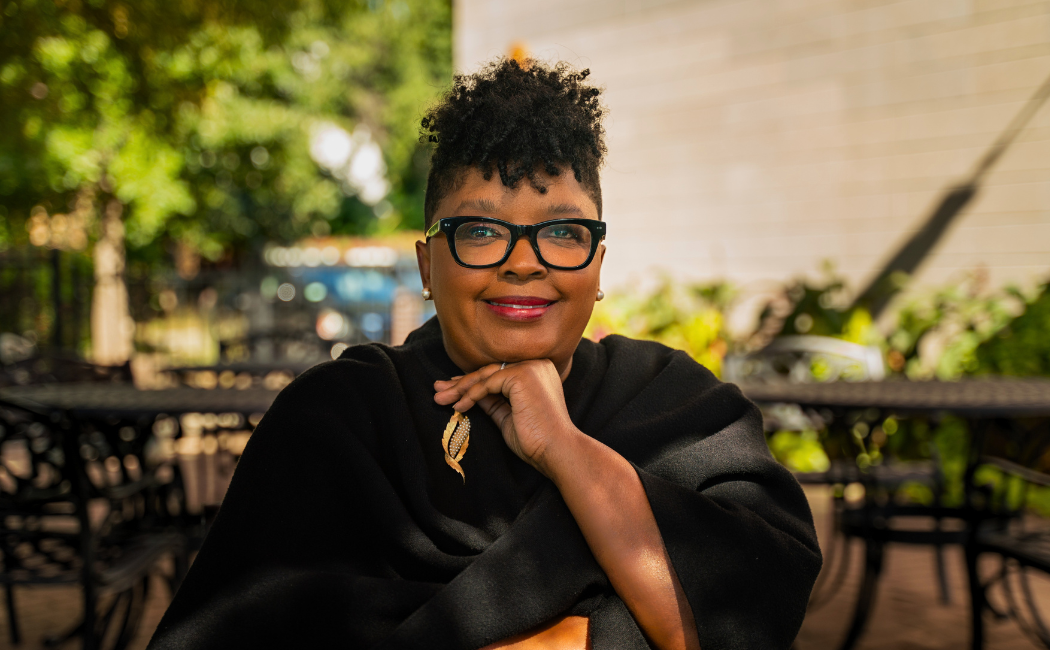
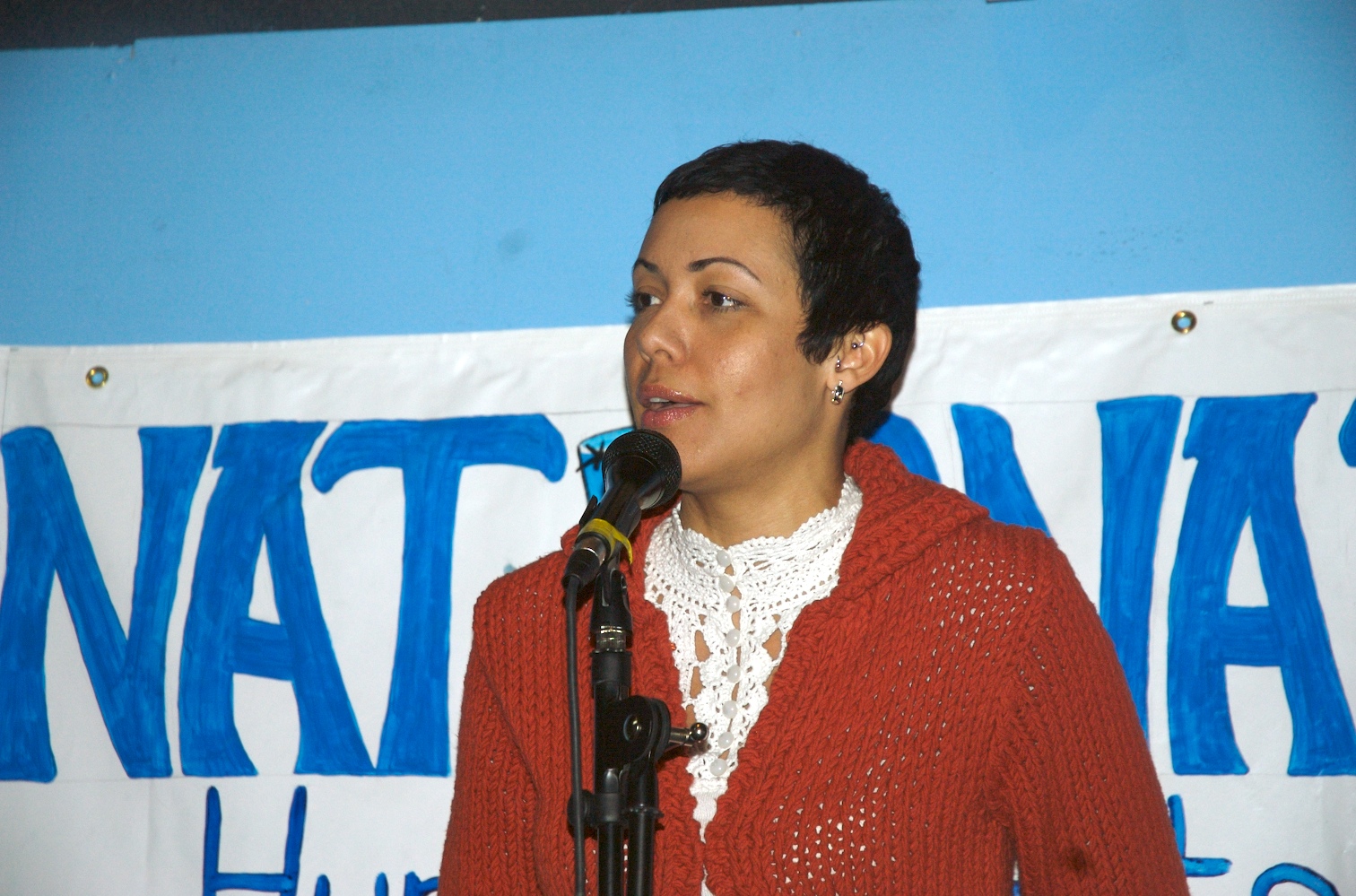

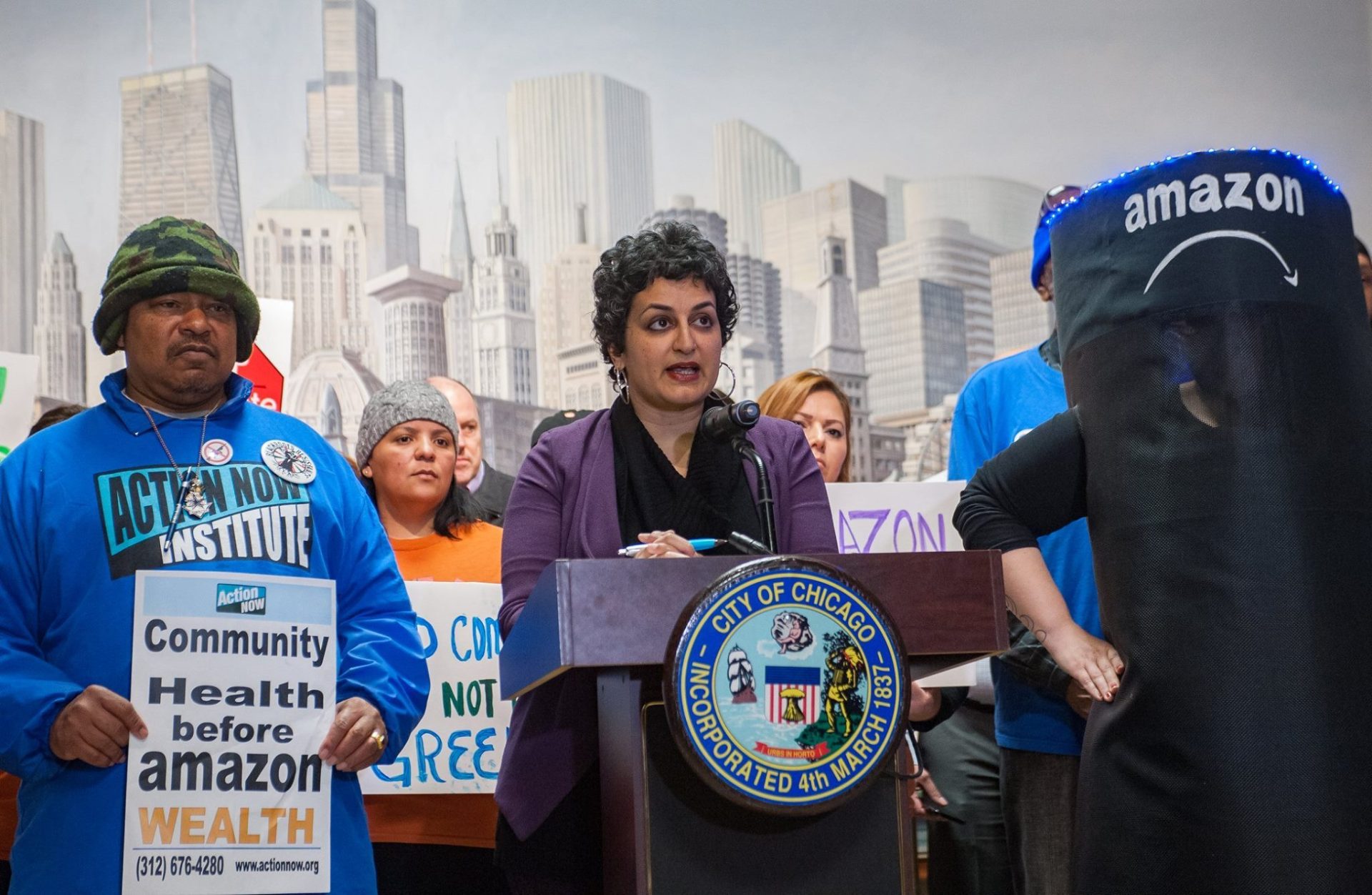
Amisha Patel dedicated her life to moving communities toward justice, dismantling systems of oppression, connecting human beings to each other, and inspiring radical solidarity. To know her–even to meet her–was to be transformed.
Amisha loved hard, and leaves behind a vast community. She is survived by her wife Neena Hemmady, her mother Kusum Patel, her children Ayush Hemmady-Wright and Varsha Hemmady-Wright, her brothers Nitin Hemmady (Weiwen) and Amit Patel (Vaishali), and her niblings Vishal Patel, Meridith Embry, Sahil Patel and Anishi Patel, as well as a large chosen family and a long line of co-organizers who’ve learned from her and struggled alongside her. Amisha is preceded in death by her father Arvind Patel.
Amisha was born in Chicago in 1975, and moved to California at 18 for college. At 19, she got her first taste of community organizing, working with other students to found an environmental justice organization focused on youth of color, joining together to fight a toxic waste facility in East Palo Alto, California. Amisha writes of this campaign, “It was my first experience connecting my individual sense of power to growing collective power.”
Growing collective power became Amisha’s life’s work, battling oppression through forging connections and building solidarities. After graduation, she became involved in South Asian LGBTQ justice organizing, and spent years leading arts-based prevention programming to end violence against women.
When Amisha moved to Chicago, she proceeded to take it by storm – and, to quote Andrea Gibson, one of Amisha’s favorite poets, “by sunshine, by rosewater, by the cactus flowers on the side of the road.” She organized hospital employees and Head Start workers, helping them unionize. She worked with the Service Employees International Union (SEIU) Local 73 to build power across sectoral, racial, and class lines. She supported a statewide campaign for driver’s licenses for immigrants and a Chicago ordinance demanding a living wage for employees of big box stores.
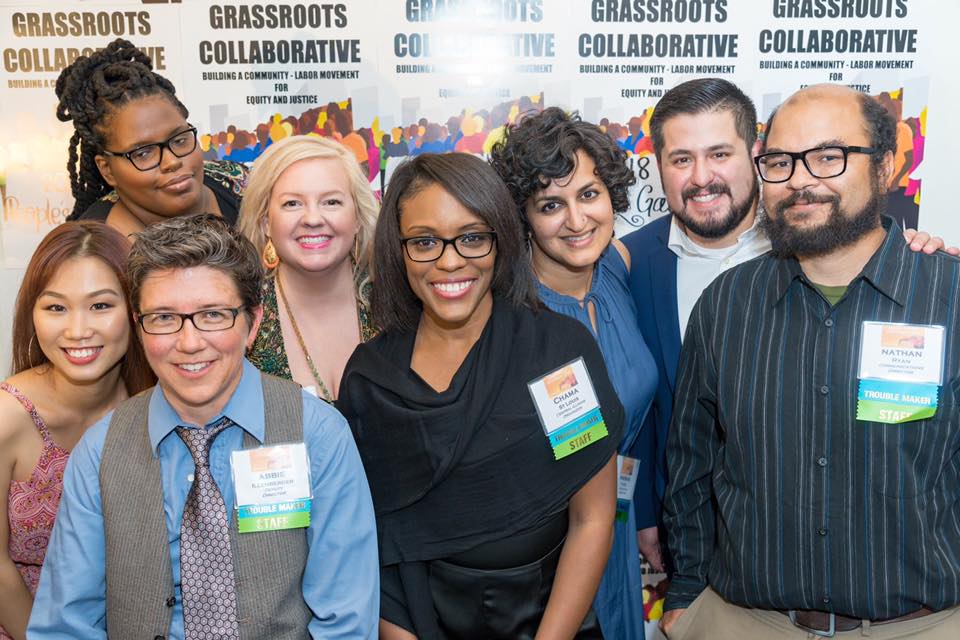
In 2007, Amisha brought her spirit of radical connection-building to her role as executive director of the Grassroots Collaborative (GC), a coalition of organizations committed to building community power toward economic and racial justice. Throughout the next decade and a half, Amisha led GC in a series of large-scale campaigns that achieved tangible wins for working people–and dramatically transformed the horizon of possibility for organizing in Chicago. Her unwavering commitment to racial and economic justice, alongside her deep emphasis on popular education to build a shared political analysis, allowed activists to nurture strong relationships across organizational and neighborhood lines.
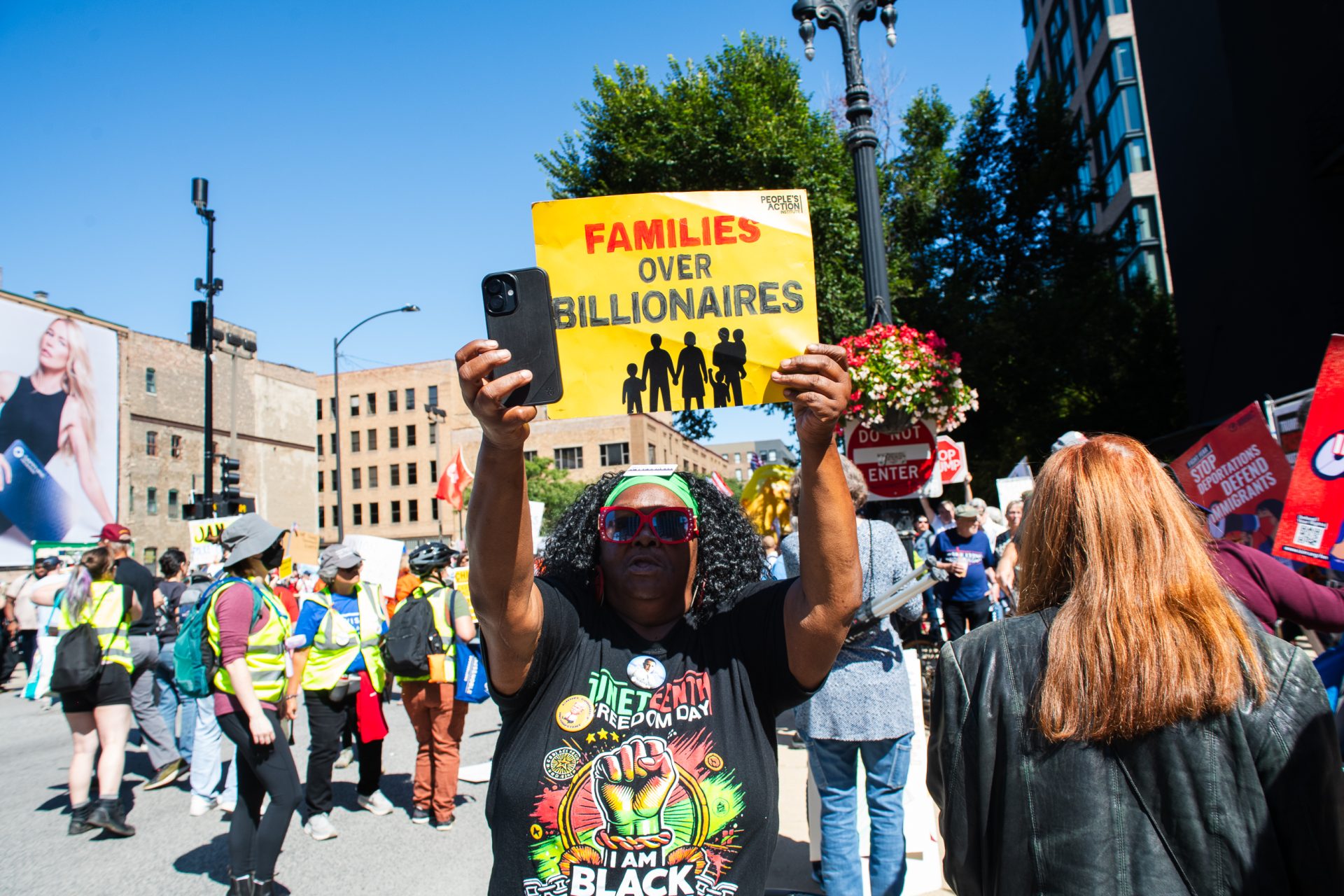
In 2009, Amisha co-led the official launch of the long-running fight to tax the wealthy in Illinois, challenging efforts by the legislature to cut back on critical social services. The campaign organized 9,000 Illinoisans to converge on the state capital, while others joined more than 100 protests spread across the state, demanding a budget that prioritized Illinois’s most crucial social programs. Amisha coordinated a hunger strike in Springfield, calling the people of Illinois to look stark inequities in the eye–and to feel empowered to act against them.
Amisha delighted in making organizing fun. She brought art, props, and political theater strategies into the work. An artist herself, Amisha used visual tactics like a spray-painted “Golden Toilet” to call attention to the Chicago Board of Trade’s request for millions of taxpayer “TIF” funds to rehab their bathrooms. She and her team held a “Bake Sale for Billionaires” outside the Chicago Mercantile Exchange Headquarters, suggesting that if the world’s biggest futures trading center was pursuing public tax dollars that were originally intended for low-income communities, they must be really struggling. The effort succeeded–the Board of Trade returned those subsidies! Other wins quickly followed, resulting in CNA Group, Bank of America, and United Airlines all returning their corporate handouts.
As public school administrators across the country became enamored with privatization and began diverting public school funds to corporate-run private charters, Amisha led her organization in fighting back. From the game-changing Chicago Teachers Union strike of 2012, in which GC provided coalitional backup to fortify that successful struggle, to the campaigns to stop school closings and limit charter schools and vouchers for private schools, Amisha challenged privatization at every turn, with clear-eyed strategy and her full heart.
Throughout her organizing Amisha had an amazing ability to bring people together. She helped convene large-scale public gatherings that brought together communities across neighborhood and racial divides to reimagine what democratic participation could look like in Chicago, from the massive “People’s City Council” to packed Mayoral forums. She played a key role in coalitional efforts such as Take Back Chicago, advancing a vision of multiracial, working-class power.
In 2014, Amisha co-led a coalition that successfully out-organized then-Mayor Rahm Emanuel to win a City Council ordinance to raise Chicago’s minimum wage to $13/hr by 2019.
During the historic two-year budget impasse caused by Governor Bruce Rauner, Amisha was central to coalescing organizations across Illinois into a united force to defend public services and workers’ rights – and force Gov Rauner to back down and fund our communities. In 2019, Amisha led a coalition lawsuit and public campaign against the Lincoln Yards development which would take more than $1 billion from Chicago, including our parks, schools, and libraries – to pay for luxury development.
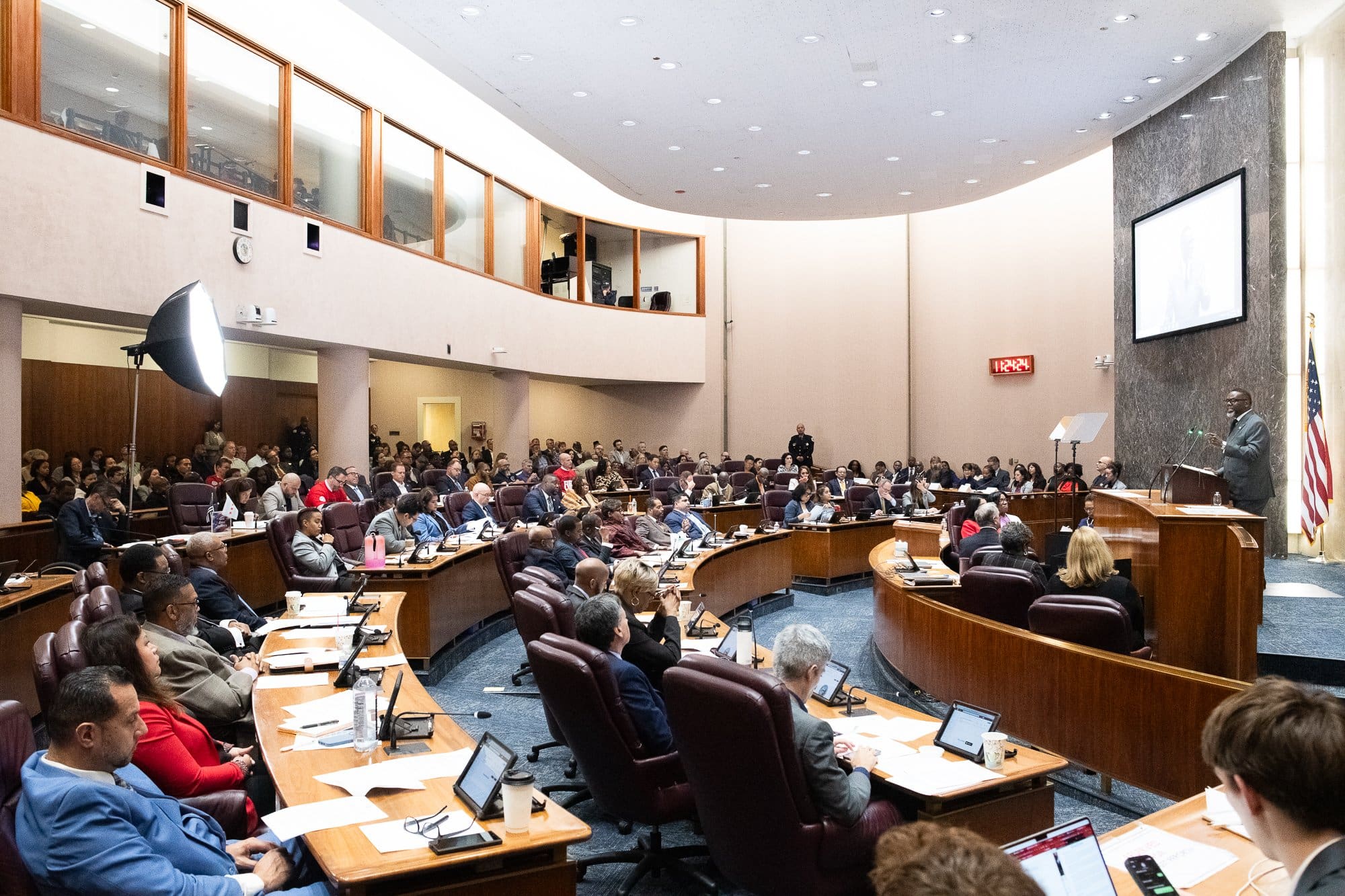
Over and over again, Amisha showed that by working together, communities can win the resources we all deserve. Along those lines, Amisha helped lead Reimagine Chicago, a broad coalition effort that defined a multi-issue platform to transform Chicago into a city in which Black, brown and working class families could thrive – this platform was foundational to the platform that united Chicagoans behind Mayor Brandon Johnson’s 2023 mayoral campaign.
Amisha thought every day about building power – in fact, the one time she got Wordle in one try was the day the word was “power” – and she joined and launched coalitional efforts strategically to further that goal. Amisha helped launch the Bargaining for the Common Good organizing model, and served on Bargaining for the Common Good’s founding Executive Committee–advancing the practice of joining unions, community groups, and other organizations together in shared struggles for economic justice. She helped elevate this groundbreaking model nationwide.
With leaders from across Chicago, Amisha launched Grassroots Illinois Action (GIA) to build independent political power for working people. GIA united people to elect state and local officials who would push back against the disinvestment and harmful policies that were closing our mental health clinics and our schools and pushing us out of our neighborhoods. Under Amisha’s leadership, GIA helped elect progressive champions who raised the minimum wage, placed a moratorium on school closings, protected renters during COVID and much more. Amisha also co-founded the United Working Families independent political organization whose goal is to elect more progressive candidates to local, state and national offices. Amisha’s contributions were instrumental to the victories of Democratic House Rep. Delia Ramirez and Mayor Brandon Johnson.
When Brandon Johnson won the mayoral election, Amisha served as a senior advisor for his transition committee. She also campaigned for other progressive candidates for public office, always combining her talent for creative strategy and deep political analysis with a relentless commitment to relationship-building.
While growing coalitions and winning campaigns in the public eye, Amisha was also building strong community and deep connections in her personal life. Those practices included joining a peer counseling community built around an equitable give-and-take of listening and sharing, and a deep focus on collective liberation. Her engagement with her class of peer counselors, primarily made up of Black and Asian Chicagoans, helped fortify her for the often-ruthless work of labor organizing, amid a status quo of near-constant crisis. In addition to counseling, Amisha knit a wide network of friends and chosen family, linking them to each other and fostering a sense of community that spanned the city and beyond.
Over her decades of organizing, Amisha has received many honors, including Crain’s Chicago Business 40 under 40 award, and has been published in Crain’s Chicago Business, The Forge, In These Times, Truthout, and the Chicago Sun-Times. Among other pieces, she published two articles that provide a concrete vision for our future organizing: “Lessons from Chicago Coalition Building” and “Fighting Cancer Has Given Me New Insights on the Anti-Fascist Challenge We Face.” Amisha’s social justice-driven art graces the offices and homes of organizers around the country. However, beyond any award or honor, some of the most meaningful accomplishments of Amisha’s life were the disruption of systemic injustices, the policies and practices she helped transform, the shared political analyses she helped cultivate and grow, the new leaders that she supported in finding their power, and the enduring relationships she built–among people, organizations, and movements.
The last project Amisha worked on was helping to build a broad-based coalition to defeat authoritarianism. She organized until her last days in mortal form. Carrying on Amisha’s legacy means continuing this crucial fight.
How can you support Amisha’s legacy? One important step you can take is to donate to the Amisha Patel Arts and Organizing Fellowship, a brand-new program housed at Grassroots Collaborative. This project will nurture efforts that join art and activism, carrying on Amisha’s unique project of using artistic strategies to win campaigns, grow movements, and build lasting power. As Amisha taught us, “Our creative power is at the center of our organizing for justice and liberation. Hope is creative.”