


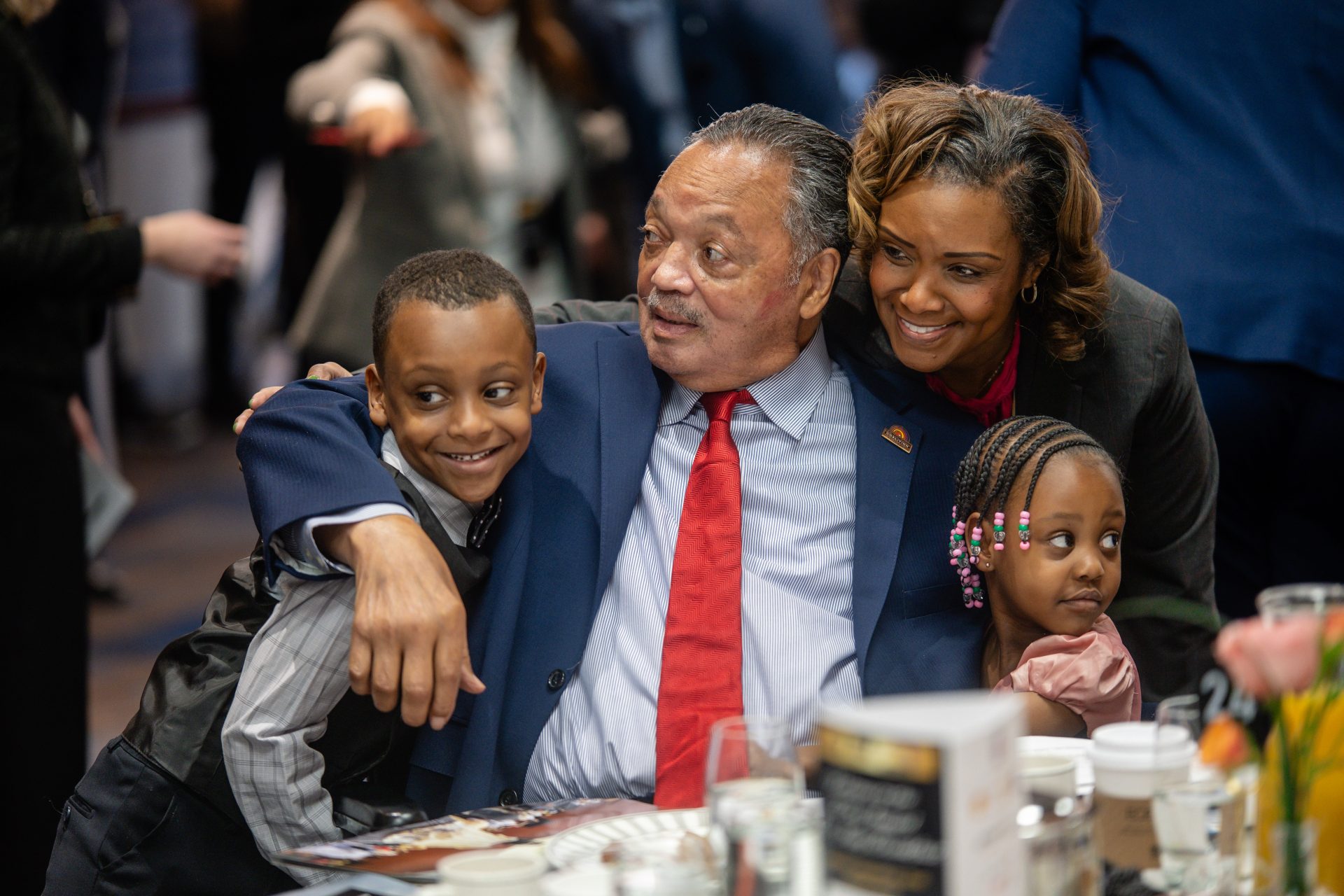
Rev. Jesse L. Jackson, Sr. defied the odds. Born in the Jim Crow South, Jackson came to the attention of Rev. Dr. Martin Luther King Jr. through his organizing in the student movement of the 1960s. King later tapped him to lead a political movement in Chicago.
Jackson carried the tools he gained as a student organizer in the South and built a national Rainbow Coalition that shaped the model for building progressive Black collective power.
“From Fannie Lou Hamer in Atlantic City in 1964 to the Rainbow Coalition in San Francisco today; from the Atlantic to the Pacific, we have experienced pain but progress as we ended American apartheid laws, we got public accommodation, we secured voting rights, we obtained open housing, as young people got the right to vote” Jackson said to an adoring crowd during his speech at the 1984 Democratic National Convention. “We lost Malcolm, Martin, Medgar [Evers], Bobby [F. Kennedy], John [F. Kennedy] and Viola [Liuzzo]. The team that got us here must be expanded, not abandoned.”
Jackson, who died peacefully Tuesday morning at 84 years old, was one of the most influential Black political figures since King. His historic presidential runs in 1984 and 1988, though unsuccessful, propelled him onto the national stage and inspired a new generation of political leaders, particularly Black political leaders.
“My constituency is the desperate, the damned, the disinherited, the disrespected, and the despised. They are restless and seek relief. They’ve voted in record numbers. They have invested faith, hope and trust that they have in us. The Democratic Party must send them a signal that we care,” Jackson said in his 1984 speech.
Historian Lionel Kimble said Jackson’s civil rights work and presidential campaigns in 1984 and 1988 were crucial in preparing the U.S. for a future Black president. Jackson lived long enough to see his work come to fruition with the 2008 election of President Barack Obama.
“Even though [Jackson] didn’t win the nominations either of those times, the importance was that he gave a voice to the people who were so far removed from the center of politics that we needed,” said Kimble, an associate professor of history at Chicago State University.
Jackson was surrounded by family when he passed away on Tuesday. He had been living with Parkinson’s Disease since 2013, but his diagnosis changed to progressive supranuclear palsy (PSP), a neurological disorder, in April 2025. Jackson spent time in the hospital last November. At the time, his family said he battled several infections consistent with the progression of his PSP diagnosis.
“Our father was a servant leader — not only to our family, but to the oppressed, the voiceless, and the overlooked around the world,” the Jackson family said Tuesday after his passing. “We shared him with the world, and in return, the world became part of our extended family. His unwavering belief in justice, equality, and love uplifted millions, and we ask you to honor his memory by continuing the fight for the values he lived by.”
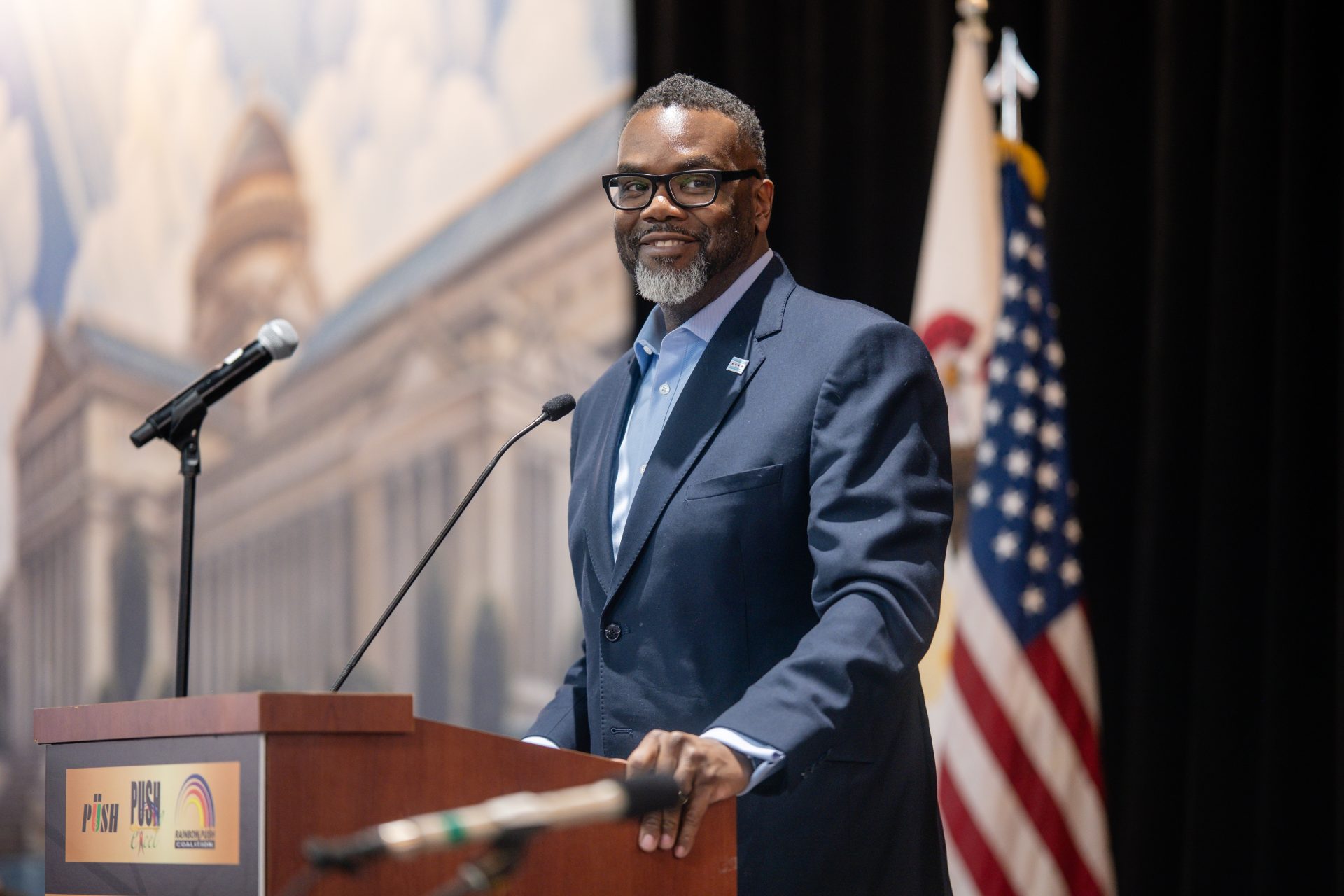
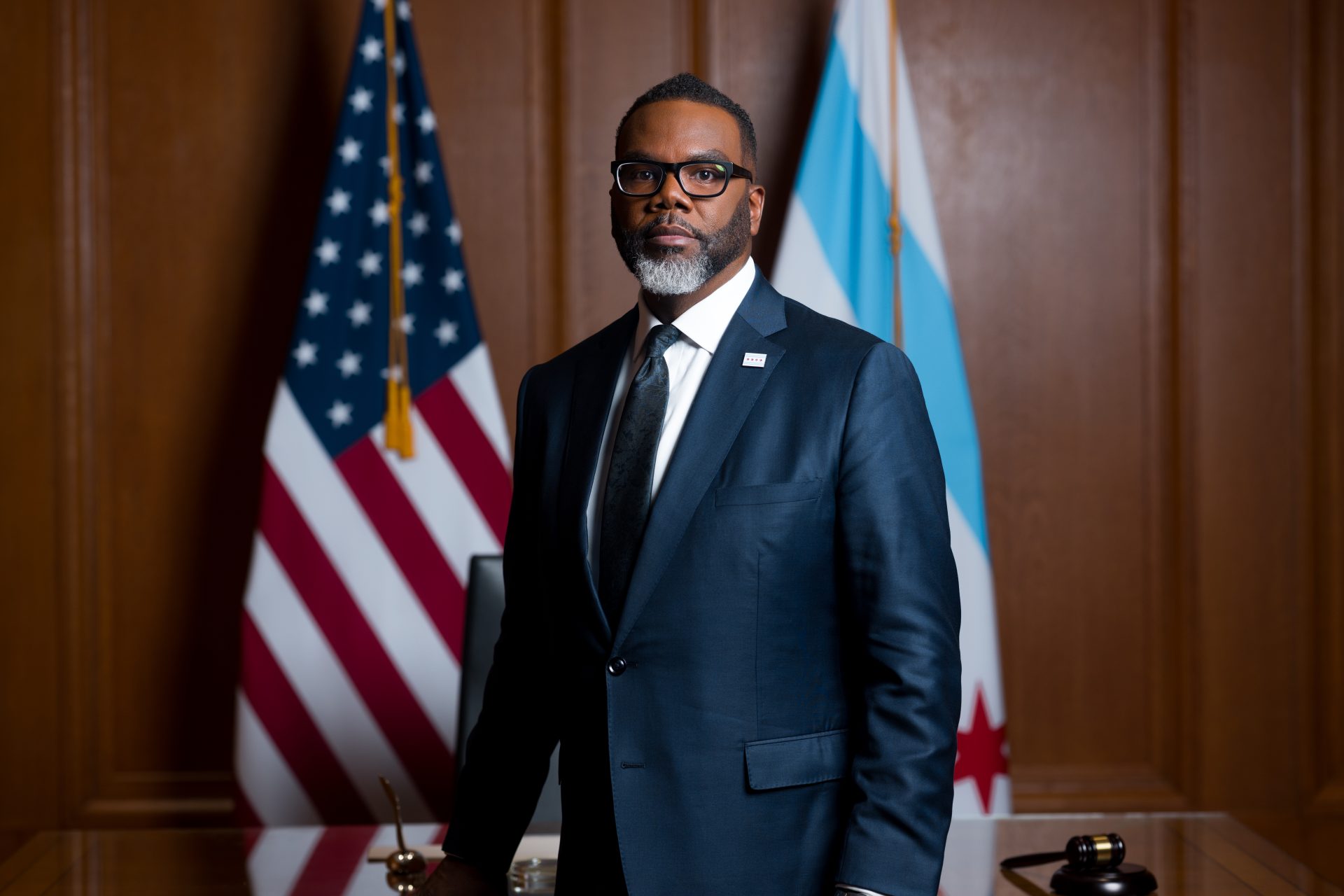
Chicago Mayor Brandon Johnson announced Tuesday that the city will lower its flag to half-staff in honor of Jackson’s lifetime of service and contributions to civil and human rights.
“Rev. Jackson’s mission always centered the strength and liberation of our Black community, but his mission always extended to all who needed empowerment by cultivating a rainbow of power that could shine through every storm,” Johnson said Tuesday in a written press release. “Rev. Jackson intimately understood what was at stake in affirming the humanity of working people. He never lost sight that those fighting for justice are entitled to the most basic needs of health and nutrition, housing, education, and jobs in order to achieve their greatest potential. Rev. Jackson held strong to this truth that we all are “somebody.”
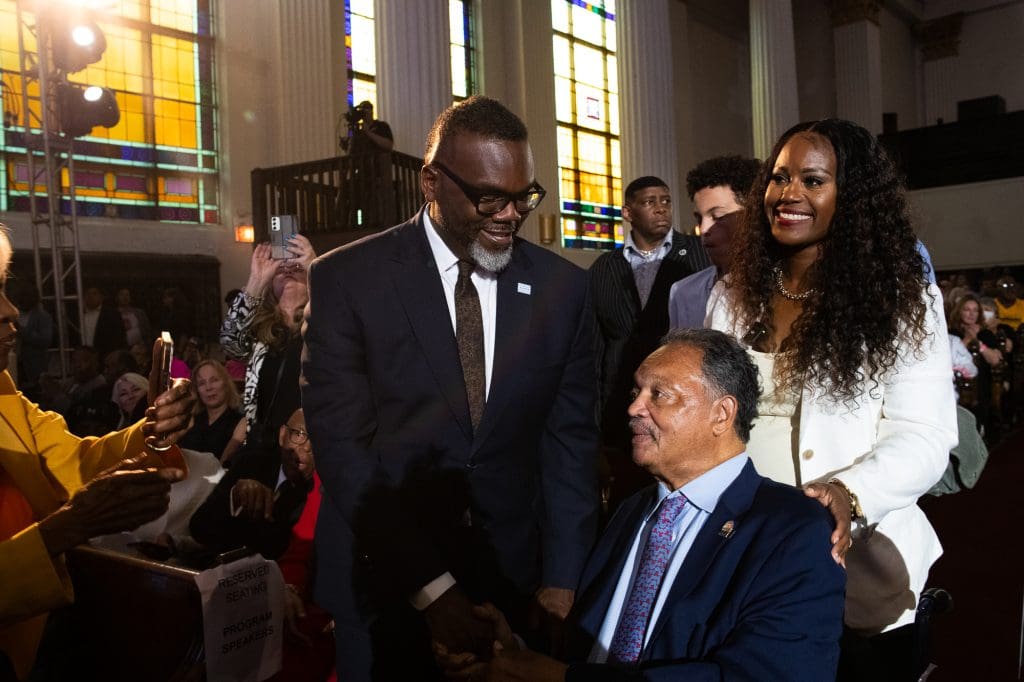
Jackson was born Jesse Louis Burns on Oct. 8, 1941 in Greenville, South Carolina, to Helen Burns and Noah Louis Robinson. A year later, his mother married Charles Henry Jackson, who later adopted him. Jackson took on his stepfather’s last name.
After graduating from the racially-segregated Sterling High School in Greenville in 1959, Jackson attended the University of Illinois on a football scholarship. He then transferred in his second semester to North Carolina Agricultural and Technical State University, a historically Black university. During the 1960s, as a student at North Carolina A&T, Jackson played a role in desegregating a public library in Greenville and leading the sit-in movement. He later moved to Chicago to study at the Chicago Theological Seminary.
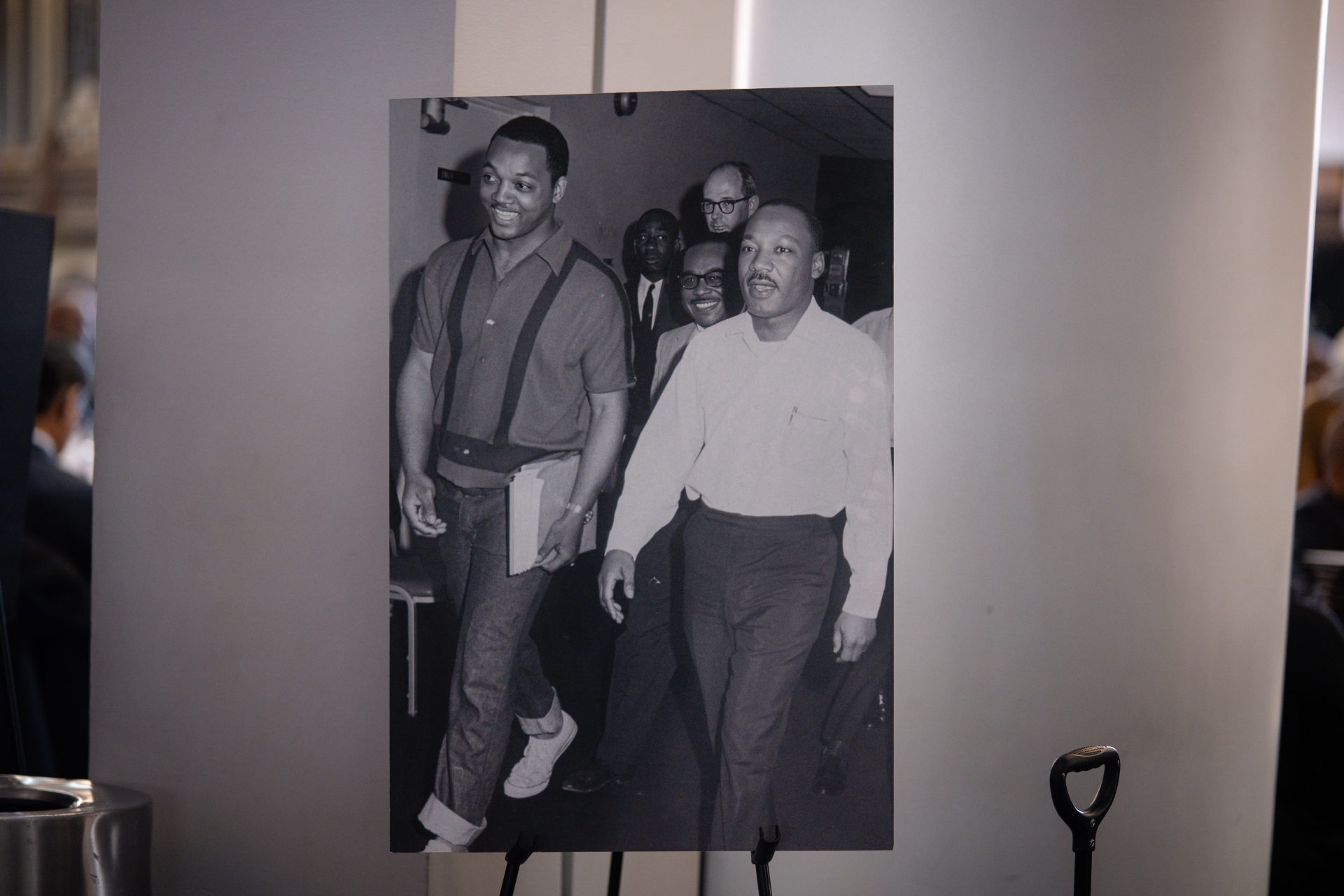
Jackson joined the Civil Rights Movement by becoming an organizer with the Southern Christian Leadership Conference (SCLC) in the late 1960s. He was appointed by King to lead Operation Breadbasket in Chicago, a branch of the SCLC that launched in 1966 to improve economic conditions for Black people.
Under Jackson’s direction, the program focused on targeting and boycotting companies that wouldn’t hire Black people. Their boycotts were successful. For example, in the summer of 1966, Operation Breadbasket pushed soft drink bottlers to hire more Black workers, according to Rev. Martin Deppe’s book Operation Breadbasket: An Untold Story of Civil Rights in Chicago.
Jackson also hosted weekly radio sessions on WVON that discussed issues plaguing the Black community. Each week, Jackson encouraged listeners to participate in calls to action around a call to action to address those injustices, and they typically involved economic injustices. For example, a call to action could include marches at construction sites in the city if there weren’t African American contractors working there, or boycotting stores that sold spoiled food. Breadbasket organizers’ efforts led corporations to sign covenants committing to hire more Black workers, which empowered Black people and demonstrated their political power.
Operation Breadbasket later evolved first into the People United to Serve Humanity (Operation PUSH) before becoming the Rainbow PUSH Coalition in 1996, which still focuses on economic justice and political advocacy today.
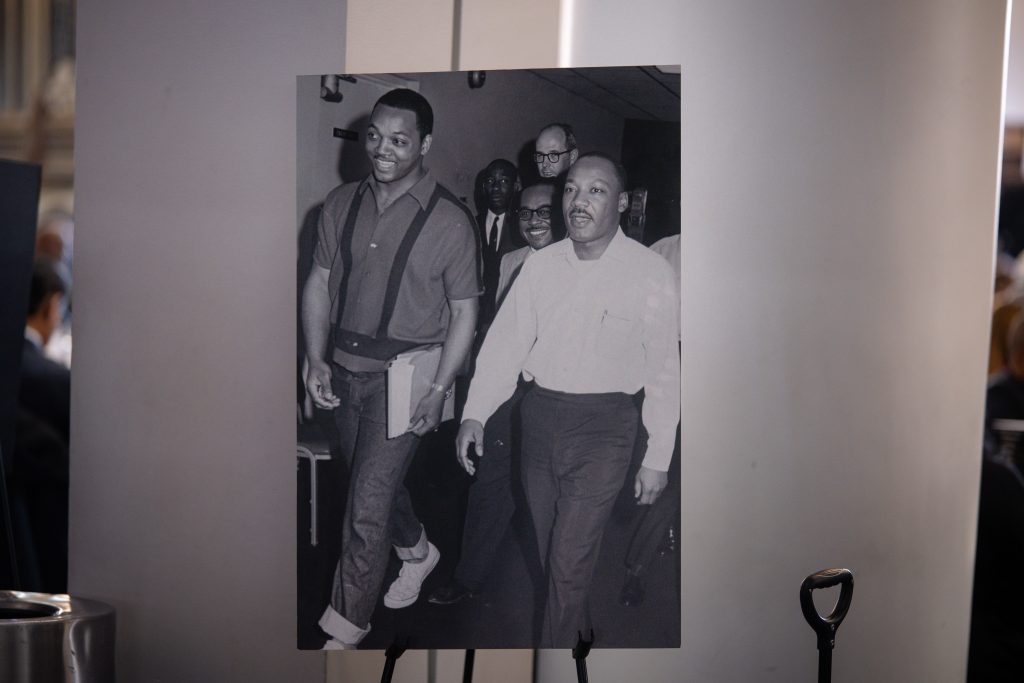
Former U.S. Congressman and Black Panther member Bobby Rush said Jackson taught him numerous things and what it meant to sacrifice. Rush said Jackson saved his life on Dec. 6, 1969, following the assassination of Illinois Black Panther leader Fred Hampton.
“A warrant had been issued for my arrest after the FBI assassinated Fred Hampton. I turned myself in that day, and Reverend Jackson said they’d better return me in the same condition I was in on that stage. If it were not for Reverend Jackson, Renault Robinson, and others, I would have been dead,” Rush said in a written press statement on Tuesday. “Since then, Reverend Jackson has been a constant presence in both my public and private life. He taught everybody that we are SOMEBODY, and his spirit will endure forever.”
In 1983, Jackson announced his intention to seek the Democratic nomination for president. He became the second Black person, after U.S. Congresswoman Shirley Chisholm in 1972, to run for a major party nomination in a presidential race.
In Jackson’s first campaign in 1984, he declared that he wanted a Rainbow Coalition of marginalized people, which included Black, Latiné, Middle Eastern, Asian and Native Americans, farmers and poor and working class people. He proposed a Works Progress Administration for job creation, cutting the Department of Defense budget, giving reparations to descendants of chattel slavery, and increasing funding for public education and more.
“He had people thinking about poverty and racism on a national scene. It was important for Black folk in particular, but I think all of us in general. If it hadn’t been for Jesse, I don’t know if people would have been ready for an Obama. I don’t think people would have been ready for Harris to run and win,” Kimble said.
One of Jackson’s most important contributions to the Democratic Party was changing how delegates are counted. After the 1984 election, Jackson was credited with advocating for moving away from the winner-takes-all approach.
“He forced the Democratic Party to change the rules because the Democratic party rules were that whoever won the majority of the votes would get all of them [delegates], which is unfair,” Rev. Dr. Janette Wilson said. Wilson is a senior advisor to Jackson and PUSH for Excellence’s national director.
This change was crucial in helping Obama secure enough delegates to win the Democratic Party nomination in 2008.
“Michelle and I were deeply saddened to hear about the passing of a true giant, the Reverend Jesse Jackson. We will always be grateful for Jesse’s lifetime of service, and the friendship our families share. We stood on his shoulders. We send our deepest condolences to the Jackson family and everyone in Chicago and beyond who knew and loved him,” Obama said in a written statement on Tuesday. “Reverend Jackson also created opportunities for generations of African Americans and inspired countless more, including us. Michelle got her first glimpse of political organizing at the Jacksons’ kitchen table when she was a teenager. And in his two historic runs for president, he laid the foundation for my own campaign to the highest office of the land.”
Although Jackson ultimately lost the Democratic nomination in 1984 to former Vice President Walter Mondale, his campaign registered over one million new voters, won 3.5 million voters, and helped the Democratic Party regain control of the US Senate in 1986, according to “Keeping Hope Alive: Sermons and Speeches of Rev. Jesse L. Jackson Sr.”
Jackson tried again to secure the Democratic Party’s nomination in 1988. He ran on a similar campaign platform around creating a Rainbow Coalition of minority groups, equal rights, creating more employment opportunities, funding public education and reversing harmful policies from the Reagan administration. The most controversial of the time was his support for Arab Americans, specifically the Palestinian people in their quest for a Palestinian state. He did not gain enough delegates to clinch the nomination.
“Arab American leadership put their full support behind the Rev. Jesse Jackson’s campaign. He was willing to support calls for Palestinian statehood against the backdrop of a political climate where even recognizing Palestinians could be considered radical,” according to a 2024 article from Center for Arab Narratives.
His 1988 DNC speech was where the infamous chant, “keep hope alive,” emerged.
Jackson’s presidential campaigns in the 1980s set the stage for future leaders like Carol Moseley Braun, who in 1992, became the first African American woman in the U.S. Senate because Jackson encouraged her.
His legacy also laid the groundwork for former Vice President Kamala Harris’s historic Democratic nomination in 2024, just as it did for President Barack Obama’s presidential campaign in 2008.
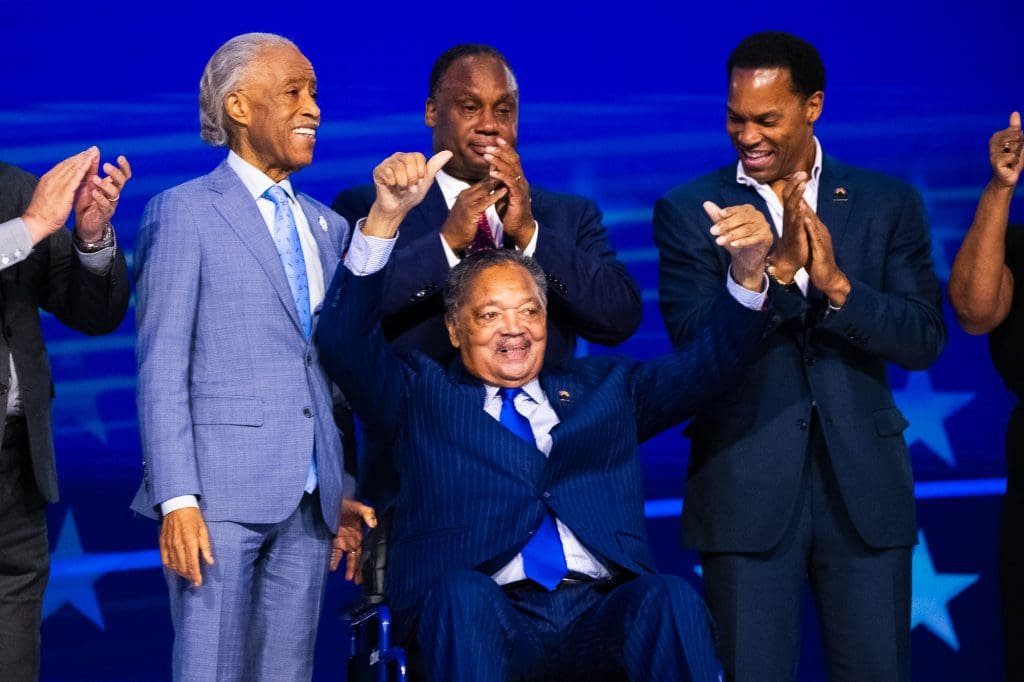
The 2024 Democratic National Convention in Chicago marked the 40th anniversary of Jackson’s 1984 speech on the floor of the DNC in 1984 in San Francisco. Jackson’s imprint was evident in some aspects of the 2024 DNC, like his relationships with leaders like DNC chairwoman Minyon Moore, who worked on Jackson’s presidential campaign in 1988 and is also a fellow Chicagoan. His sphere of influence also includes political strategist Donna Brazile, who worked on his 1984 presidential campaign.
In Chicago, Jackson’s approval and political influence was crucial for candidates with political aspirations. The Rainbow PUSH Coalition radio program and breakfasts would serve as endorsements of political candidates for successful campaigns. Political leaders like Obama, the late Mayor Harold Washington, former Mayor Lori Lightfoot and Mayor Brandon Johnson, and Gov. JB Pritzker have attended the organization’s annual Dr. Martin Luther King, Jr. scholarship breakfast.
“I had the honor and privilege of walking alongside Reverend Jackson in countless marches, protests, and demonstrations here in Chicago and across this nation. Together, we stood with workers, with the poor, with seniors, with young people, and with communities demanding fairness and opportunity,” U.S. Rep. Danny Davis (IL-7) said in a written statement on Tuesday. “Those moments were not just protests, they were part of a movement that helped transform lives and expand justice. His leadership extended from the streets of Chicago to the halls of power in Washington, D.C., and across the world.”
Jackson’s influence extended beyond Chicago, especially in mobilizing voters in Illinois and across the South. He traveled throughout Mississippi and 11 other southern states with then-U.S. Attorney General William Bradford Reynolds to expose issues and barriers to voting in the 1990s.
His advocacy work in the South would lead to Black people in those states running for public offices like county sheriff, county supervisor, state representative and Congress. Jackson’s presence empowered Black people to run for positions of power.
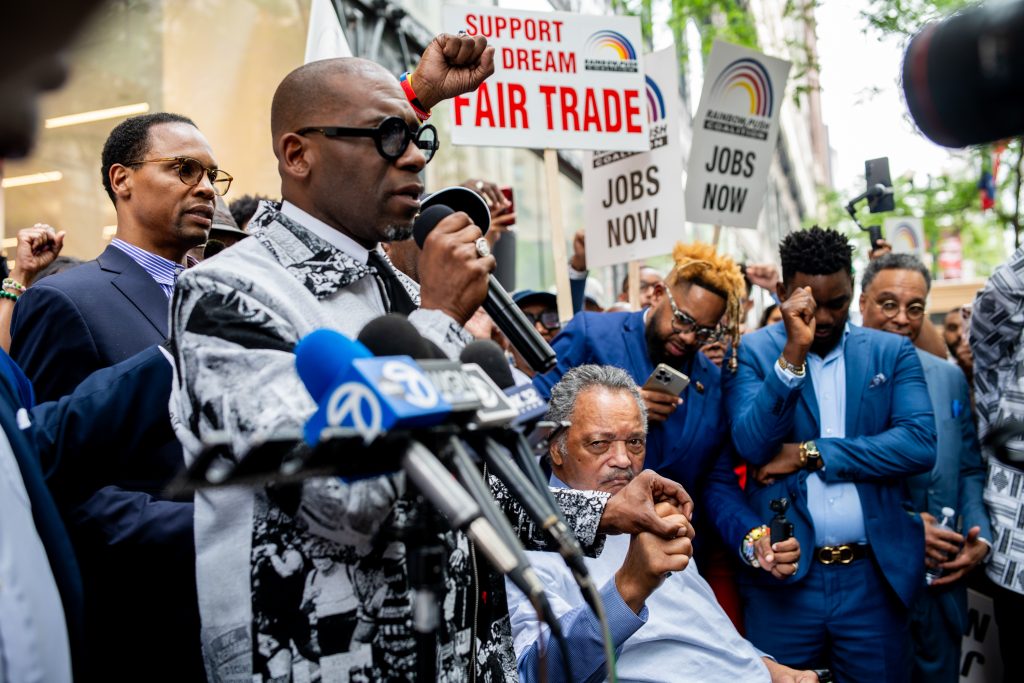
Jackson is survived by his wife Jacqueline; their children — Santita, Jesse Jr., Jonathan, Yusef, Jacqueline; daughter Ashley Jackson, and grandchildren.
Public observances will be held in Chicago. Final arrangements for Jackson’s celebration of life services will be released by the Rainbow PUSH Coalition and on JesseJacksonLegacy.com.
“I am deeply moved by the overwhelming outpouring of love, prayers, and support I have received during this profoundly trying time,” Congressman Jonathan L. Jackson said in a written statement on Tuesday. “My father was a servant leader to our family, to the oppressed, the voiceless, and the overlooked around the world. We shared him with the world, and in return, the world became part of our extended family. His belief in justice, equality, and love uplifted millions, and I am comforted in knowing his legacy lives on in the hearts of so many.”