





Despite a last-minute effort to extend time for occupants to find other housing and receive housing assistance, residents of the South Shore apartment building raided by ICE must move out by Friday.
Cook County Circuit Court Judge Debra Ann Seaton denied a request by the 7500 South Shore Tenant Union for more time to secure housing. She said her decision was made out of necessity as the “court cannot take on the responsibility that has been clearly identified as dangerous and hazardous under the city codes of Chicago.”
The unlivable conditions of the building were exposed after a high-profile raid by federal immigration enforcement agents back in September. Dozens — including U.S. citizens — were detained, leaving the residents of the property in despair as the building conditions worsened. Wells Fargo filed the motion to evacuate the property and is working to foreclose on the building, which was previously owned by Trinity Flood.
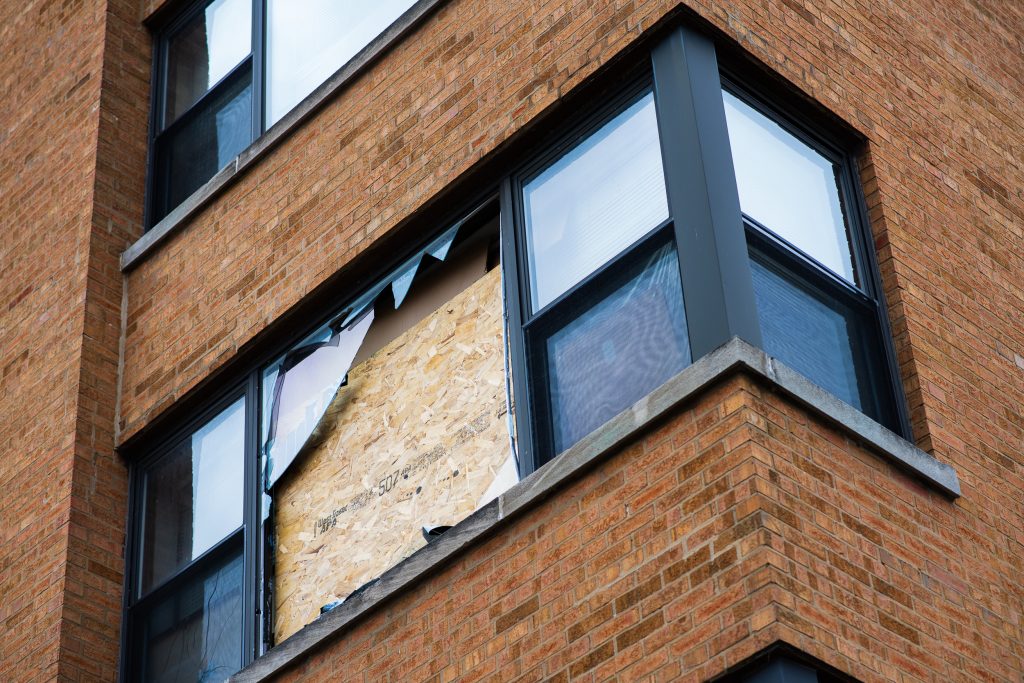
Seaton repeatedly detailed the building as being uninhabitable, stating that the property is “an electrical fire waiting to happen” as occupants are using their stoves and space heaters for heat. Other issues inside the building include sewage and gas leakage.
Sam Barth, a lawyer with the Law Center for Better Housing, is representing the tenant union. He argued that the demand for more time to relocate was due to some tenants not having a place to go; there are concerns that some would end up homeless. Seaton responded that the court had no intent to make tenants homeless, adding that the court-ordered receiver, Friedman Communities, provided resources and that tenants need to talk to the receiver to discuss options.
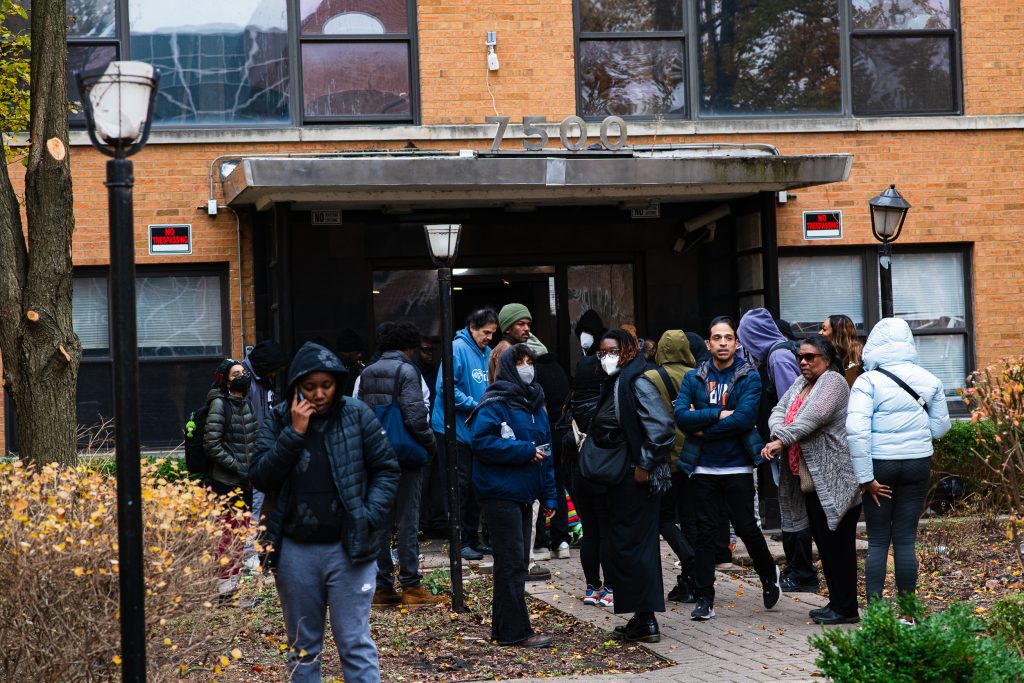
The notice posted in the hallway of the 7500 S. South Shore Drive property listed various support services and organizations tenants could reach out to for housing support and a list of nearby housing options, which they noted were “offered as suggestions only.”
During a rally on Dec. 2, members of the union said Friedman offered assistance individually but that they wanted to meet as a group over fears that residents were being told different things. Jonah Karsh, an organizer with the Metropolitan Tenants Organization, who has also worked with the tenant union, said that Friedman cancelled a meeting with the union upon learning of their court filing.
In response, Seaton said tenants should be going to the receiver individually, not as a group.
“This isn’t a group think,” Seaton said, adding that the union could not bypass parameters set by the court, which gave them a “fair price to relocate.”
As a tenant union, residents also demanded $7,500 for reallocation assistance from Friedman Communities, repairs to the building, and assistance from Mayor Brandon Johnson and Gov. JB Pritzker. Seaton denied the demand for the relocation amount.
Jared Friedman, co-CEO of Friedman Real Estate, also spoke at the hearing. He said 12 occupants of the building have accepted relocation assistance that is “over double the amount of monthly rent they pay at the property.”
Friedman said checks were available to residents, with half of the assistance given up front and the other half during their moveout. One tenant said during last week’s rally that the company offered her $5,000, but she was holding out until the union met with Friedman as a group.
Last week, Johnson penned a letter to Friedman, “requesting an immediate postponement of the move-out date and $7500 lump-sum payments to each household in the building.”
Seaton addressed the mayor’s letter during the hearing. She said the court order to vacate was being made political when it is an issue of safety. Seaton said that the court takes issue with the city presenting two different viewpoints: city inspectors deemed the property dangerous, but the Office of the Mayor is asking that the court delay the move-out order. Seaton said the “court is not persuaded due to evidence of the dangers.”
Seaton also accused the media of spreading misinformation, adding that Friedman Communities was appointed as a receiver on Nov. 7 and occupants of the building were invited to speak at the hearing before the mandate to evacuate was given. She said the decision to shut down the property “didn’t come out of a vacuum.”
However, union members previously told reporters they learned of the evacuation notice just a day before Thanksgiving and that the decision was made without tenant input.
Seaton said the building would be secured so that residents who can not take all their belongings can come back to retrieve them. The judge asked Friedman to provide storage units for those tenants.
Friedman said the building will be accessible by appointment after Dec. 12, the mandatory move-out date, for tenants to access personal property.
Last weekend, a grassroots coalition of Black advocates, community members, faith leaders, educators, health workers and longtime organizers hosted a solidarity rally for unity among Black and Latine communities in Little Village. A rally scheduled for Dec. 11 in South Shore was cancelled to allow tenants time to prioritize finding alternate housing after the judge’s ruling.
Those who would like to support the tenants as they make the emergency relocation can make donations here.