



Criminal justice advocates are demanding that Gov. JB Pritzker and the Illinois Department of Corrections (IDOC) adopt their rapid response plan to mitigate harm should both entities decide to relocate the Logan Correctional Center population before a new correctional facility is built in the next three to five years.
The transfer process, advocates say, is violent, inherently disruptive and harmful. More than 1,000 women, transgender and nonbinary people are currently incarcerated at Logan in Lincoln, Illinois near Springfield.
Advocates also argue that another way to mitigate potential harm is for Pritzker to release as many people as possible by granting commutation and clemency requests.
“We are concerned that Gov. Pritzker and IDOC expect people incarcerated at Logan to continue living in a condemned prison while the state invests more than a billion dollars rebuilding Logan and Stateville prisons,” said Chez Rumpf, a Love & Protect and No New Prisons IL campaign member.
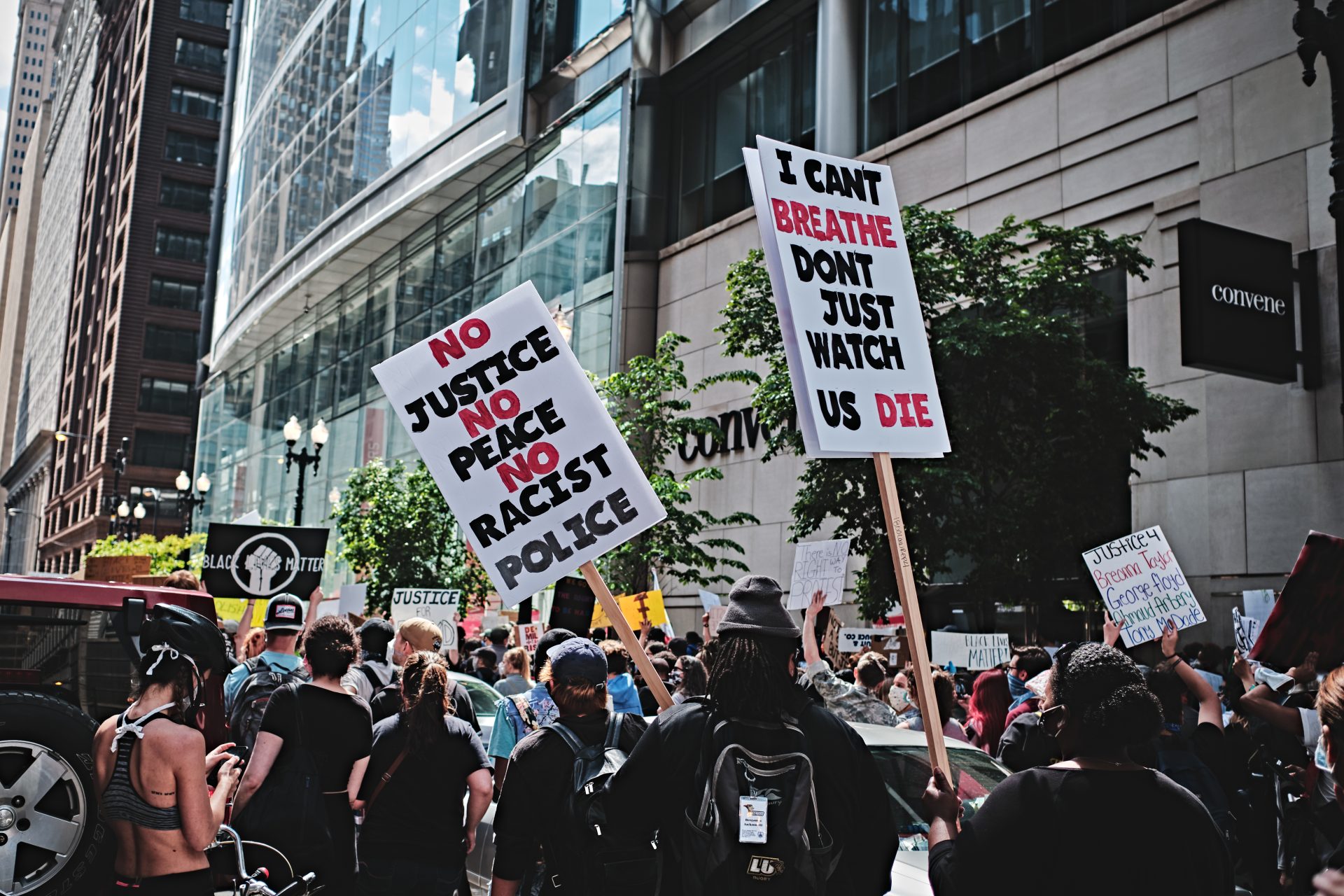
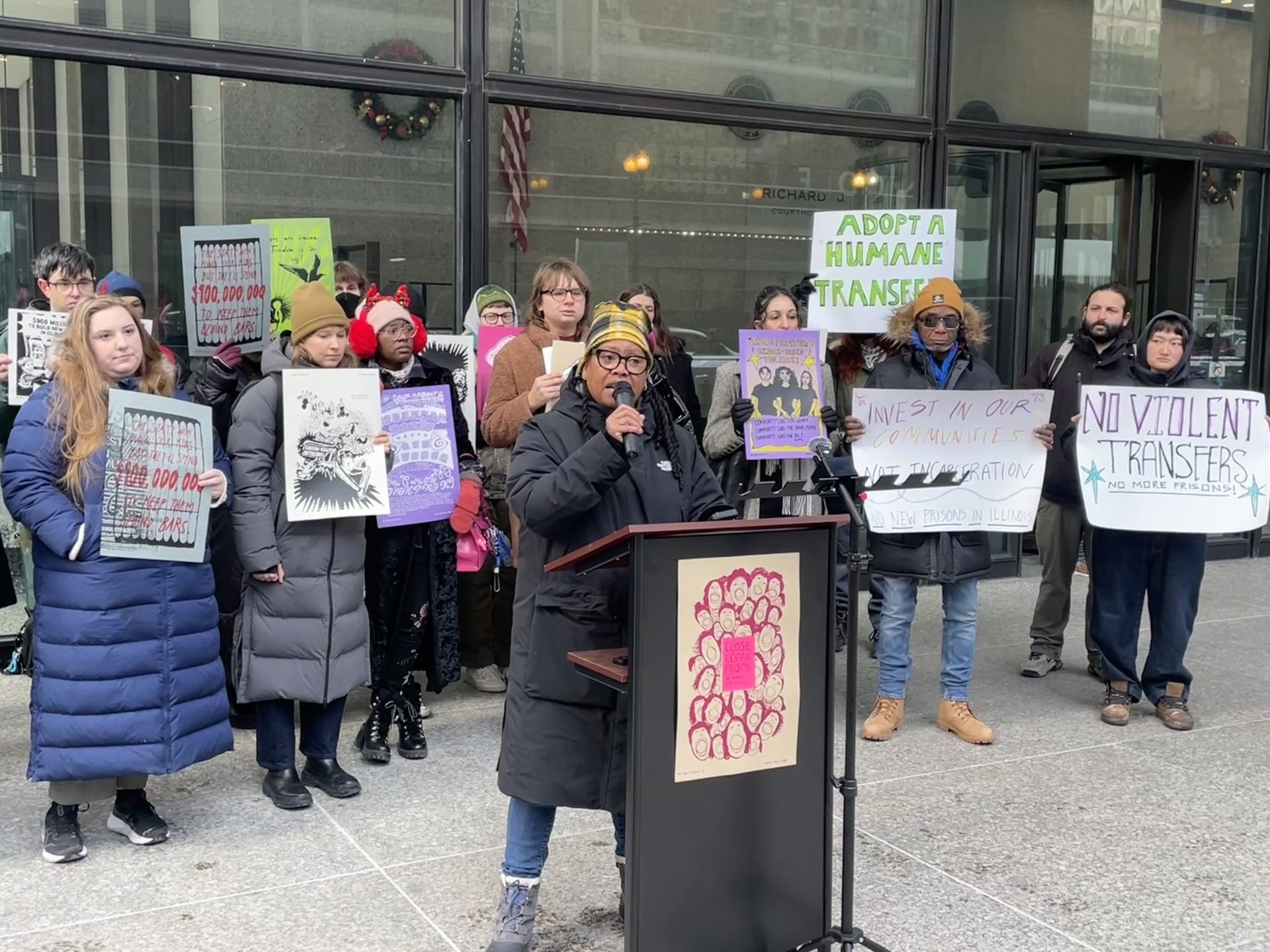
Rumpf and dozens of criminal justice advocates gathered Tuesday outside Daley Plaza to raise awareness about their Logan Transfer Rapid Response Plan and highlight the worsening conditions at Logan.
“This expectation seems especially cruel, given that 66% of people incarcerated at Logan have a mandatory supervised release date between now and 2030, meaning they will be released before the new Logan prison is expected to be built,” Rumpf continued.
Rachel White-Domain, an attorney and director of Women & Survivors Project at the Illinois Prison Project, said her team has 33 executive clemency petitions pending on Pritzker’s desk that could be signed at any moment.
“These are all survivors of gender-based violence whose crimes are related to surviving abuse, who have, despite the hardships of incarceration, gone through incredible experiences of healing and change, all of whom are ready for release,” Domain said. “But in the meantime, we know that harm reduction matters, and we call on the governor to robustly engage with this Logan Transfer Rapid Response Plan.
Last year, Pritzker and IDOC announced plans to allocate $900 million from the 2025 budget to demolish and rebuild Stateville and Logan Correctional Centers because of the unlivable and inhumane conditions inside the aging prisons.
State officials in a 2023 report found Logan to be “inefficient, ineffective, and unsuitable for any population” due to its aging coal-fired power system and the molding of housing units and layout.
Incarcerated people and prisoner rights organizations sounded the alarm about conditions inside of Stateville: poor drinking water and living conditions, rust, mold, plumbing issues and rodents, among other issues. In June, Michael Broadway died during a heat wave while incarcerated at Stateville. In August, a federal judge ordered the closure and evacuation of Stateville. The court-ordered closure at Stateville led to abrupt mass transfers, which were ahead of IDOC’s two-to-three-year timeline, Rumpf said. The last men incarcerated at Stateville were transferred out in March.
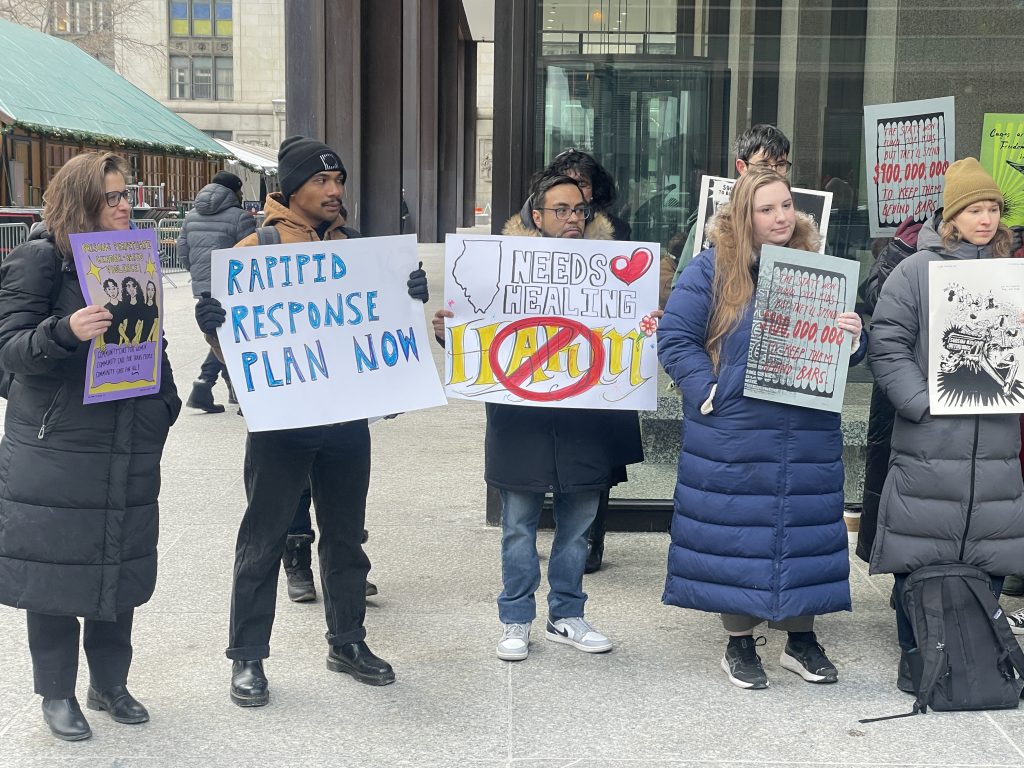
Jimmy Soto, a member of Build Communities Not Prisons Illinois (BCNP), was among the nearly a dozen advocates who spoke at Tuesday’s press conference about the experiences of men who were abruptly transferred from Stateville.
“They endured a number of harms, including loss of property, micro and macro aggressions. They also have experienced the trauma of being chained up for hours and hours until they got to their destination. I think it is inhumane the way that they transfer individuals throughout IDOC,” Soto said. “I think that it’s time for us to demand that the IDOC and our state officials adopt this rapid response plan.”
Soto was wrongfully convicted and was sentenced to life without parole at 20. He was exonerated and released from prison in 2023. He spent his periods of incarceration between Stateville and Menard Correctional Center in Menard, Ill.
While members of the No News Prisons IL campaign and their allies support the closure of Logan, they’re concerned about incarcerated people at Logan facing the same fate as those who were recently moved from Stateville.
With their plan in place, Soto said it will provide safety measures to reduce any potential harm. The rapid response plan has the endorsement of 43 prisoner rights, social justice and criminal justice advocacy organizations.
Their demands outline steps IDOC should take to mitigate harm, including written communication to incarcerated people, loved ones and legal teams, ability to contact family before transfer and within 24 hours of arrival, uninterrupted access to healthcare, medication, programming and legal documents, protection of personal property and medical records, limits on restraints and prohibition of strip searches and more.
In addition, they are seeking accountability from Pritzker and IDOC. Rumpf said they shared their plan with Pritzker and IDOC last month and requested a response by Nov. 21 to affirm that they will meet with them, but to date, they’ve only received acknowledgement that their request was received.
Logan was previously a men’s prison and was converted into a women’s prison in 2013. Ana Navarro, an ambassador with the Illinois Prison Project, spoke about her experience being transferred from Dwight Correctional Center to Logan prison in 2013.
“They grab you, put you in a cell with the doors open and strip search you. You could also see the other person getting strip-searched. All your items are taken from you,” Navarro said.
She said women at the prison were moved overnight without notice. They went weeks without talking to their loved ones, were strip-searched and also went weeks without being given their medications during the transition.
“A lot of us went a whole month and a half without contact with our families because the phone systems weren’t working. We also went a whole, almost two months without being able to shop and get the basic hygiene that we needed,” she continued. Some were even further away from their families after the move to Logan.
Colette Payne, a director at Women’s Justice Institute, echoed Navarro’s sentiments.
“They were rounded up like cattle onto buses, left there for hours, unable to even use the bathroom, forced to stand in long lines and heckled by staff and prison leaders who told them they were smelly and dirty,” Payne said.
Payne also spoke about the loss of credits and programming that occurred during the transfer from Dwight to Logan.
“That legacy of harm lasted well beyond the transition, particularly as it related to programming, jobs and education, because the conversion was poorly planned,” Payne said. “There were few paid jobs for women. They lost sentencing, credits, opportunities, programming, education was disrupted without a plan.”
IDOC, in a previous TRiiBE article, said people incarcerated at Logan will remain there until a new facility is completed, but today advocates reiterated that the prison is inoperable.
“The Logan Transfer Rapid Response Plan is a tangible way to treat people at Logan with the dignity and respect they deserve,” Rumpf said. “We call on Gov. Pritzker and IDOC leadership to meet with us to discuss and adopt the transfer plan. Let’s implement it now. Care cannot wait.”