
Selling off unpaid debt to balance Chicago’s 2026 budget is a recommendation in the latest proposal from a moderate and conservative-leaning group of alders known as the Alternative FY26 Budget Coalition. The suggestion has progressive alderpeople and community organizers speaking out about the potential dangers to vulnerable communities.
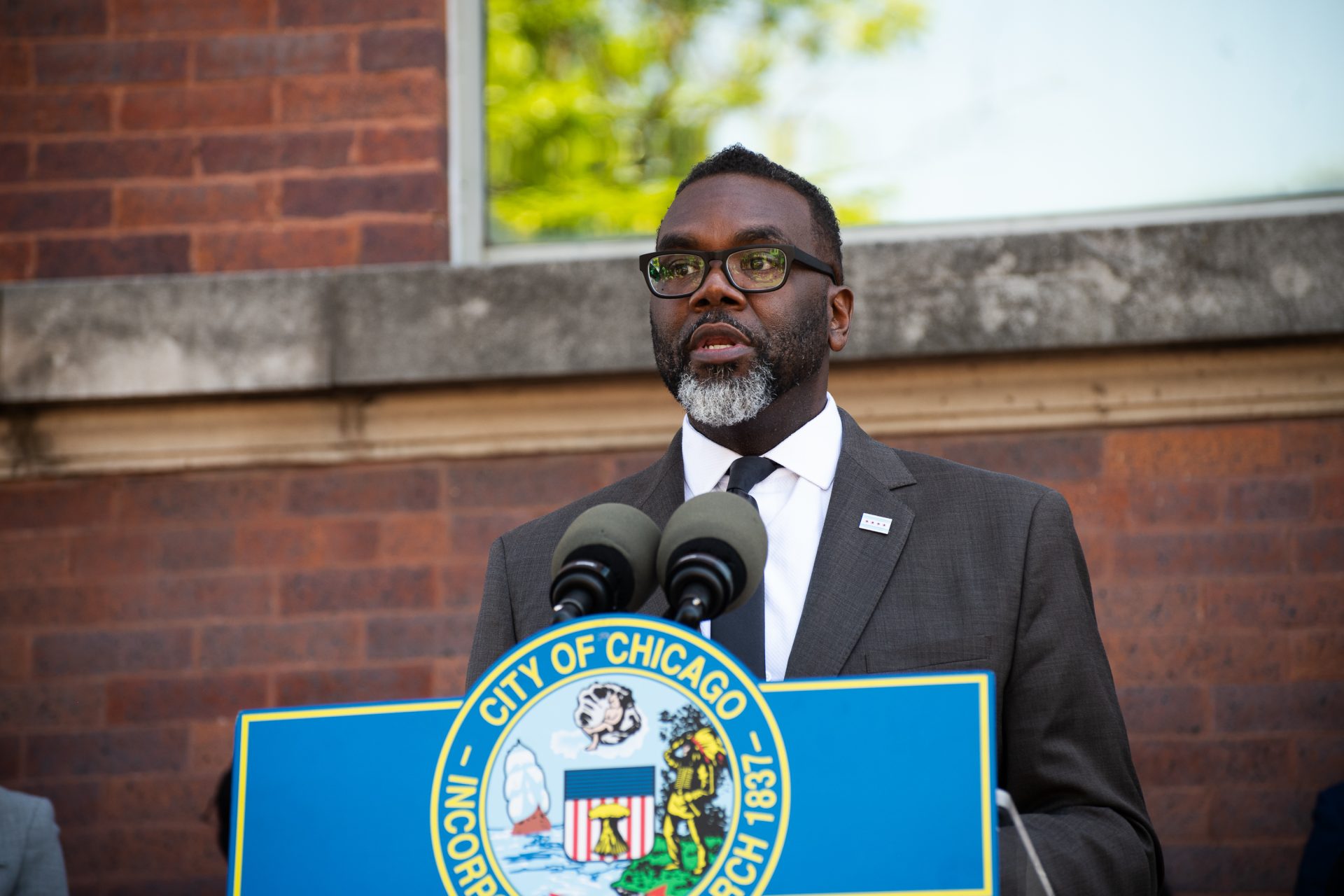
Though the alternate proposal keeps Mayor Brandon Johnson’s budget recommendations 98% intact, notably the new proposal replaces the corporate head tax with ramped-up efforts to collect years of unpaid debts owed by Chicagoans for utility bills, red-light camera tickets, ambulance payments and more. The proposal also opens the door for the city to sell those unpaid debts to private collectors.
The Mayor’s Office says its head tax, also known as the Community Safety Surcharge, would generate roughly $90 million. The bloc of moderate-conservative alders says that the debt collection option would bring in nearly the same amount.
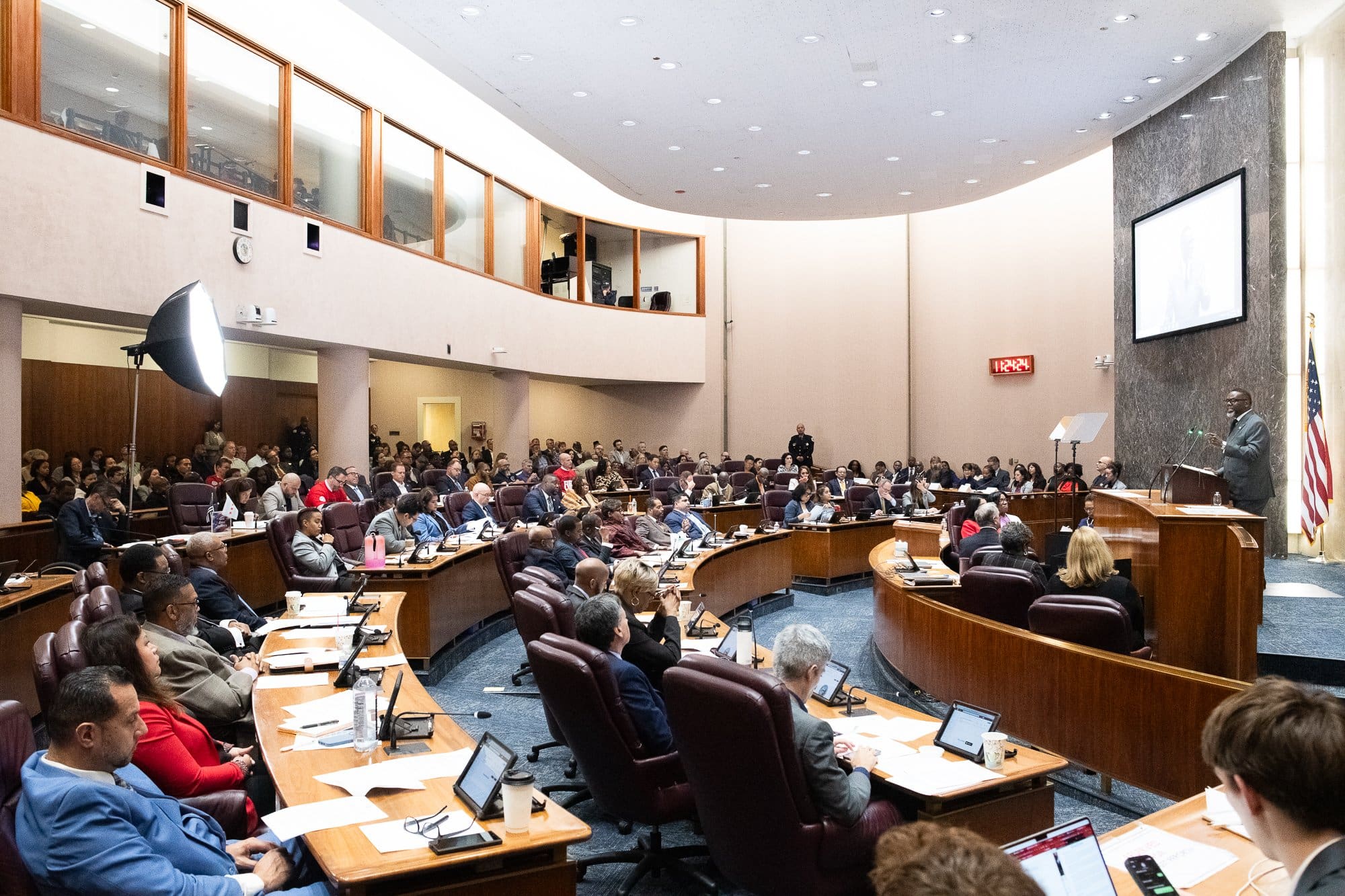
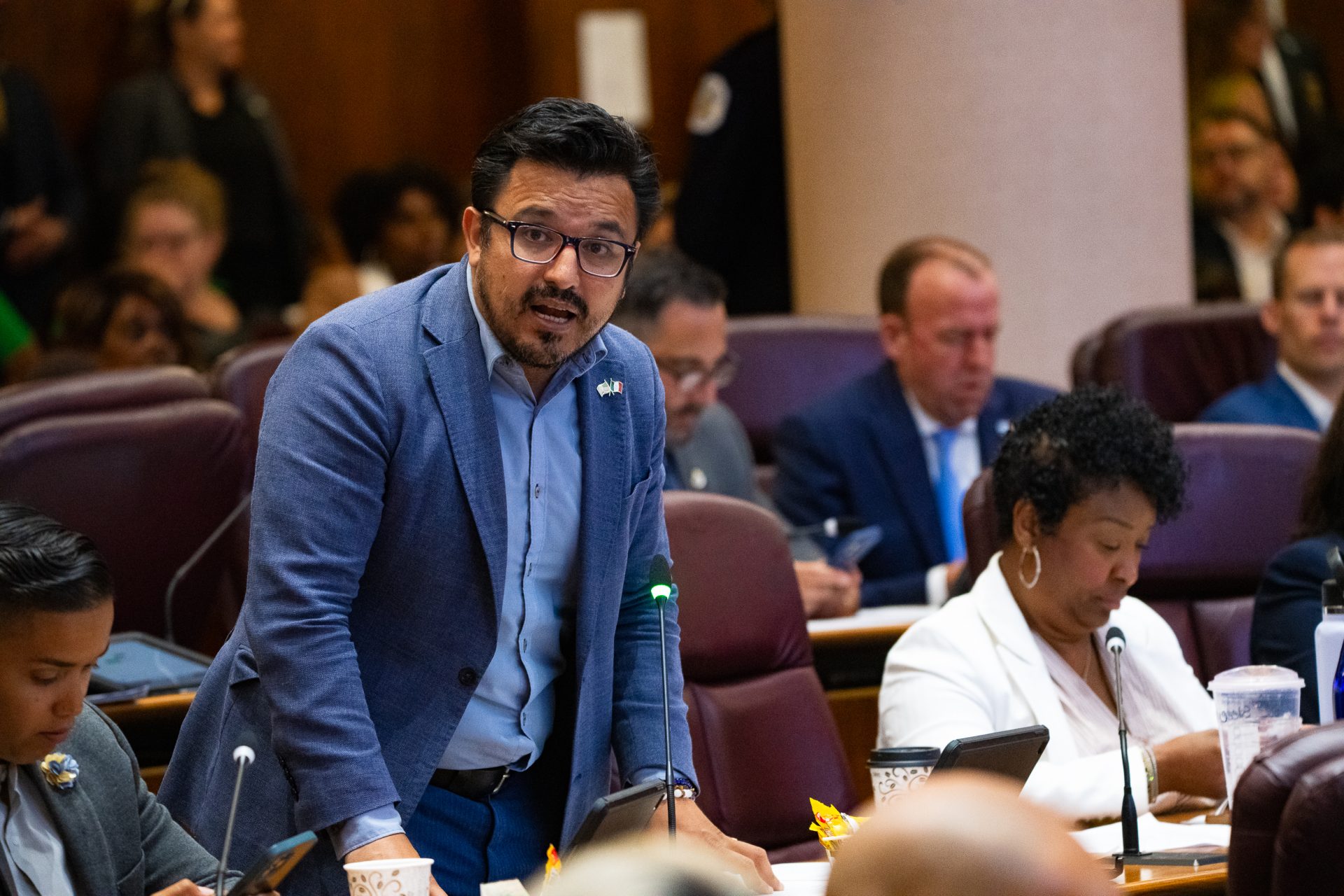
“They are quite literally displacing the corporate head tax attacks on the largest corporations in the city with debt collection on some of the poorest and [most] impacted people,” Ald. Anthony Quezada (35th Ward) told The TRiiBE ahead of Thursday’s City Council meeting. “The debt collection proposal is actually just one time. It’s a one-time revenue source. If you collect that debt, well, then that’s it. It’s not like it’s going to continue funding [the city].”
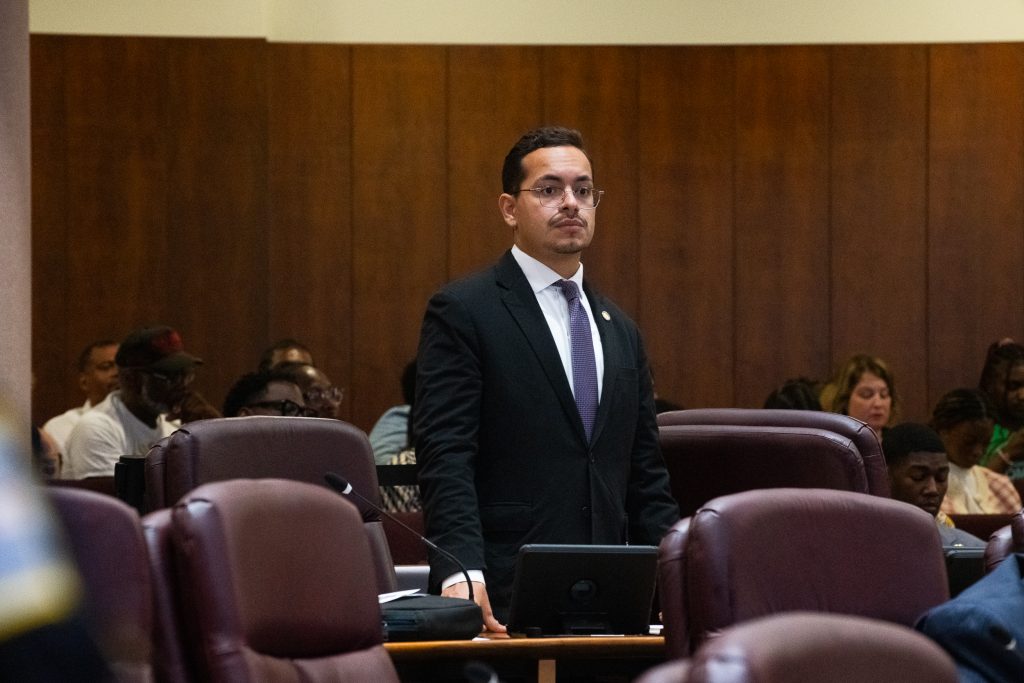
Johnson said that the debt collection idea is a deal breaker for him, adding that there is no guarantee that an individual or company would even buy the debt.
“Keep in mind that the parameters that they’ve established around the debt collection, there’s no guarantee that they can actually happen,” Johnson said during a press conference after the City Council met on Dec. 18.
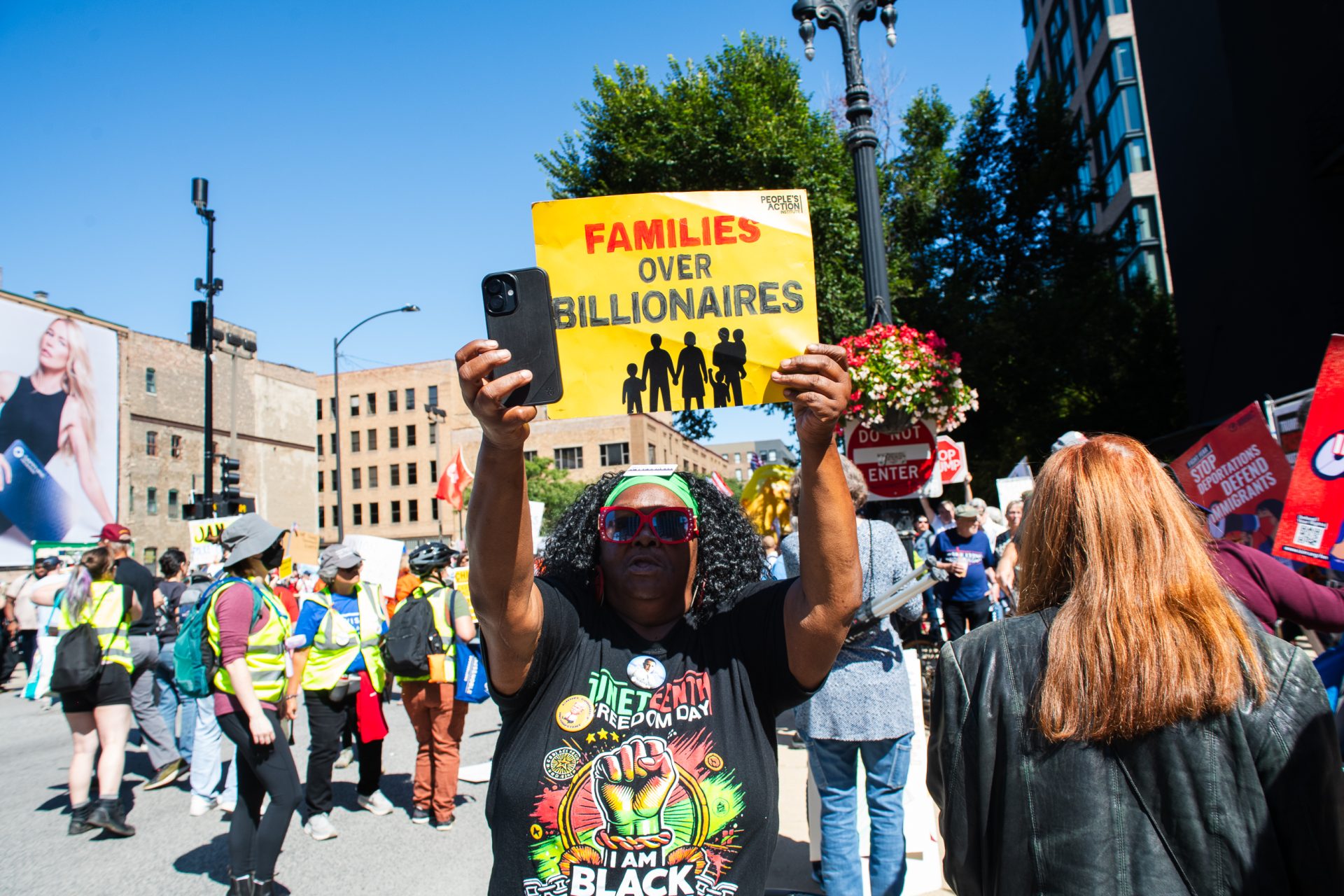
Several voices who have been rallying in favor of Johnson’s head tax-centric budget proposal staged a press conference Thursday morning inside City Hall. The group of various community organizations and activists, known as the People’s Unity Platform (PUP), pushed back against the alternate budget that passed during the Finance and Government Operations committee meeting on Dec. 17.
“Chicago is set to hit a billion dollars’ worth of water debt in the next couple of years,” said Oliver Ciciora, an organizer with Southsiders Organized for Unity and Liberation. “We didn’t get here because people don’t want to pay their bills. We got here because people cannot pay their water bills. Two city comptrollers have even said that they don’t expect to collect on this debt that’s over 10 years old. So why are people on the hook?”
A 2021 study by WBEZ found that homeowners in Chicago accumulated over $421 million in water debt, with most of that debt concentrated in majority Black areas.
Ald. Jessie Fuentes (26th Ward) joined organizers during the Thursday morning press conference, stating that she was a no vote on the alternative budget. She takes issue with numerous parts of the proposal.
“We have taxes that force our families to make difficult decisions on whether they pay those here or somewhere else,” Fuentes said. ” And yet, we have another budget proposal that is going to harm the very residents that we serve.”
Maps provided by the city’s Office of Budget Management show the amount of outstanding debt for seven plus years in the city. According to the maps, areas on the South and West sides have higher debts for collections in parking, utilities, emergency services such as ambulances and administrative hearings.
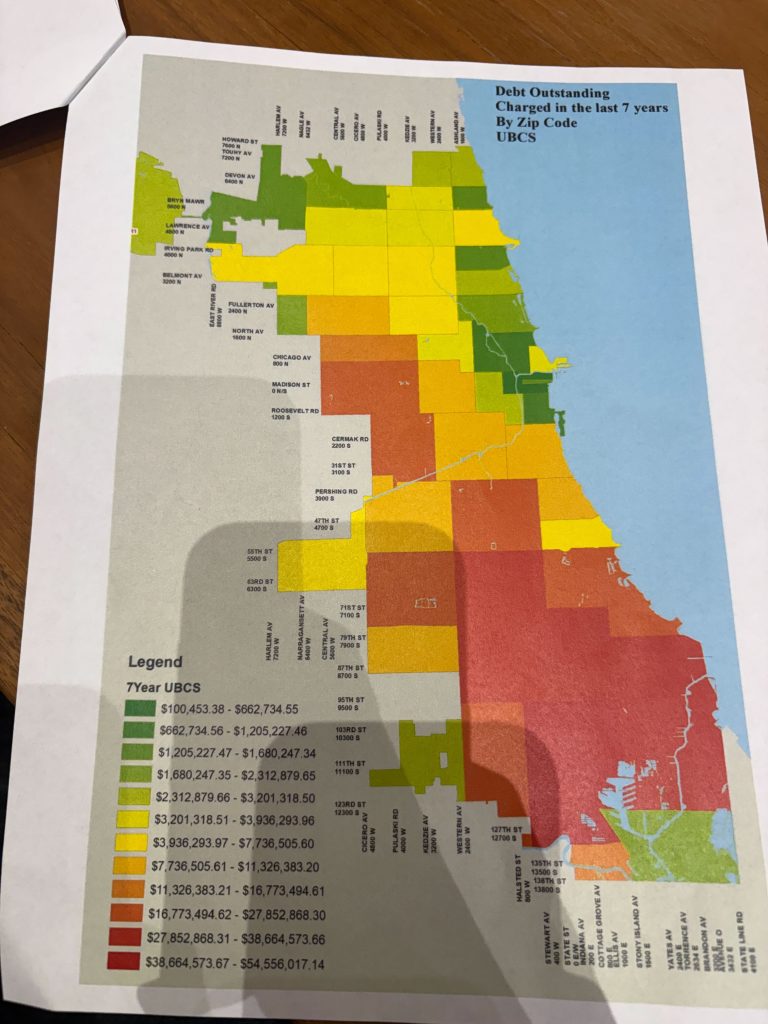
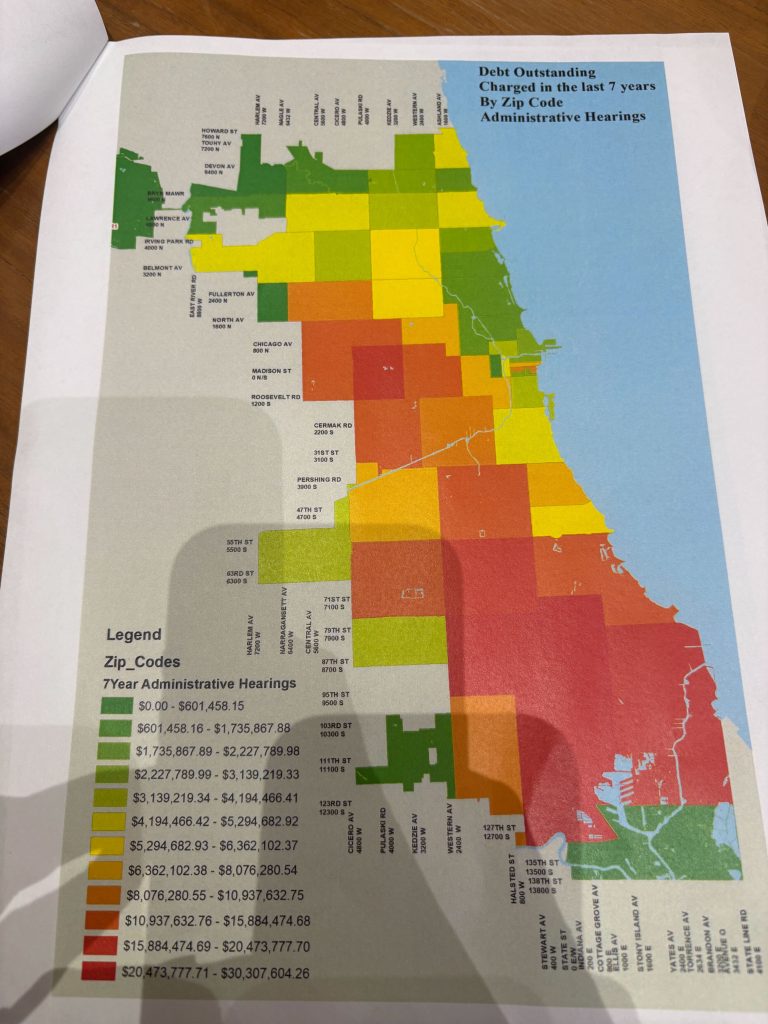
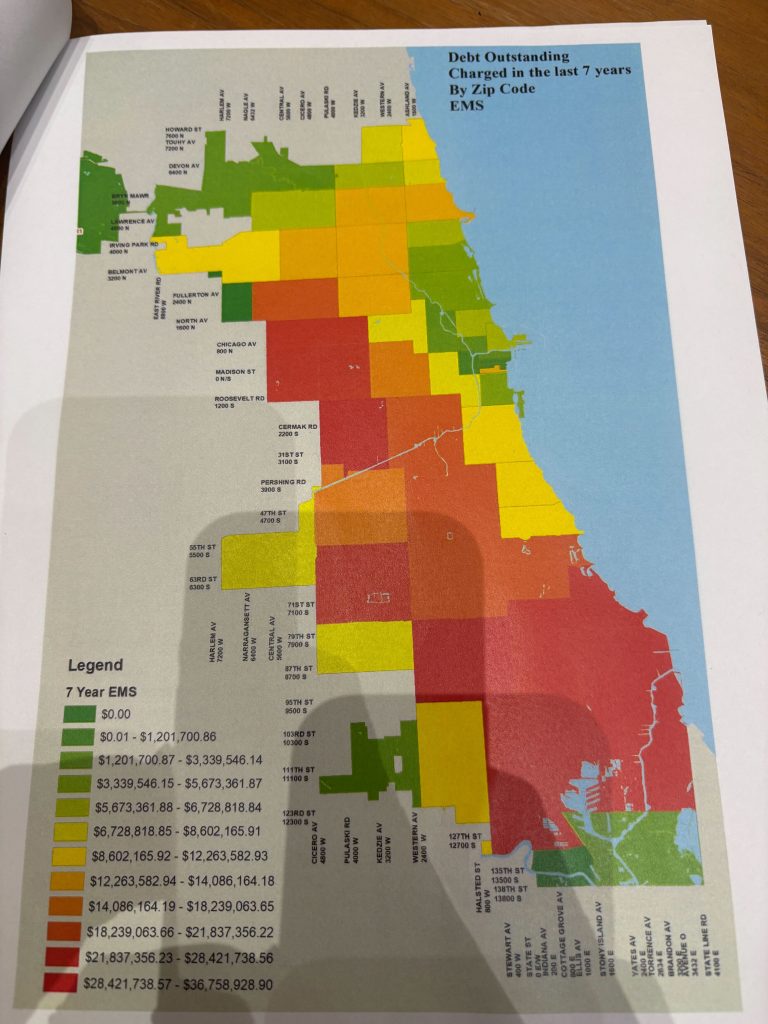
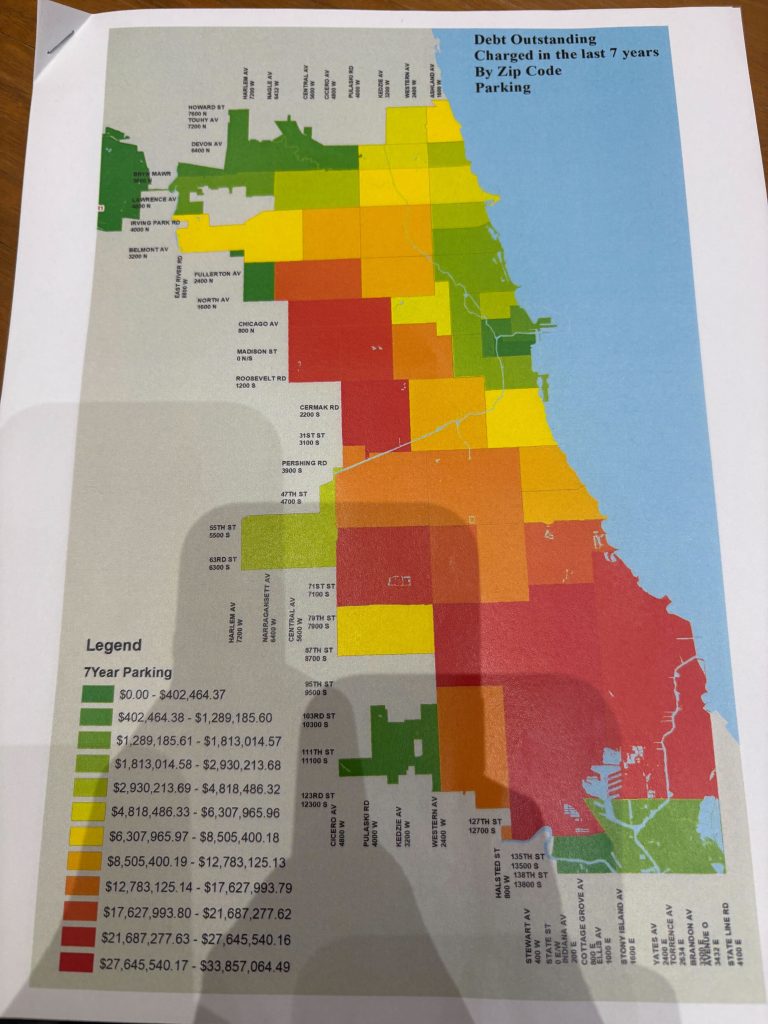
“If they do that quickly, it can be devastating, especially when you have high property taxes in South and West Side,” Ald. Byron Sigcho-Lopez (25th Ward) said. “I mean, I’m really concerned. And you add something like this, it can be the reason why people just sell their homes.”
The alternate budget group held their own brief press conference after the council meeting. They said the implementation of the debt collection would ultimately be up to the mayor’s team.
“It’s up to the mayor how he’s gonna carry that out. He’s talking about targeting the poorest people, that’s him,” Ald. Gilbert Villegas (36th Ward) told reporters. “There’s other people that can afford to pay that we haven’t targeted. We need to make sure that we’re collecting the fines.”
Ald. David Moore (17th Ward), who is not a member of the bloc of alders who proposed the alternative budget, said that the debt could potentially impact people’s credit scores. He also said the mayor’s office has the ability to collect the debts they want and that corporations could be the ones targeted through the proposal.
“We want that money from the corporations. Whether it’s from permits or fees and fines – we need that money from them,” Moore said. “A lot of that is corporate debt, but you’re going to have some individuals get caught up in that as well.”
Johnson said it’s not true that the model could be done equitably.
“The debt that they’re speaking about, we’re talking about individual debt now you have people who are just making stuff up,” Johnson said. “We’re not going to be subject to that fallacy. We’re going to continue to ensure that we’re balancing our budget responsibly.”
As it stands now, Moore said he is in favor of Johnson’s originally-proposed “Protecting Chicago Budget” because there has not been enough time to review the alternative.
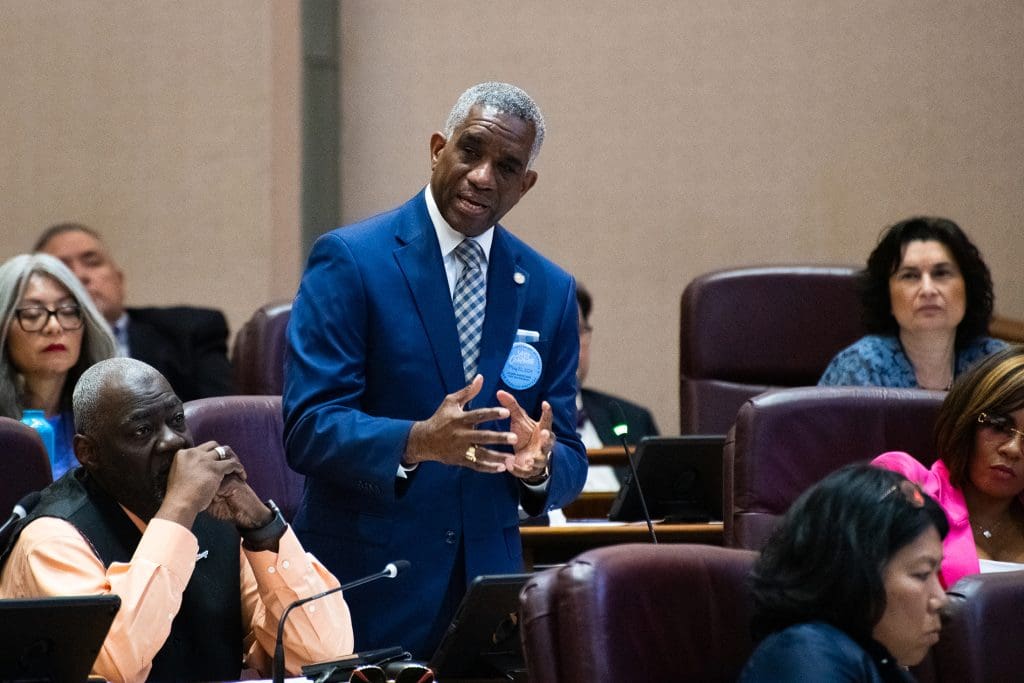
Quezada has similar reservations to Moore, stating that they have not had time to look over the data on what those debt collection efforts, proposed by alders, would actually look like.
“We haven’t taken a look at their data,” Quezada said. “So I’m very skeptical, especially for selling off debt to private debt collectors who have predatory practices.”
Sigcho-Lopez said even if the corporations are a large part of the debt collection strategy, their ability to hire lawyers, change their company names or declare bankruptcy would help them evade accountability, unlike the everyday Chicagoan.
“Sometimes they’re not even in the country, so it’s hard for us to get that debt,” Sigcho-Lopez said. “They’re going to stick it to people who are here, and that’s my biggest concern.”Ald. Emma Mitts (37th W
ard), a member of the alternative budget coalition, declined to comment on the criticism of the debt collection proposal. Her ward includes predominately-Black communities of Austin and West Garfield Park on Chicago’s West Side.
A document put together by Dan Schneider with Legal Action Chicago, obtained by Sigcho-Lopez, shared information on wage collection tactics by debt collectors. Sigcho-Lopez then shared the information with The TRiiBE.
According to the document, the principal way that debt collectors recover money is by wage garnishment. The coalition added that debt collectors can file “a lien on a home, just as the City may, and also have the right to seize a person’s assets, including their vehicle or work tools.”
“It is so extraordinarily unlikely the city is going to get the amount of money someone is telling them they’re going to get if they try and sell this debt,” Schneider told The TRiiBE. “Some of the city’s water [debt] goes back to the second Daley administration, goes back to the 1990s. People have died. People have moved and there are just so many other issues with the way the city’s water billing practices have worked, including for non metered properties. There are some real questions about how much of this debt is legally enforceable at all, or at least in the amount the city claims people owe.”
According to a 2022 analysis from the Metropolitan Planning Council, “Chicago’s lowest income households are the most burdened and pay on average almost 10% of their income on their water bill, double the commonly used U.S. EPA threshold of 4.5%.”
The city has debt relief tools to help Chicagoans with outstanding utility bills, something Quezada said should be the focus, rather than new ways to collect debt.
“There’s a reason why our working class folks are in debt in the first place, it’s because they’re lower income,” Quezada said. “They are struggling with an unaffordable economy, and so I think that our city should be finding ways to alleviate debt for people and to bring them into financial security, not, further put them in a more precarious economic situation.”
The council will reconvene on Friday and Saturday; a final vote on the alternate budget proposal could happen as early as Saturday.