


This moment demands more revolutionary voices in journalism. Support independent, Black-owned journalism today.
What starts in the streets ends up in the courtroom. On Wednesday, Chicago’s federal courthouse proceeded with multiple criminal and civil cases that have emerged in the wake of President Donald Trump’s mass deportation campaign.
Big news of the day included the announcement of a new hearing for the restraining order meant to rein in federal agents’ violent behavior, and arraignment hearings for two young people accused of blocking in/ramming federal immigration agents’ vehicles on Oct. 4. Those young people are facing felony assault charges over the incident, even after a federal agent shot one of them.
Here’s a look at where things stand.
Arrested youth released
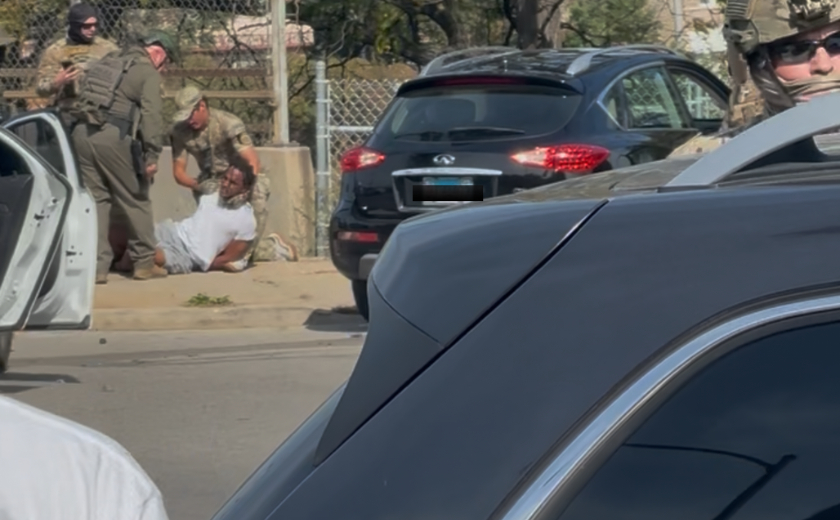
The TRiiBE reported Tuesday that an older white Border Patrol agent detained a young Black man outside a Walgreens in the East Side neighborhood, only blocks away from where agents deployed tear gas on dozens of local community members at the intersection of 105th Street and S. Avenue N.
“Why you running?” the agent asked the young man, who was pinned underneath him. As the young man attempted to answer, another person can be heard in the video screaming, “he’s a citizen!”
Follow-up reporting from ABC-7 indicates that the young man,19-year-old South Side native Warren King, was released the same day.

Another young person, who is Black and Hispanic, was detained at the scene of the community unrest at the 105th and Avenue N intersection. That 15-year-old boy, who is a U.S. citizen, was released, Block Club Chicago reported.
Southeast Side Rapid Response said Tuesday afternoon that federal agents had captured at least nine people during their raids across the area that day, including three from the scene of the gassing.
Judge orders early morning Thursday hearing on temporary restraining order against federal agents’ violent behavior
District Judge Sara Ellis, a Barack Obama appointee, filed a brief entry Wednesday as part of ongoing civil litigation against the Trump administration. Judge Ellis entered a temporary restraining order (TRO) against the federal defendants last Thursday, ordering federal immigration agents in Chicagoland to, among other things, wear identification and curtail their use of chemical weapons on journalists, protestors and religious practitioners.
The order is part of a class action lawsuit filed Monday against Trump, Homeland Security Secretary Kristi Noem, multiple federal agencies and “unnamed federal officer defendants.” Federal agents have spent a month shooting pepper balls, tear gas, rubber bullets and flashbangs into protestor crowds, Chicago communities and press alike. Agents have also arrested at least one Chicago journalist, Unraveled Press co-founder Steve Held, and have been caught on camera shooting reporters and clergy in the head and groin with pepper balls.
Ellis’ new entry called for a hearing on the case at 8:30 a.m. Thursday. The entry doesn’t provide any explanation for the hearing, though the TRO itself compels the parties to, within seven days, provide a joint status report “setting forth proposals for ensuring federal agents present in the northern [court] district of Illinois while this action is pending remain informed of the limitations imposed by this order.”
A hearing is still scheduled for Oct. 23, the day the order expires, to determine whether it should be upgraded to a longer-term preliminary injunction.
Despite the order’s language barring agents from using tear gas and other “riot control weapons” on press and protestors “who are not posing an immediate threat to the safety of a law enforcement officer or others,” agents have deployed tear gas in two separate Chicago communities in the week since Ellis handed it down.
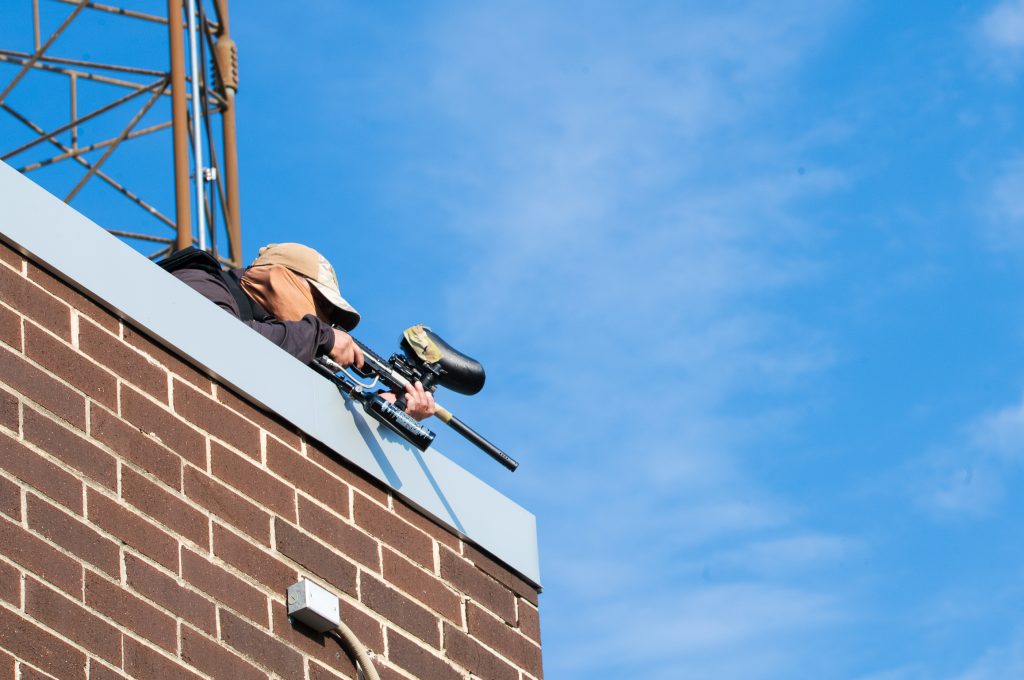
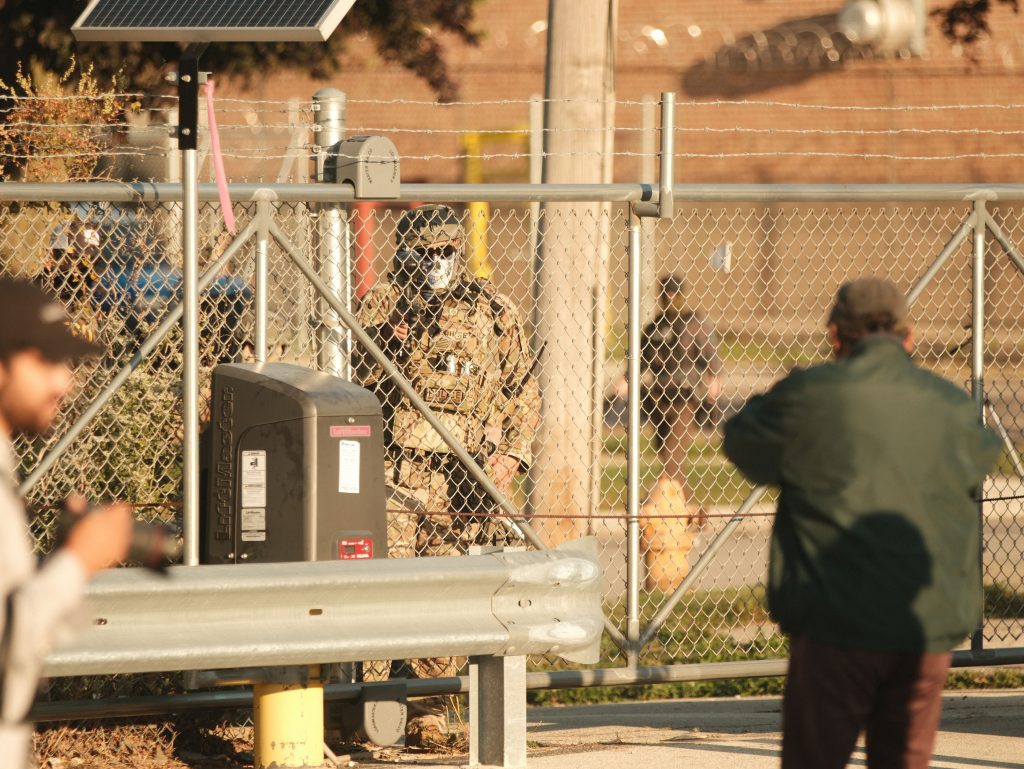
The gas affected more than protestors who stood up to agents in Albany Park on Sunday and East Side on Tuesday; also impacting press, the surrounding local neighborhoods and, in the case of East Side, at least one baby.
The order also compelled the often-masked federal agents to wear “visible identification” — which Ellis said could take the form of a “unique alphanumeric identifier sequence.” Per multiple photographs and videos The TRiiBE has reviewed since last week, some agents have responded by handwriting alphanumeric sequences on small bits of yellow tape attached to their gear.
Community members plead not guilty to assault charges
Marimar Martinez and Anthony Ian Santos Ruiz, two Chicago locals each facing a felony assault charge for allegedly using their cars to strike Border Patrol agents’ own vehicle in Brighton Park on Oct. 4, both pleaded not guilty during separate arraignment hearings on Wednesday.
A federal agent shot Martinez during the same encounter on Oct. 4, which led to a standoff between Brighton Park community members and militarized federal agents that afternoon. The confrontation ended when federal agents deployed tear gas onto the street and sped off in a long convoy amid the resulting chaos. The gas affected protestors, press, locals on adjacent streets, and even Chicago Police officers who had placed themselves between the feds and the crowd.
Martinez’s wounds were visible when she appeared in court for a detention hearing last week.
A grand jury, which is charged with finding probable cause for further prosecution, indicted both Martinez and Santos Ruiz last Thursday. Federal prosecutors have dismissed felony and misdemeanor charges against four other Chicagoland locals also accused of assaulting or impeding federal immigration agents since late September.
Martinez’s attorney Chris Parente has questioned the government’s narrative in court despite the grand jury indictment, and has argued the armed federal agents who shot his client are the real danger.
The Trump administration’s credibility has now been called into question not only by the press and elected officials, but by the federal court itself. Reflecting this lack of trust in the government’s honesty, Parente asked the court this past Monday to enter a preservation order on the Department of Homeland Security (DHS).
The order, if granted, would compel DHS to maintain “any and all records, emails, text messages, documents, notes and other materials” related to Martinez’s shooting and the subsequent press release issued by DHS Assistant Secretary Tricia McLaughlin.
In that press release, McLaughlin claimed federal officers were “forced to fire” on Martinez after someone tried to run them over.
“It is Ms. Martinez’s position that there are multiple factual inaccuracies in this press release which presumably originated with Border Patrol agents involved in this investigation. The credibility of DHS’ agents’ descriptions of the events at issue will be the focal point of the defense at trial,” Parente wrote in the preservation order motion.
Grand jury returns indictment against man accused of murder solicitation plot
A grand jury on Tuesday returned an indictment against a man named Juan Espinoza Martinez on a murder racketeering charge, whom the federal government accuses of placing a $10,000 murder hit on Border Patrol Chief Gregory Bovino. Bovino has become a face of the Trump administration’s mass deportation campaign in Chicago, particularly regarding the activation of militarized Border Patrol agents.
DHS claims Espinoza Martinez is a high ranking member of the Latin Kings gang; an accusation Espinoza Martinez’s lawyers have denied. The indictment returned against Espinoza Martinez on Tuesday makes no mention of any gang affiliation at all.
Broadview fence comes down
A fence in front of the ICE facility in west suburban Broadview, IL came down late Tuesday night, in compliance with a ruling by District Judge LaShonda Hunt.
Hunt, a Joe Biden appointee, ordered DHS late last week to remove the fence by midnight on Tuesday. Federal authorities erected the fence across the street leading to the ICE facility in late September after weeks of protests, but Broadview sued DHS and Kristi Noem earlier this month in order to have it removed. Broadview officials claimed it was a public safety hazard, and noted in their complaint that federal agents had refused to remove it voluntarily.
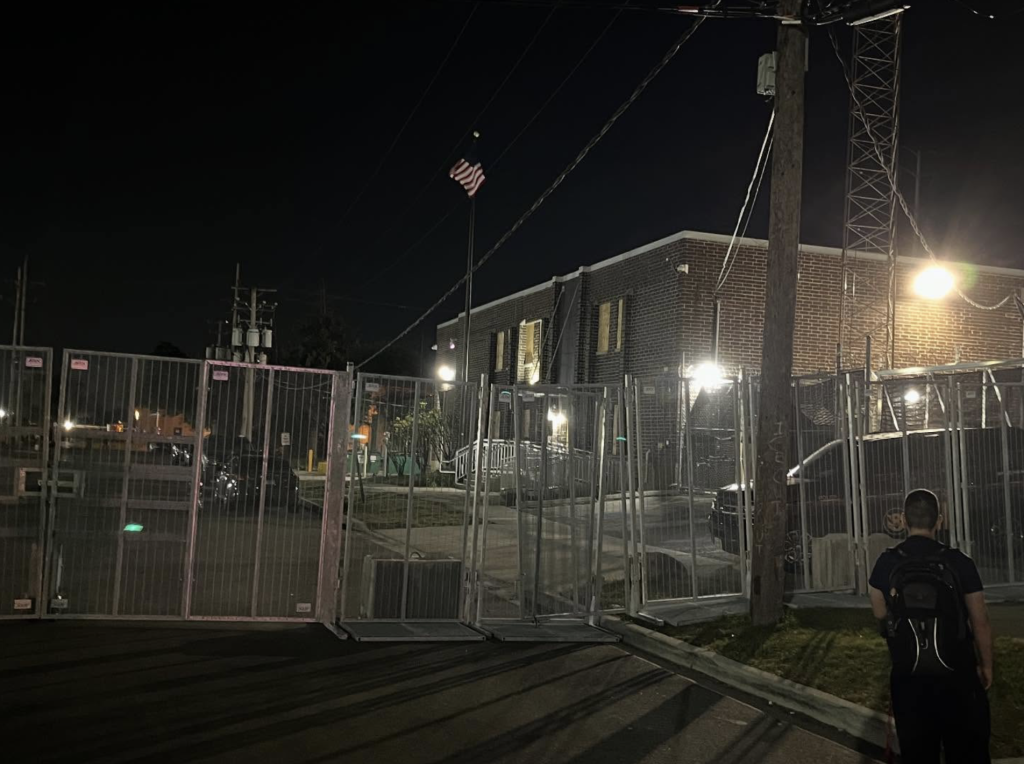
Chicago Sun-Times journalists at the Broadview facility Tuesday night reported the fence came down shortly before 11:00 p.m.
Fence or no fence, the Broadview ICE facility has been heavily fortified against disruptive protests since the end of September. Multiple concrete barriers have been added to the streets adjacent to the site in order to create “free speech zones,” and over the first two weekends of October, local police and Illinois State Police have themselves cleared protest crowds and arrested multiple individual protestors.
Broadview Mayor Katrina Thompson, meanwhile, has issued two executive orders since the start of October meant to further discourage protests around the facility. The first, signed Oct. 6, limited protest to between 9:00 a.m. and 6:00 p.m. The second, signed Oct. 12, further shrank the “free speech zone” to only Beach Street, the side road on which the facility is located in a small industrial area. The order further prohibited protest on 25th Avenue, the busy street adjacent to that industrial area.
“There are too many protesters abusing their right to protest,” Thompson said in a statement accompanying her second executive order.