




The People is our section for opinions and perspectives. Submit your opinion to info@thetriibe.com.
This question was once again on the minds of legal experts and political pundits after President Donald Trump announced on his social media platform Truth Social that he will designate antifa a major terrorist organization.
Some legal analysts were quick to point out that no, he cannot do that. While U.S. federal law gives the executive the power to designate foreign groups as terrorist organizations, there is no such provision for domestic groups.
But what the president is and is not legally empowered to do in this case misses the larger point of his announcement. What matters is not simply whether Trump can designate antifa a terrorist organization, but also what his attempt to do so signals.
As a scholar researching how the language of terrorism functions in political culture, I have seen throughout history how the terrorism label is first and foremost a propaganda term with awesome power to discredit political opposition and justify repression.
This year alone, administration officials called for antifa and Black Lives Matter to be treated as terrorist organizations and accused Tesla protestors and student activists of terrorism. Mere hours after Charlie Kirk was shot and killed at an event in Utah on Sept. 10, with the shooter still at large, President Donald Trump condemned the attack as terrorism and vowed vengeance against the “radical left” he claimed was responsible.
On the social media platform X, far-right activist Laura Loomer blamed the left for sending a sniper to kill Kirk and called them terrorists. The White House correspondent for the right-wing online magazine The Federalist called for designating the Democratic Party a domestic terrorist organization.
This rhetoric against the left is in stark contrast with the evidence. According to the Cato Institute, left-wing violence accounts for less than a quarter of people killed in acts classified as terrorism in the United States. Over half of all fatalities were caused by right-wing violence. This is not a new trend either. Since the 1970s, six times as many people were killed by right-wing violence than by violence from the left.
Yet whenever lawmakers call for counterterrorism against right-wing violence, pushback ensues. Famously, in 2019, a leaked Department of Homeland Security assessment that highlighted the threat posed by white supremacists led to conservative outrage and effectively ended further efforts to address right-wing violence. The Domestic Terrorism Penalties Act and the Confronting the Threat of Domestic Terrorism Act of 2019, federal legislation to criminalize terrorism introduced by bipartisan groups of lawmakers, have still not been passed.
The point is not that elected officials should finally pass these laws and equally use counterterrorism measures against all forms of political violence, regardless of ideological motivation. Quite the opposite.
The point is that we need to see the terrorism label for what it is: a highly effective rhetorical weapon that serves to delegitimize criticism, persecute political opponents and consolidate power.
This is not unique to the Trump administration’s rhetoric but a defining feature of domestic terrorism policy in the United States.
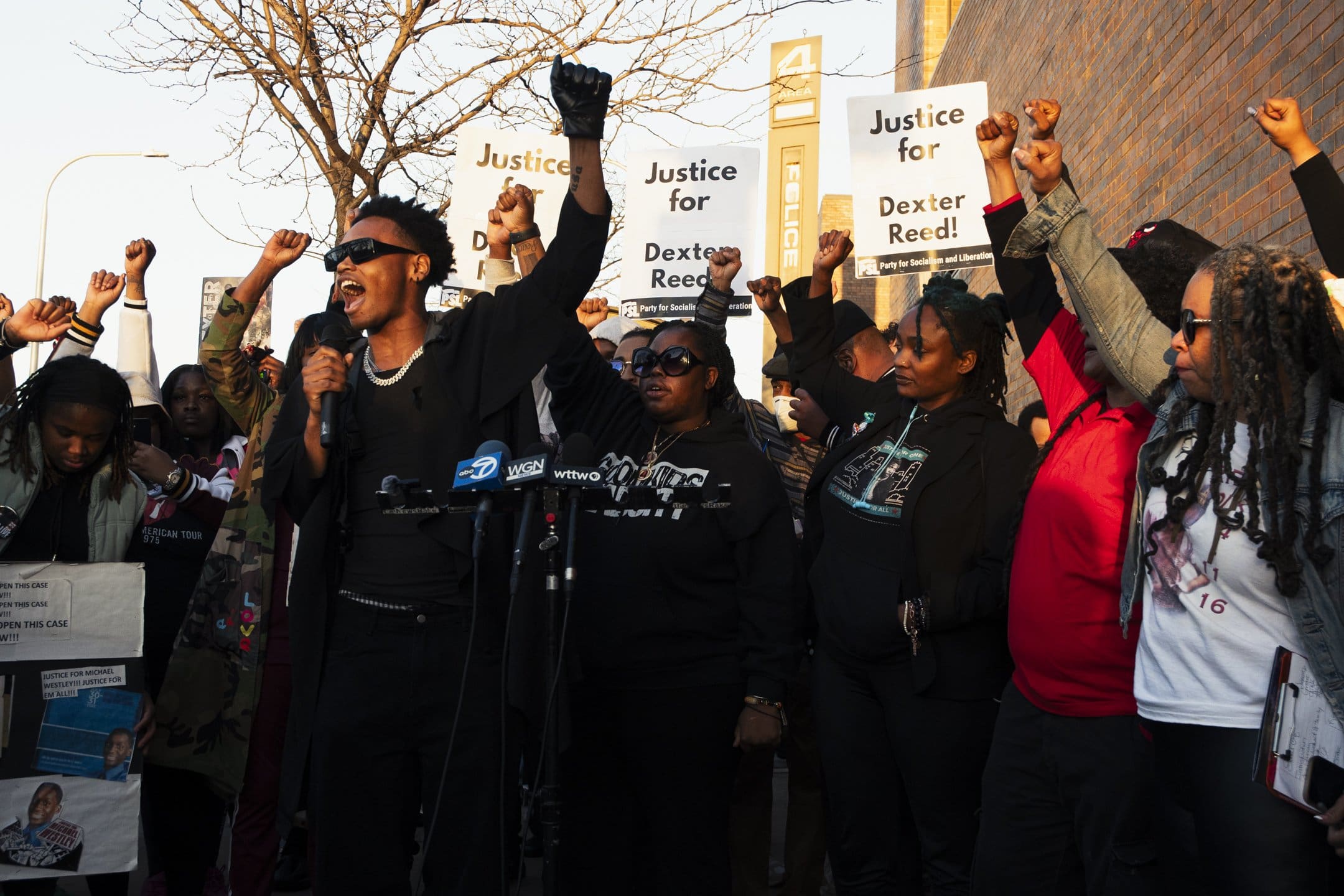
U.S. counterterrorism was established in the 1960s and ’70s in response to Black uprisings against police brutality, the foundation of the Black Panther Party, Black militancy and anti-war activism. By branding Black and Left activists as terrorists, the Richard Nixon administration was able to suppress demands for social justice and racial equality in ostensibly neutral terms of law and order and national security.
It did so by using techniques of counterintelligence the FBI had used since its establishment against organized labor, socialist and communist activism, Black civil rights leaders, Indigenous resistance and white supremacist organizations like the Ku Klux Klan. The architects of counterterrorism also repurposed practices of imperial violence used, for instance, to annex the Philippines in 1898 and counterinsurgency tactics developed against anticolonial movements in Southeast Asia and Latin America.
Growing domestic unrest and the 1972 attack on the Israeli team at the Olympic games in Munich created a political climate that allowed for the consolidation, domestication, and institutionalization of these repressive techniques in the name of counterterrorism. The Cabinet Committee to Combat Terrorism was established in 1972, the first Joint Terrorism Task Force in 1980.
Ever since, domestic counterterrorism policy has been partisan by design. It was built to quash political dissent while portraying the state as guardian of order and security against dangerous terrorists. The current administration’s rhetoric is part of this pattern.
In the 1970s, individuals and groups whose activism was delegitimized as terrorism called on their supporters to steer clear of the language of terrorism in order to avoid lending credibility to the government’s claims and amplify its push for repression.
While it is understandable that elected officials clamor for more counterterrorism funding to respond to school shootings and other forms of political violence, I worry that such a move would do more harm than good—especially in a moment when the federal government weaponizes the rhetoric of terrorism to silence critics and go after political opponents.
The rhetoric of terrorism is designed to inflame. It is an incendiary label that deepens our divides and fuels repression. It’s time to stop using it.