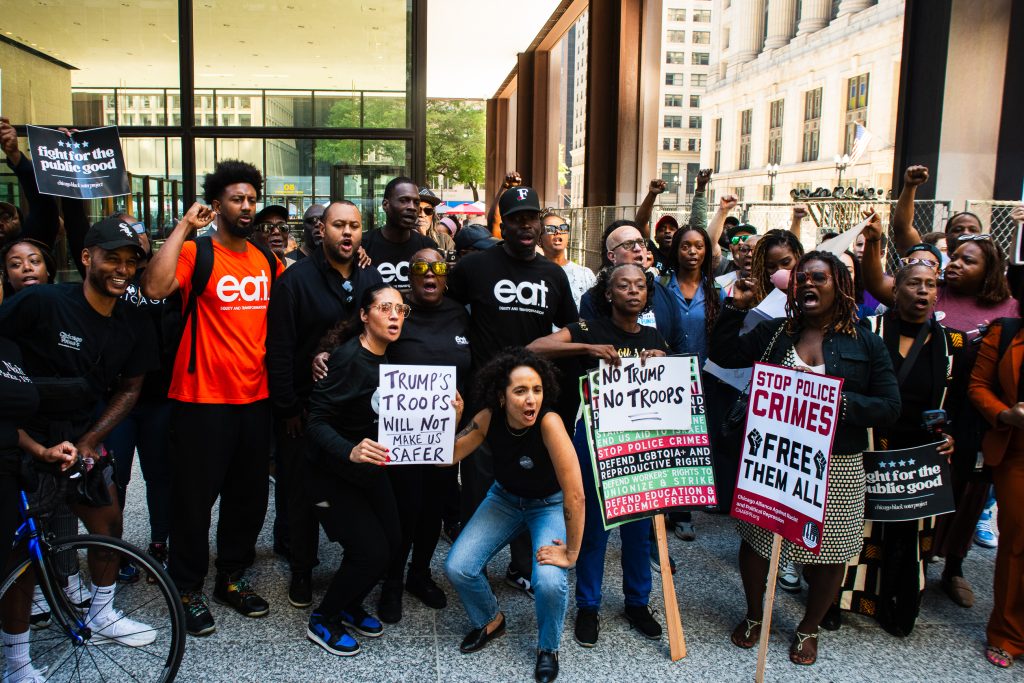
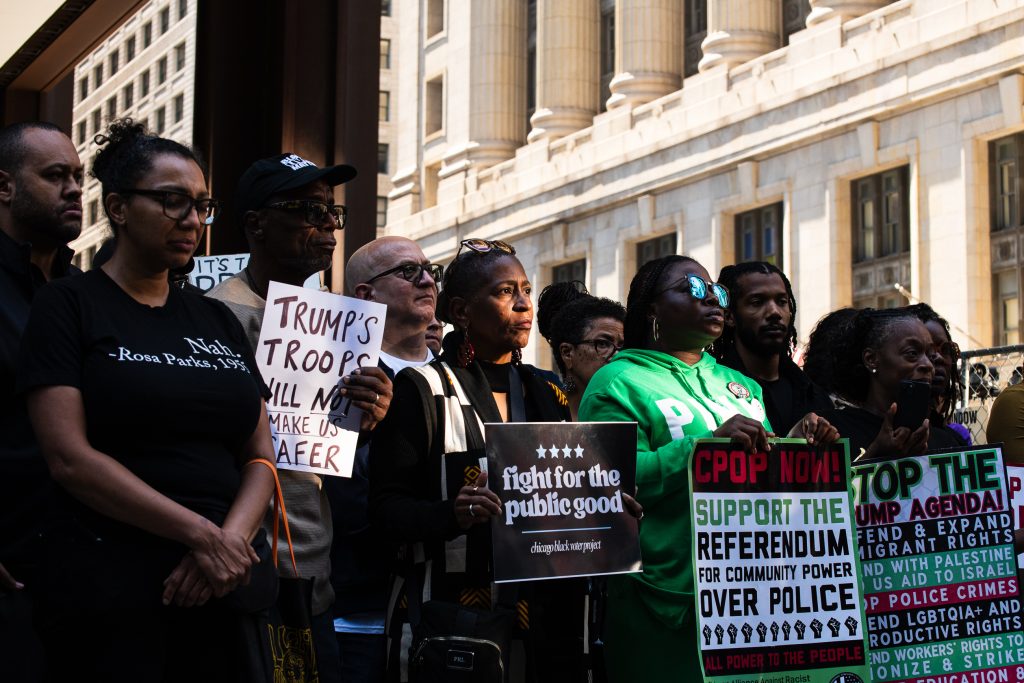
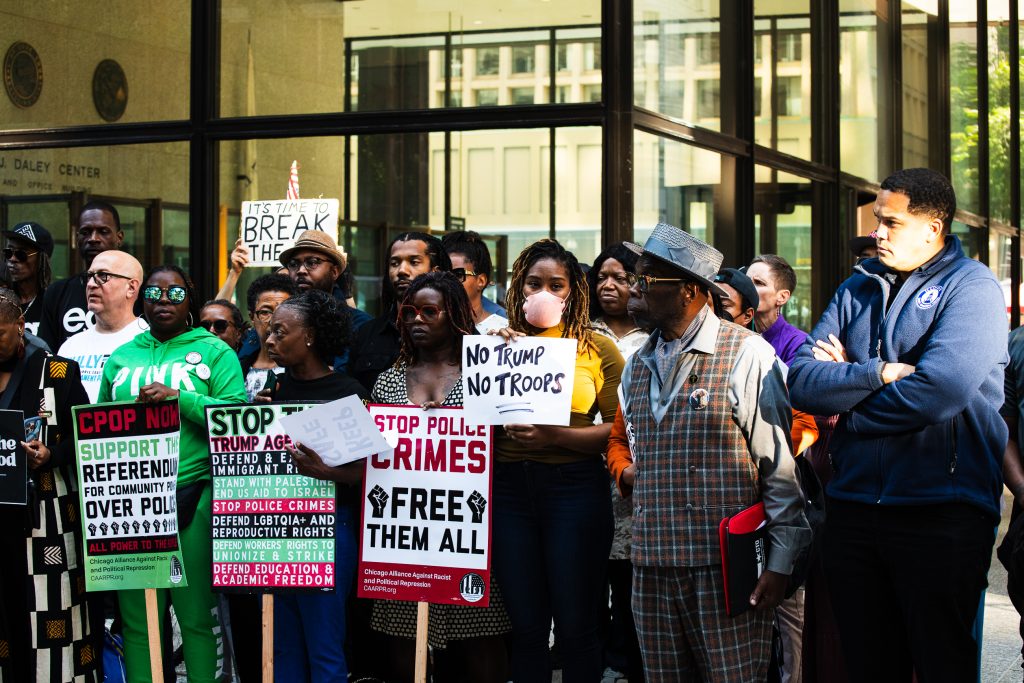
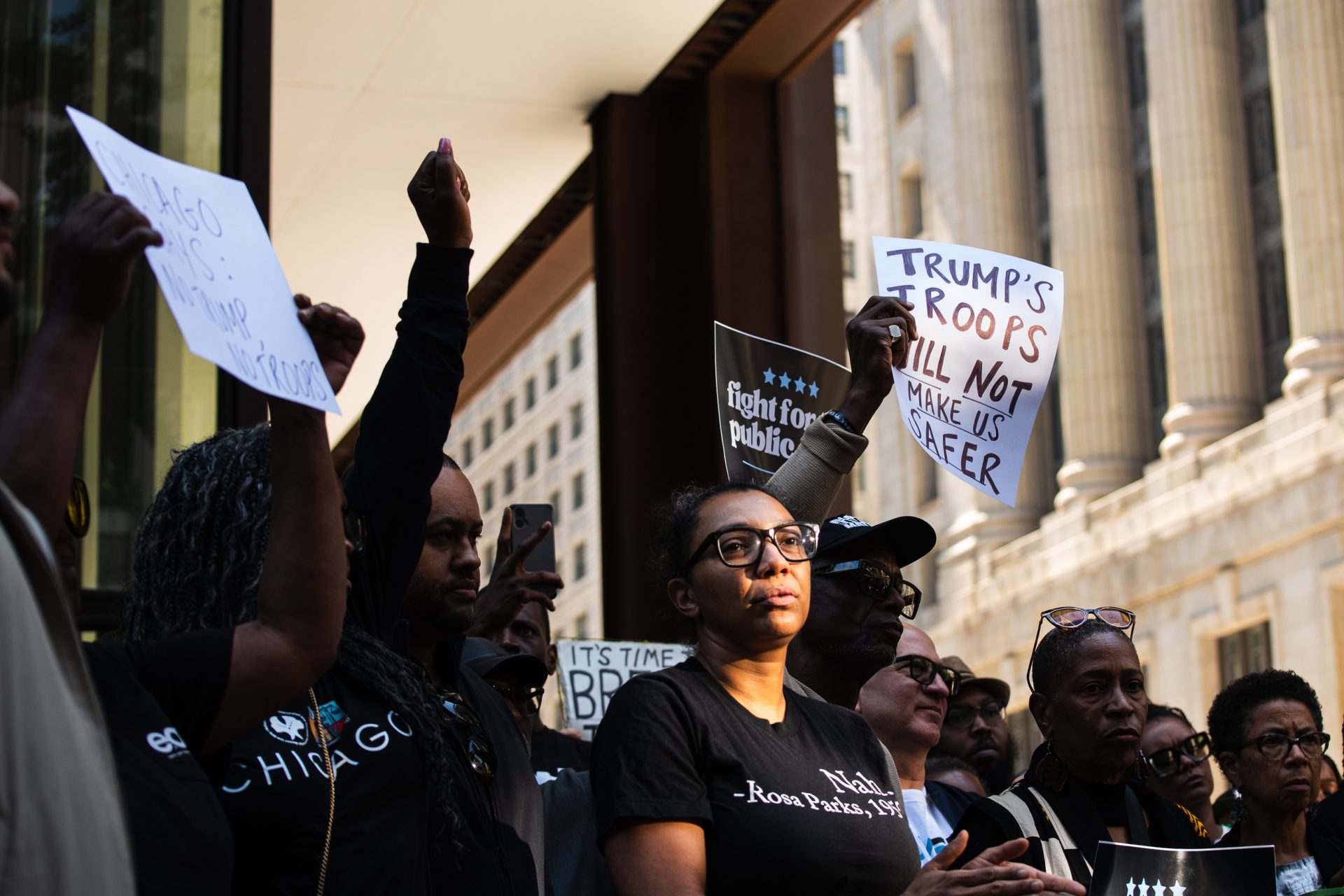
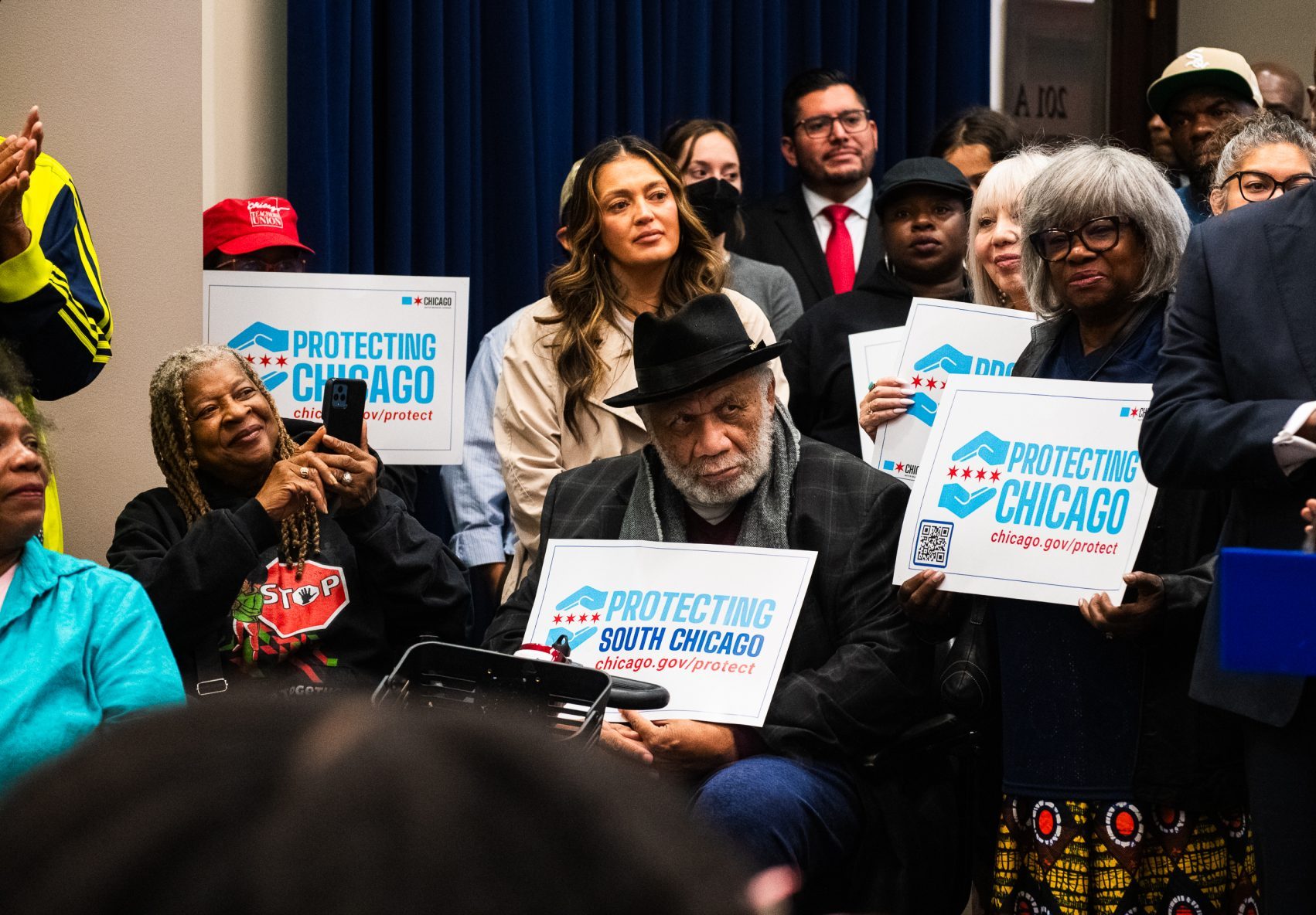
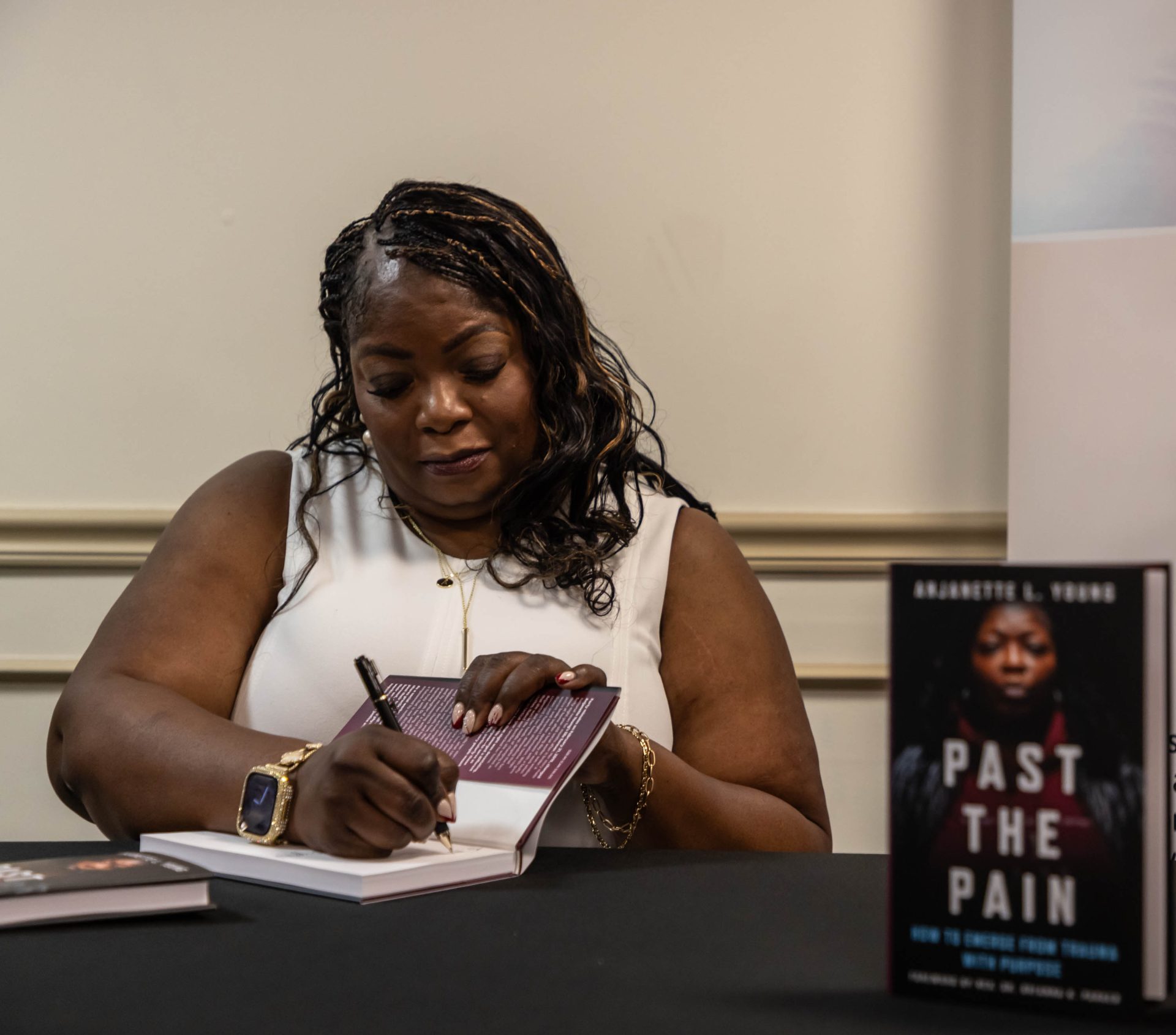
A coalition of elected leaders and dozens of Black-led community organizations gathered today outside of Daley Plaza in Chicago’s Loop to denounce President Donald Trump’s threats to send military forces to Chicago.
Although the Trump administration has not publicly shared its plans, media reports say federal agents with the Department of Homeland Security, Immigration and Customs Enforcement (ICE) and U.S. Customs and Border Protection may be staying at the Naval Base near North Chicago. Other reports list Sept. 5 as the possible deployment date.
“We know that President Trump has been talking about Chicago. He’s been making sensationalized racist threats about our city since at least he first ran for president in 2015, and that’s not right, that’s not us, and his military threats are not welcome in our city,” said Asha Ransby-Sporn. She’s a longtime organizer and currently leads the Chicago Black Voter Project.
Collectively, they introduced that they’re developing a 30-day emergency response plan, which includes establishing mutual aid hubs in 10 neighborhoods, Know Your Rights training sessions and sanctuary spaces citywide. Details about the emergency response plan are still being ironed out, according to Ransby-Sporn.
“We’re establishing mutual aid hubs in 10 of Chicago’s neighborhoods that will provide direct cash support to our people in need,’’ Equity and Transformation (E.A.T.) founder and executive director Richard Wallace said.“Second, we are training 1000 community members to know their rights and third, we’re creating an organizing network of sanctuary spaces throughout the city of Chicago.”
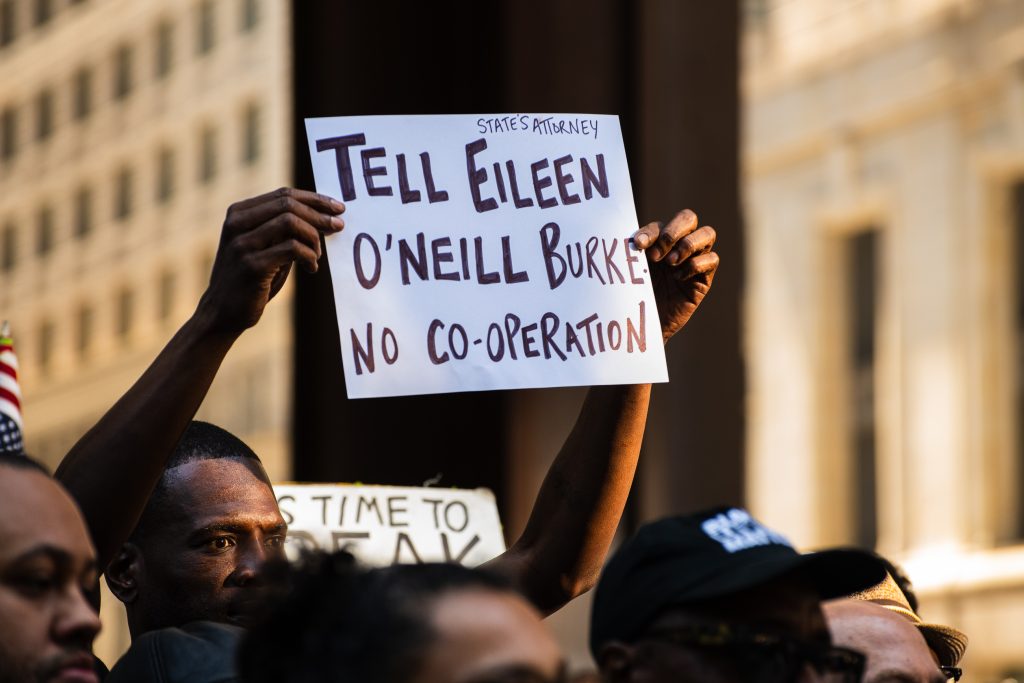
The coalition is also urging Cook County State’s Attorney Eileen O’Neill Burke’s office to “pledge not to assist the racist and harmful occupation of the city by federal military forces.”
“We have an elected official, State’s Attorney Eileen Burke, who has yet to commit to not cooperating,” said Jasmine Smith, a lead organizer with the Chicago Alliance Against Racist and Political Repression (CAARPR). “We’ve been [known] since she came in office, where she stands, but it’s up to us to stand on her neck to make sure she stands with us in our demands of fighting for our liberation.”
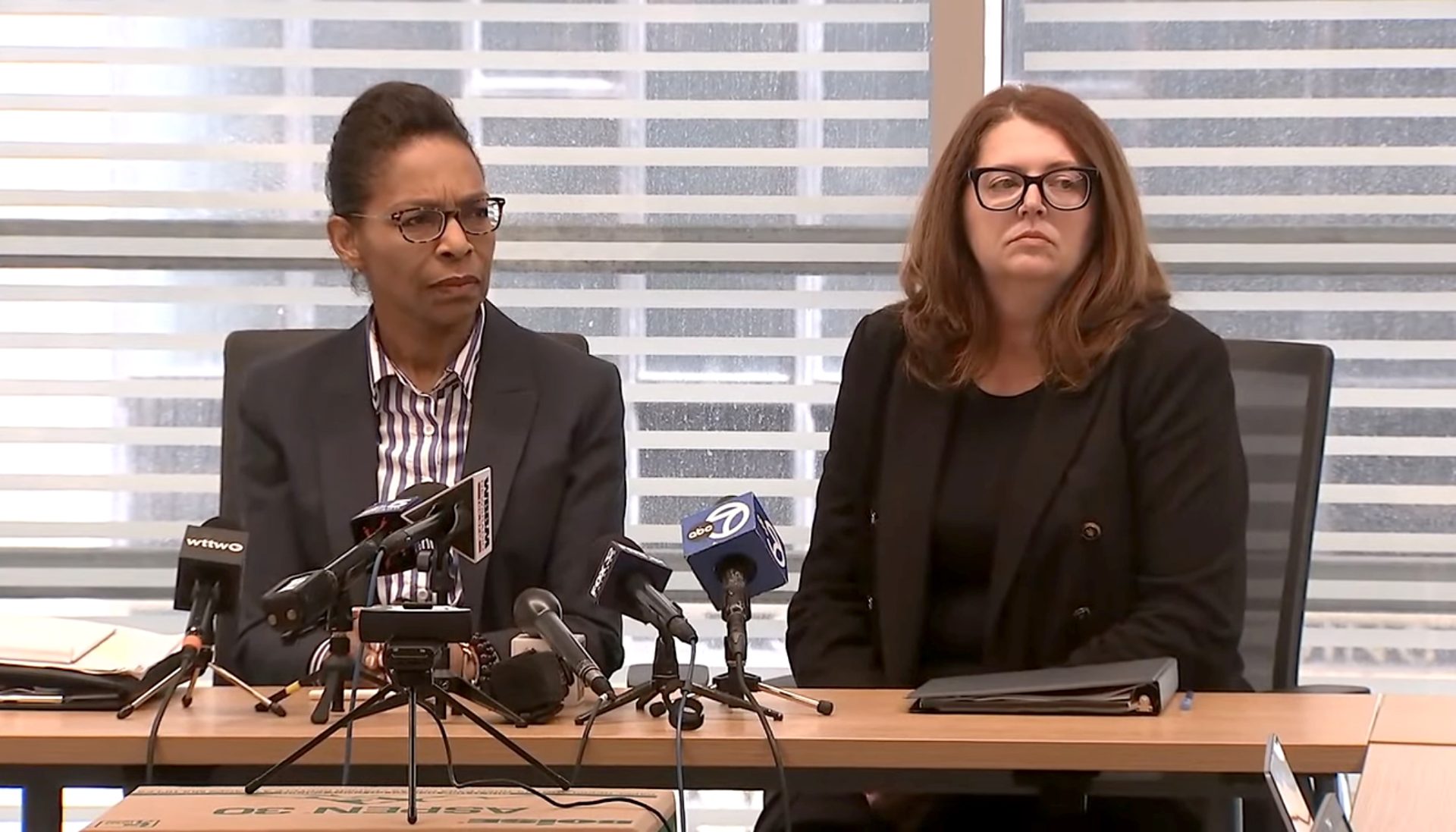
The TRiiBE reached out to the Cook County State’s Attorney’s Office for comment. Without answering our question, a spokesperson directed The TRiiBE to an Aug. 25 joint press release from elected leaders who stood in solidarity Monday on the Chicago River Walk to tell Trump not to send in the National Guard or any other authoritarian force.
“We prosecute crimes in collaboration with our law enforcement partners when they are properly presented with appropriate jurisdiction and sufficient evidence,” O’Neill Burke wrote in the press release. “Federal intervention in our public safety efforts will never result in a deviation from our core mission of following the law and representing all victims of crime in Cook County.”
Today’s gathering included elected leaders State Sen. Robert Peters (D-13) and Cook County Commissioner Tara Stamps (D-1); and members of Black-led faith and community organizations such as E.A.T., the Chicago Black Voter Project, CAARPR, LIVE FREE Illinois, the Illinois Coalition to End Permanent Punishments, Chicago Torture Justice Center, and more.
“When the state fails to protect us, we have no choice but to protect ourselves, and we have always known how to do that. We’ve been doing that all along,” Wallace said.
Trump has always had something to say about Chicago. In 2016, nearly 2,500 people, led by young Black organizers, assembled to protest Trump during a campaign rally at the UIC Pavilion. The Trump campaign abruptly ended the rally as a result. During his first and second terms, he’s constantly referred to Chicago as a place rampant with crime. This year, Chicago is seeing historic lows in homicides and shootings.
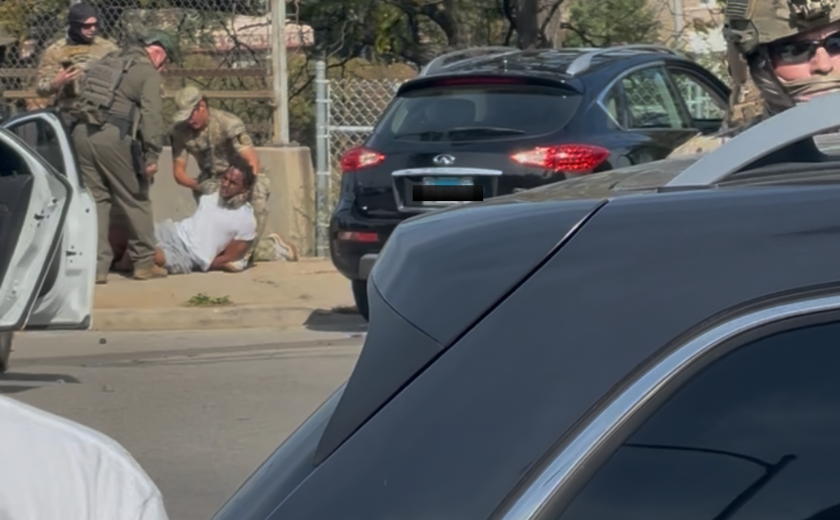
In his renewed attacks on Chicago, Trump threatened to deploy federal agents and National Guard troops to the city, just like he’s done this summer in Los Angeles and in Washington, D.C. The mobilization of the National Guard and additional federal agents has resulted in hundreds of arrests in DC.
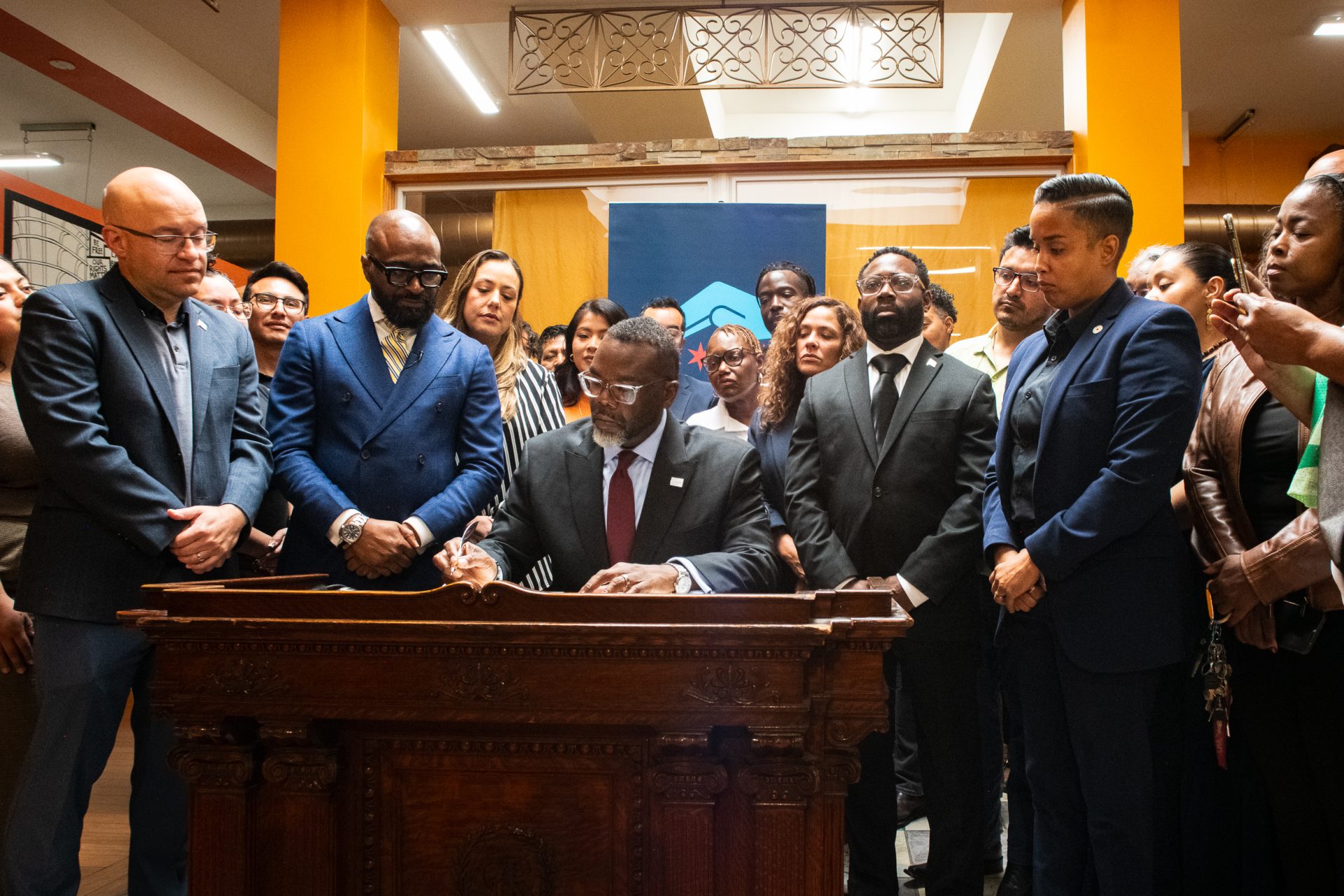
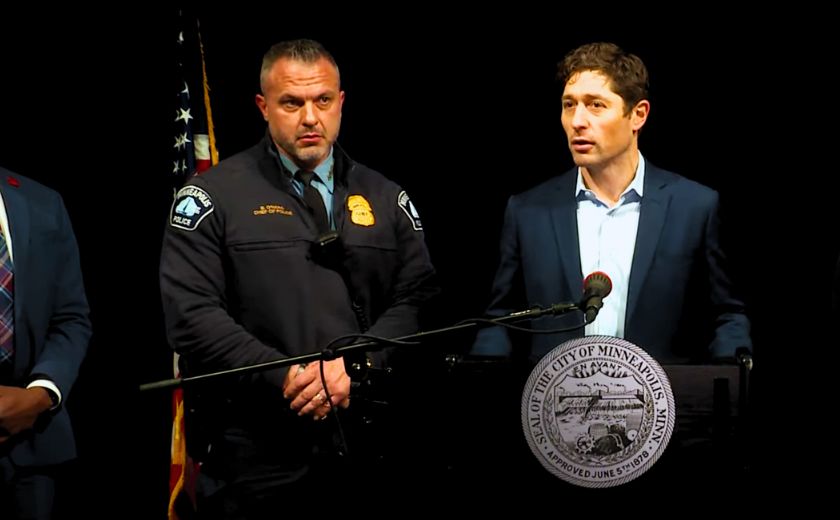
Mayor Brandon Johnson and members of his administration held a virtual press briefing this morning to provide clarity and answer questions around the city’s response to Trump’s threats. Johnson stated that the city still hadn’t received any formal communication from the Trump administration regarding federal law enforcement or military deployments.
“We have not had any communication with the White House regarding the president’s purported desire to send federal troops into cities across America; he has not communicated that with us,” Johnson said.
Others on the call included chief of staff, Cristina Pacione-Zayas; deputy mayors: Garien Gatetwood, Beatriz Ponce de Léon, and Sendy Soto; corporation counsel Mary Richardson-Lowry and Chicago Police Department (CPD) Supt. Larry Snelling.
Snelling reiterated that CPD cannot and will not interfere with federal agents’ work. He said CPD officers alone won’t be dispatched to calls related to Immigration and Customs Enforcement (ICE). “What we will do is send a supervisor to that location to assess,” he said. “Once the assessment is made, and we know that it’s only immigration enforcement going on, our officers will not be in those areas assisting in any way when it comes to immigration enforcement.”
Snelling and Soto, the Johnson administration’s chief homelessness officer, said the city won’t be assisting in any efforts to arrest people experiencing homelessness.
“We do not interfere with the work that they’re doing, but we will not engage in immigration enforcement in any way, assisting with federal agents, but we won’t, and again, I’ll just make this clear, we will not interfere with the work that they’re doing,” Snelling said.
Ponce de León, who leads the Johnson administration’s office of Immigrant, Migrant and Refugee Rights, responded to reporter questions about how the city will support immigrant communities. She said the city has been sharing Know Your Rights information in multiple languages and working with immigrant rights groups on preparation planning.
Allies, she said, are also organizing ways to assist immigrant communities with daily outdoor errands.
“What does it mean to be ready in the case of a separation? People are looking at basic information, having their passports and documents together. They’re also considering giving guardianship to a trusted friend or family member in case they are separated from their children,” she said. “These separations are life-changing, and the most that we can do right now is to make sure that we are working in partnership with the faith community, with community organizations, with a variety of groups to help get this information out.”
The key tenet from the coalition’s press conference at Daley Plaza that was reiterated is that an influx of federal agents or the National Guard will not solve the decades-long disinvestment in Black communities. Speakers also emphasized that investment in quality schools, affordable housing, and employment is crucial to addressing systemic inequities.
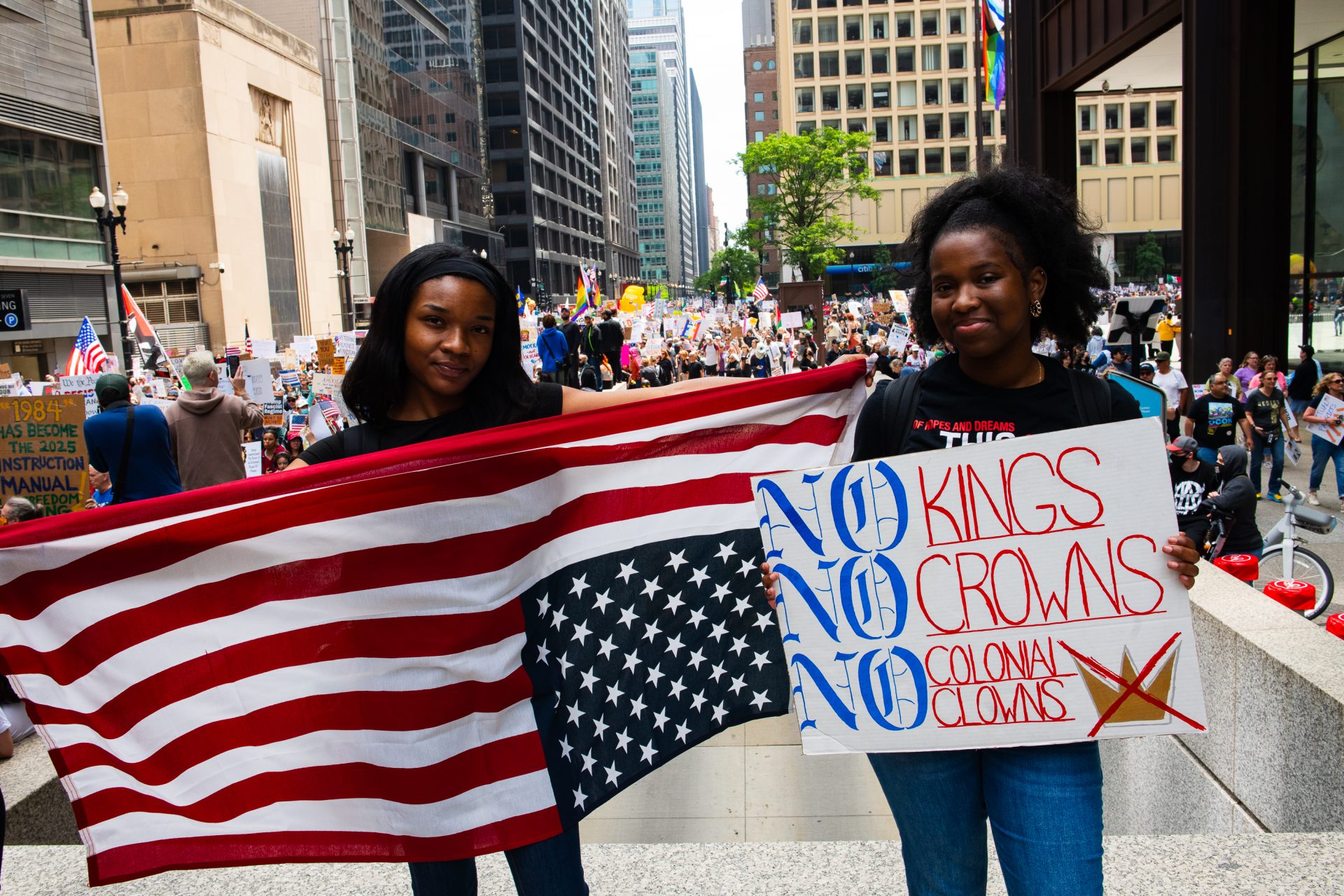
“We cannot solve these problems, y’all, by continuing to put police and people with guns in our community,” said Ernest Crim III, a lead organizer with E.A.T.’s Joliet Chapter. “We talk time and time again about how crime is down, but the truth is, no matter how low crime is, we will always be viewed as criminals in this country until there is restoration and reparation done.”