

In 2014, when Noelle Curtis opened Pretty Dapper, a day spa in Oak Park, she did so out of passion. A North Lawndale native, Curtis thought about the skills she possessed; she’d worked in the marketing field and wanted to combine that with her customer engagement skills and her love for the beauty industry.
“At that point, we were like the fourth African American-owned day spa within the city boundaries of Chicago and the surrounding suburbs. And we had a good [nearly] 10-year run,” Curtis said.
The entrepreneurial journey came with its own unique set of financial shortfalls that Curtis noticed in the early years of running the business. They included her doing a base cost price analysis of what she would make if a certain number of clients visited her shop, but she said she didn’t consider payroll and other expenses, or even cancellations. She was booked but wasn’t making a profit.
Without a financial team to help make sense of her business numbers, Curtis had to learn how to solve them on her own.
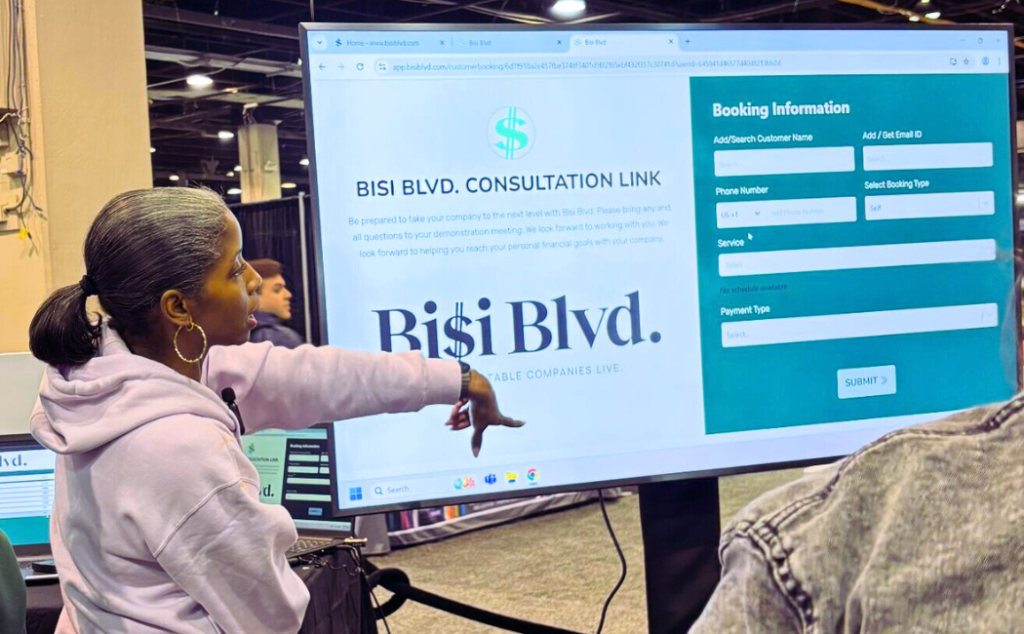
“I want to say it was about year three of me actually having my day spa. I realized my numbers weren’t calculating the way I thought they should with the business plan,” Curtis said. “I started educating myself more within corporate finance, and discovered some formulas and processes and systems that helped us shore up and strengthen our company’s financials.”
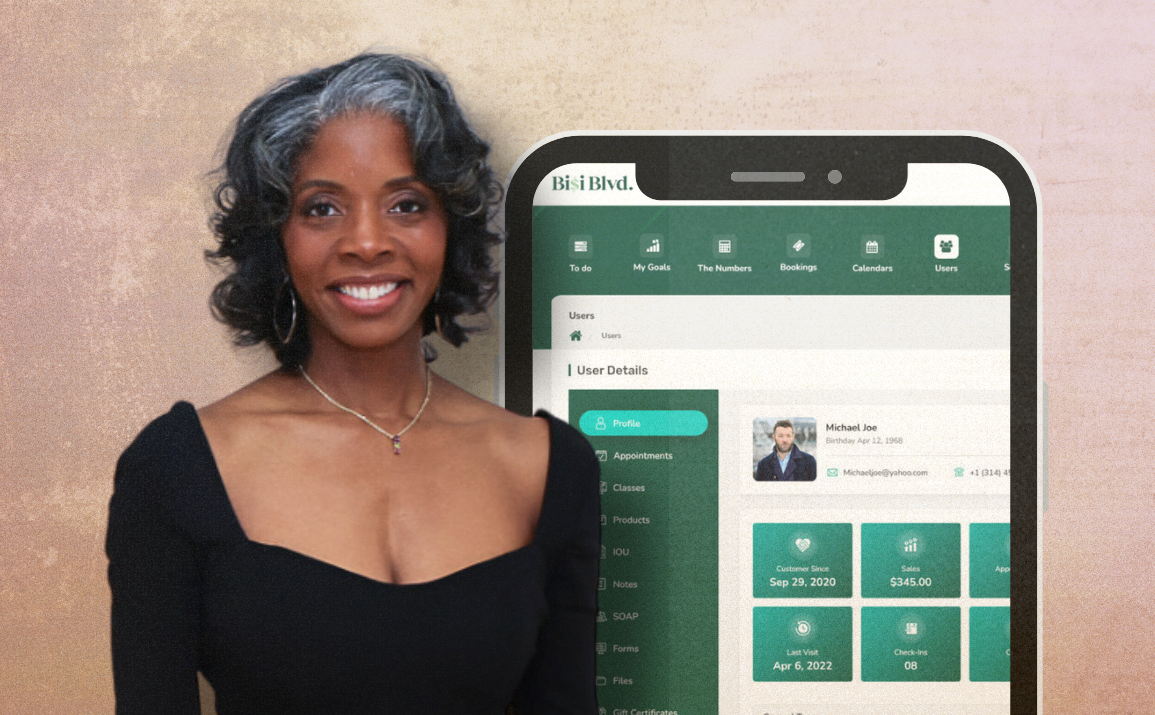
Curtis decided to close her day spa in 2022, two years after the COVID-19 pandemic. She spent her post-shop time educating herself on finance. That led to her launching Bisi Blvd., her new revenue planning business the same year. With her platform, Curtis supports business entrepreneurs by helping them overcome a frequent challenge: financial growth.
“Our system helps with personal budgeting, company budgeting, and price optimization,” Curtis explained. “We really come in and give that business acumen that’s lacking in a lot of these technical trades and industries, and we simplify it.”
Bisi Blvd. works as a booking software similar to the popular beauty and wellness app Booksy. Instead, with Bisi Blvd., business owners can get back-office support to help them streamline their operations. Curtis says that the platform allows owners to look at the pain points they may miss – just like she did when she was operating her spa.
“There’s still this educational black hole gap of showing service providers how to actually generate profit,” Curtis said. “And so we do all that back office. So, budgeting, inventory control, customer rescheduling, we’re integrating AI now. We’re building the model to train each client’s account and give them more predictive controls.”
Curtis is an example of a Black woman in the financial services industry called fintech, which is short for financial technology. Black people are underrepresented in financial services, a growing sector that includes a range of professions such as banking, accounting and investing. Another Black-owned fintech company is the New York-based Squire, which is specifically for barbers to schedule appointments and also provides business management services for owners.
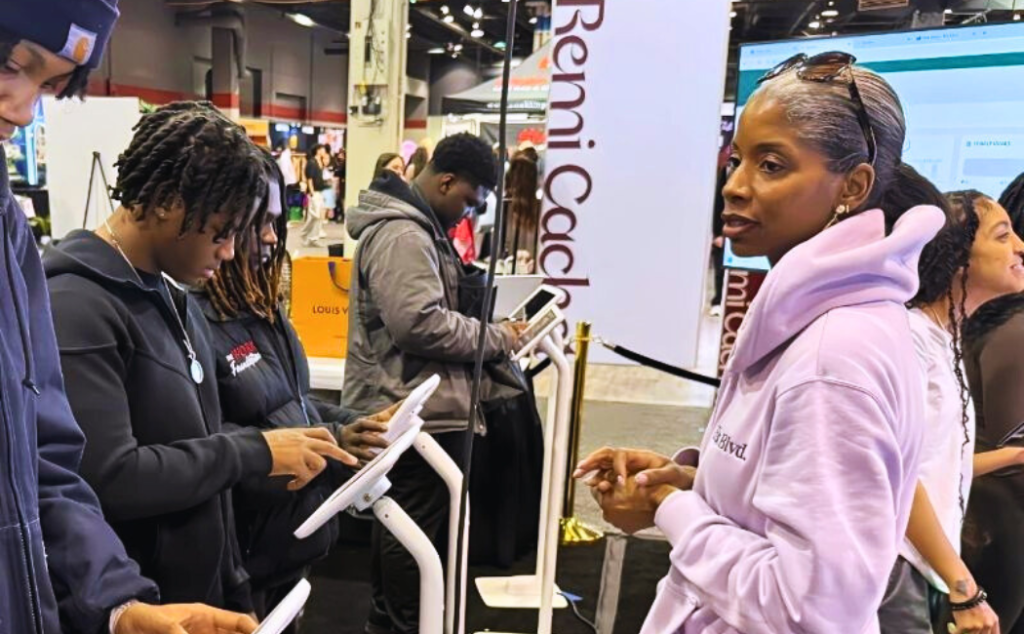
Curtis said she financed Bisi Blvd. herself for a year and a half before deciding to look for outside financing. In 2021, Bisi Blvd. secured $25,000 when Curtis participated in a pitch competition with TechRise. TechRise is an initiative of P33, which supports tech founders in Chicago with its pitch competitions and various programs to connect startup founders to stakeholders throughout the city.
Black entrepreneurs are less likely to have the money to fund startups and are less likely than white founders of tech startups to receive venture capital funding for their businesses.
Chicago:Blend, a local nonprofit that provides data about diversity in the VC industry, released a report last year highlighting disparities in venture capital funding. According to the report, “Despite having the second highest percentage of venture-backed companies founded by Black or African American founders in the last five years relative to other cities, these startups raised just 2.4% of all VC funding allocated to Chicago companies.” This was also the case for woman-owned startups like Bisi Blvd.
Bisi Blvd., which is currently in its pre-seed funding stage, has raised $1 million out of its $2 million goal through self-funding, friends and family and outside investors, Curtis said.
“[Waiting to get funding] was with intent, because I wanted to grow at a pace that I could handle,” Curtis said. “Unfortunately, people of color don’t have access to a lot of disposable income, right? And if they do, they’re a little risk-averse to put it into something that they’re not going to get that return back immediately.”
According to a 2020 equity report by consulting firm McKinsey & Company, “Representation in financial services is especially effective for achieving equity, since the sector has control over capital and assets that yield outsize power and influence over markets, the business landscape, and entrepreneurship.”
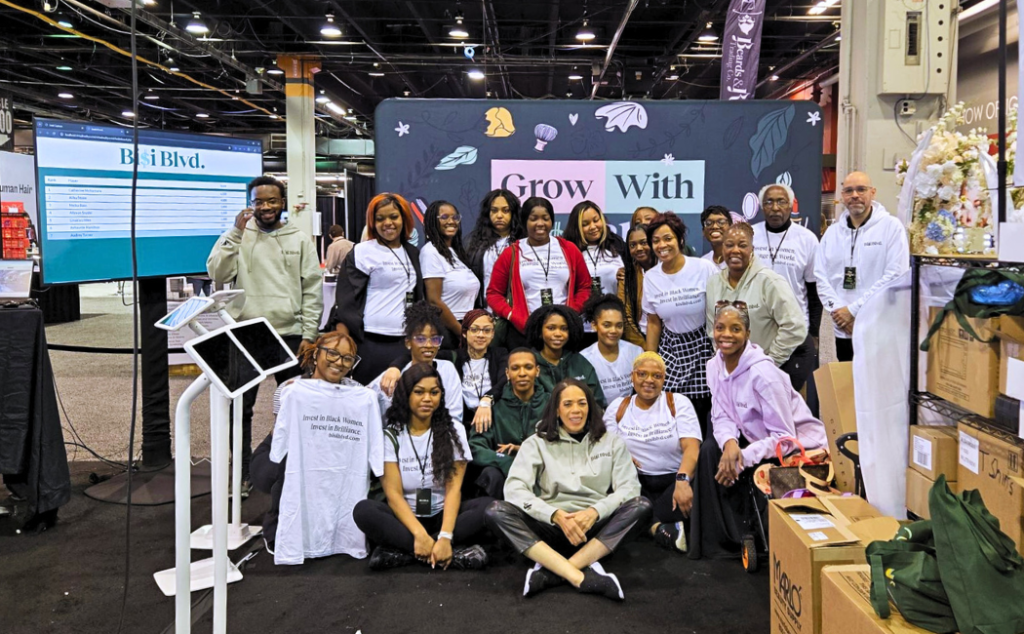
Such realities are why organizations like the Greenwood Project exist.
“You can’t build wealth if you don’t have enough money coming in, right? It’s impossible,” said Kwesi Smith, CEO of Chicago-based Greenwood Project. The organization helps Black and brown college students find employment in the financial services industry to diversify the sector. Through its programming, the Greenwood Project connects students through a year-long process to prepare them for a career in financial services.
“Finance is the most lucrative area of the economy, arguably,” Smith said. “That’s what gets me up every day, an organization that has the potential to really scale and grow and really help in terms of generating economic mobility for our communities.”
Smith, who has a background in investing, has seen the lack of Black people within the space and now works to ensure that marginalized communities grow the industry as a way to close the racial wealth gap in what he described as “high trajectory careers.”
“Our name, it really is pulled from the Tulsa, Oklahoma, race riots and what happened there and the destruction of Black wealth,” Smith said. “And that just reflects what’s happened in many other Black Wall Streets, including Richmond, Virginia, and over 200 other different race riots that destroyed prosperous Black neighborhoods. So there’s a specific historical context about the country and the views on wealth being had by Black and brown people.”
Recently, Curtis spoke to cohort members of the Greenwood Project during an event in partnership with the city’s economic development agency, World Business Chicago. The discussion centered around educating the future workforce about the fintech landscape in Chicago.
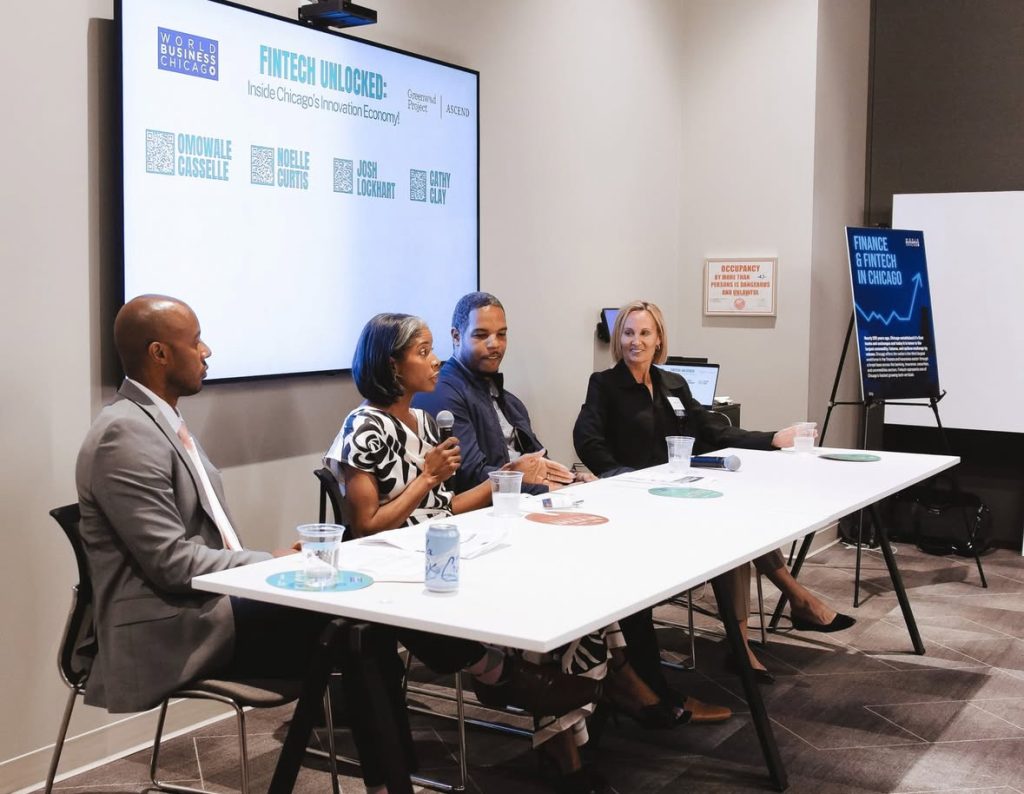
“If you are not in these rooms to help make decisions, to understand the decision-making process, to be a part of the decision-making process, you will see a great chasm of Black-owned companies in any industry,” Curtis said. “There’s a fear on the other [funder] side of the conversation where ‘I’m not familiar with what your community moves from an economic perspective,’ when sad truth is, it moves the same way of yours does, the only difference is [that] community had access to the financial resources to keep moving forward.”
As she grows her company, Curtis said she is currently working on a policy to help startup companies have access to more lending products and for Bisi Blvd. to become a credit union to provide loans to her subscribers.
“You have a digital divide in a community that already had a financial divide,” Curtis said. “This is a huge problem. It’s not going to be solved in our lifetime, but what can I do to help move the needle towards it being resolved? That’s what I’m here to do, and I’m enjoying every bit of it.”