





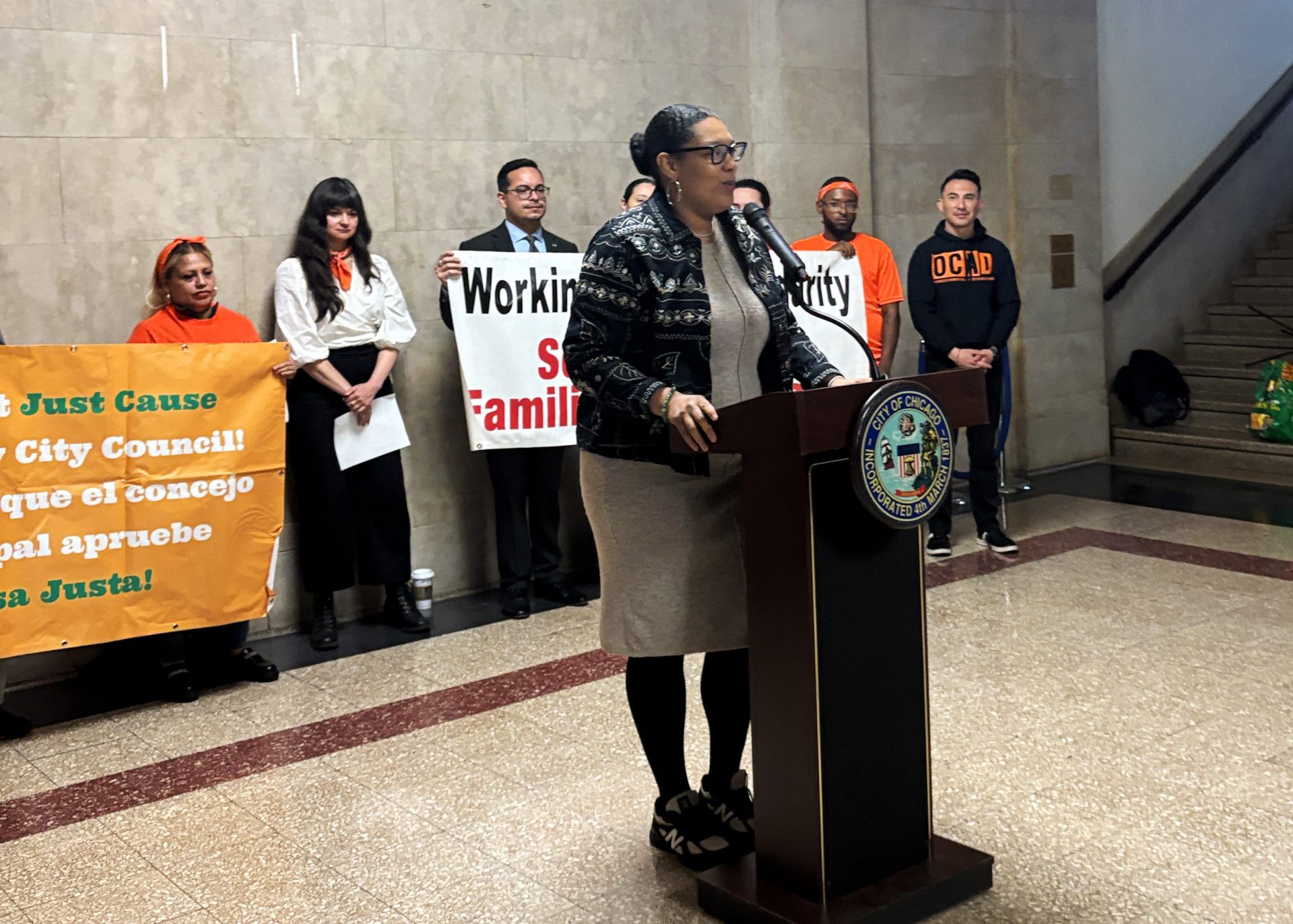
At today’s Chicago City Council meeting, Ald. Desmon Yancy (5th Ward) introduced an ordinance crafted to prevent unjust evictions. Now, it’ll go before the rules and housing committees for consideration.
As written, the ordinance — named Just Cause for Eviction — protects renters who, under the current city law, don’t have to be given a reason for an eviction or non-renewal of a lease.
It would require landlords to provide reasons for a tenant’s eviction from a list of “just causes,” such as failure to pay rent or other lease violations. The ordinance would also require landlords to assist with relocation fees for the tenant if the eviction or lease termination is not due to any fault of the tenant.
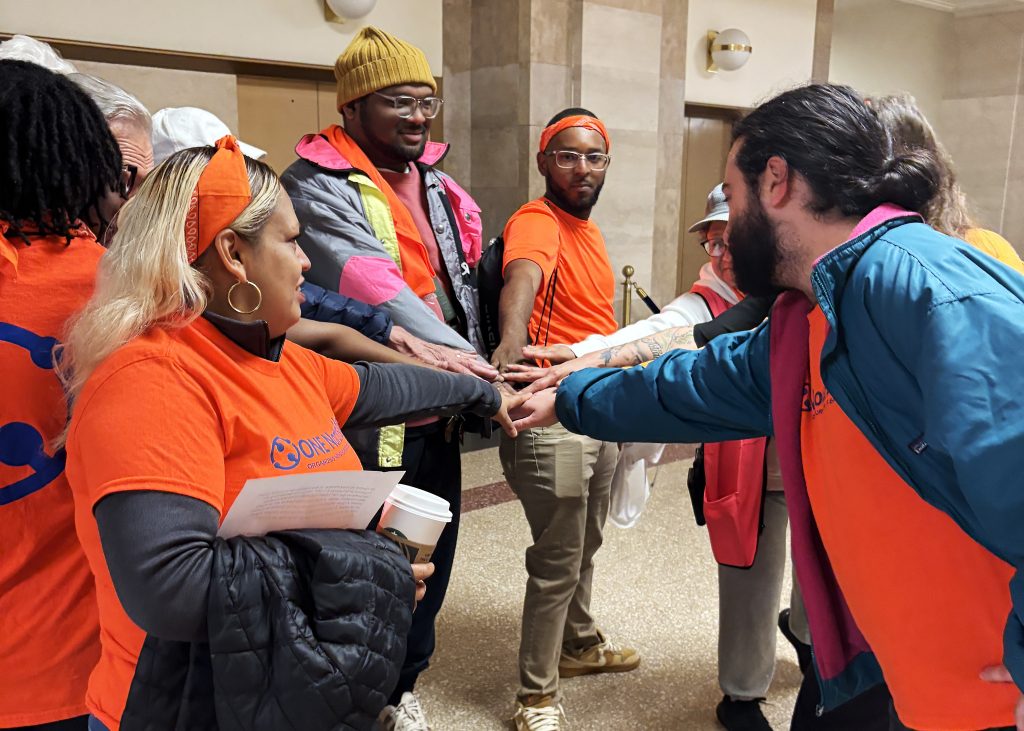
Housing organizers with the Chicago Housing Justice Coalition, which includes over 60 grassroots groups and nonprofits, held a press conference hours before the City Council meeting.
“The rising cost of housing and the affordable housing shortage, and the lack of tenant protections have led to a growing number of evictions,” Diane Limas, board vice president of Communities United, said during the press conference. “A ‘just cause’ policy will promote residential stability by limiting the reasons upon which a landlord may evict a tenant.”
The law would create a rental registry for a dedicated source of funds for relocation fees. The registry would require the name and information of the property owners to create transparency and accountability. For example, in South Shore, properties who were formerly managed by CKO Real Estate have multiple LLCs listed as owners, which can cause confusion for tenants who look to have housing issues resolved.
“It would be easier to find [property owners] and hold them accountable, because now they can just hide behind a bunch of LLCs, and this would stop that from happening,” said Racheal Wilson, senior organizer with the Chicago Housing Justice Coalition.
As drafted, large landlords would be required to pay $100 per-unit, per year into the registry, which would be overseen by the city’s Department of Housing, according to Wilson.
Wilson also stated that small “mom and pop” landlords would not be required to pay into the rental registry but instead would be given other avenues to help residents out who may be facing threats of displacement.
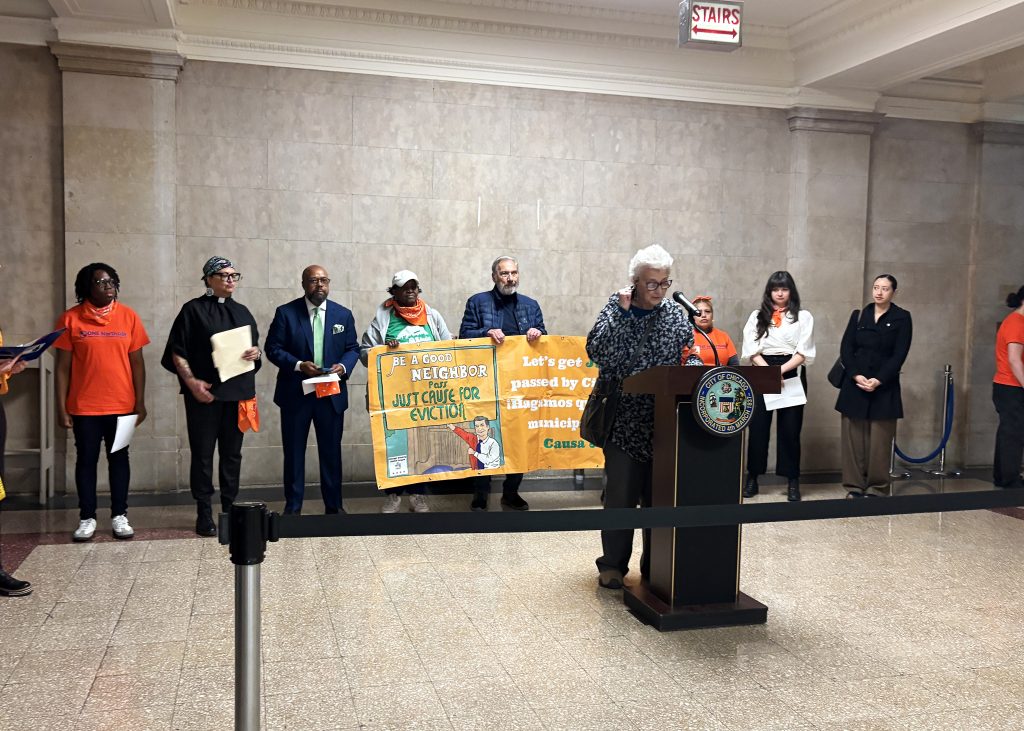
“[Small landlords] can figure out with their tenant how relocation assistance gets paid. For a large landlord, they just have to pay out of pocket. For a small landlord, they could do rent mitigation. They could do a couple months of the person not paying rent so they can work it out with a tenant,” Wilson said.
The proposal is sponsored by Yancy, whose ward includes parts of Woodlawn and South Shore, where residents have complained of being displaced from their homes due to nonrenewals of their leases and unjust evictions with the forthcoming Obama Presidential Center.
“This ordinance is important because when landlords unjustly evict tenants, it causes unnecessary burdens on those tenants. To relocate people, to secure their homes and to build stronger communities,” Yancy said during the press conference.
The proposal also requires rental assistance if landlords raise rents by more than 10% and the tenant decides to move.
According to the Urban Institute, many cities and states have “no-cause evictions,” which don’t require landlords to give a reason for evictions or lease terminations. “In these cases, tenants have little to no power to challenge the eviction. A landlord can file for an eviction even when they have taken illegal actions against the tenant, including ignoring maintenance requests, locking tenants out, or shutting off utilities,” reads a post from Urban Institute about “just cause” evictions.
Chicago organizers have tried to pass “just cause” laws since at least the 1980s, as reported by In These Times, with the last consideration in 2020.
The Just Cause ordinance is also supported by Ald. Angela Clay (46th Ward) and Ald. Carlos Ramirez-Rosa (35th Ward), whose districts include Uptown, Lakeview, Logan Square and Avondale. Residents from Clay’s and Ramirez-Rosa’s wards spoke about their experiences of having to leave their residences because developers want to build luxury condos, showing that the displacement impacts those across the city.
“Eviction has been used as a tactic to push poor people out of great neighborhoods. It’s been pushed as a tactic from landlords to discriminate against long-time residents,” Clay said. “To have an ordinance that offers more protection for our renters, now is the time. We have to make sure that we are protecting our most vulnerable neighbors.”
The Just Cause ordinance is supported by over 100 organizations around the city and state, including RAGE Englewood and Healthy Illinois.
Several states have implemented Just Cause for Evictions laws, including New Jersey, California and Oregon. According to the National Low Income Housing Coalition, in many cases, the state-wide laws were passed locally first and then led to statewide reform.