




Two Black business owners on Chicago’s South Side struggled to secure bank loans to complete their community investment projects after being rewarded city grants created to address decades-long divestment in Black and brown neighborhoods.
Although Donnell Digby was able to use his own money to cover the bulk of his $780,000 project, bringing the newly opened Nafsi restaurant to life inside the South Shore Cultural Center, James Daughrity and his business partner Corey Gilkey are still struggling to find a lender to complete the construction of their Policy Kings mixed-used development in Washington Park after receiving over $2 million in city funding.
Both say banks don’t see the value in investing in under-resourced areas.
“It’s difficult to get loans and lending for new businesses. So that was our uphill battle to try to find the funds because it’s a good business,” Digby said about Nafsi, the first Black-owned restaurant to sit inside the South Shore Cultural Center, offering lakefront views at the formerly “whites only” country club. The restaurant is named after the Swahili word for “soul.”
“[If] you don’t have financials, you don’t have history, banks really are not too keen on funding projects as brand new,” Digby continued.
Nafsi officially opened on Oct. 9 with the help of a $250,000 Chicago Recovery Plan (CRP) grant that Digby was awarded in 2022.
However, he said, banks were hesitant to offer a loan, even with the CRP grant funds, despite his 20-year history in real estate and operating other businesses such as The Woodlawn at 1200 E. 79th St.
Digby said it was the knowledge that he’s gained over the years in the real estate business that helped him to persevere.
“CRP helped us along with our capital expenditures with our pocket funds,” Digby told The TRiiBE.
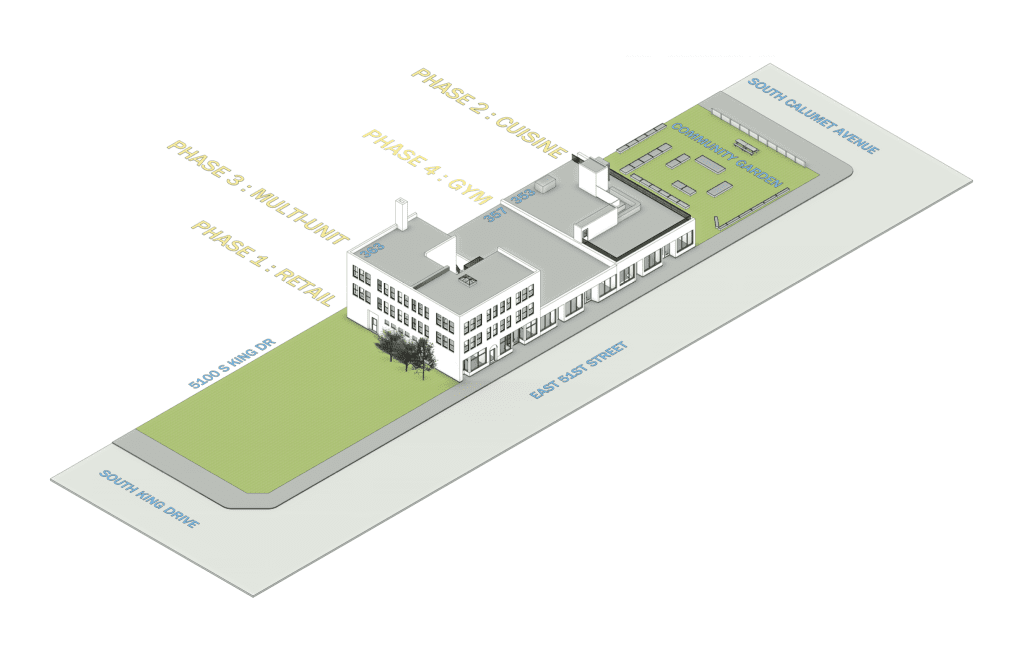
Policy Kings, named after the numbers game played by Black Chicagoans in the early 1900s, started renovations to the building at 353-63 E. 51st St. two years ago. With the development, the owners seek to use local Black-owned vendors to “revitalize” the neighborhood. The building would include new retail options, dining and apartments in the corridor.
James Daughrity, co-founder of Policy Kings, and his business partner Corey Gilkey, were approved for $2.3 million from the city’s large Neighborhood Opportunity Fund (NOF) grant in 2021. The estimated cost for the total project is over $6 million.
According to the city’s website, the project was approved to receive Tax Increment Financing (TIF) support in 2022. Daughrity said the money was switched from a NOF grant to TIF money with no clear indication why.
“The City of Chicago is interesting the way the grant is worded, and that’s some of the hurdles we have to overcome,” Daughrity said.
These city grant programs are helpful but because they are reimbursements instead of upfront money, sometimes business owners cannot access the money because banks are reluctant to give loans for such projects, according to Cecilia Cuff, CEO of business development firm Nascent Group. She works with both Daughrity and Digby and has worked with many small businesses in Chicago that have gotten such grants.
“Even though we’ve been awarded millions of dollars from the city, we can’t get that without a lender. And there’s no lenders that are lending to us because the company, they’re saying, doesn’t appraise at what the value would be,” Cuff said about the Policy Kings project.
Daughrity said the reimbursement component of the grant has made traditional banks such as JPMorgan Chase, Bank of America and Wintrust not agree to a loan.
“Instead of taking the consideration that we have this grant, they want us to still be able to cover the whole project,” Daughrity said. “And they’re like, just in case something will happen so that money doesn’t come through, how [are] you gonna finish this project?”
The past three mayoral administrations have had variations of programs that focus on developments on the South and West sides of the city.
In 2016, Rahm Emanuel’s administration implemented the Neighborhood Opportunity Fund (NOF), a city grant that seeks to prioritize funding for developments on the South and West sides where disinvestment has historically taken place. The fund uses taxes from downtown zoning districts.
Former Mayor Lori Lightfoot created the three-year Invest South/West initiative for such investments. The initiative was supported by “public funding” and targeted 10 corridors for public and private investments.
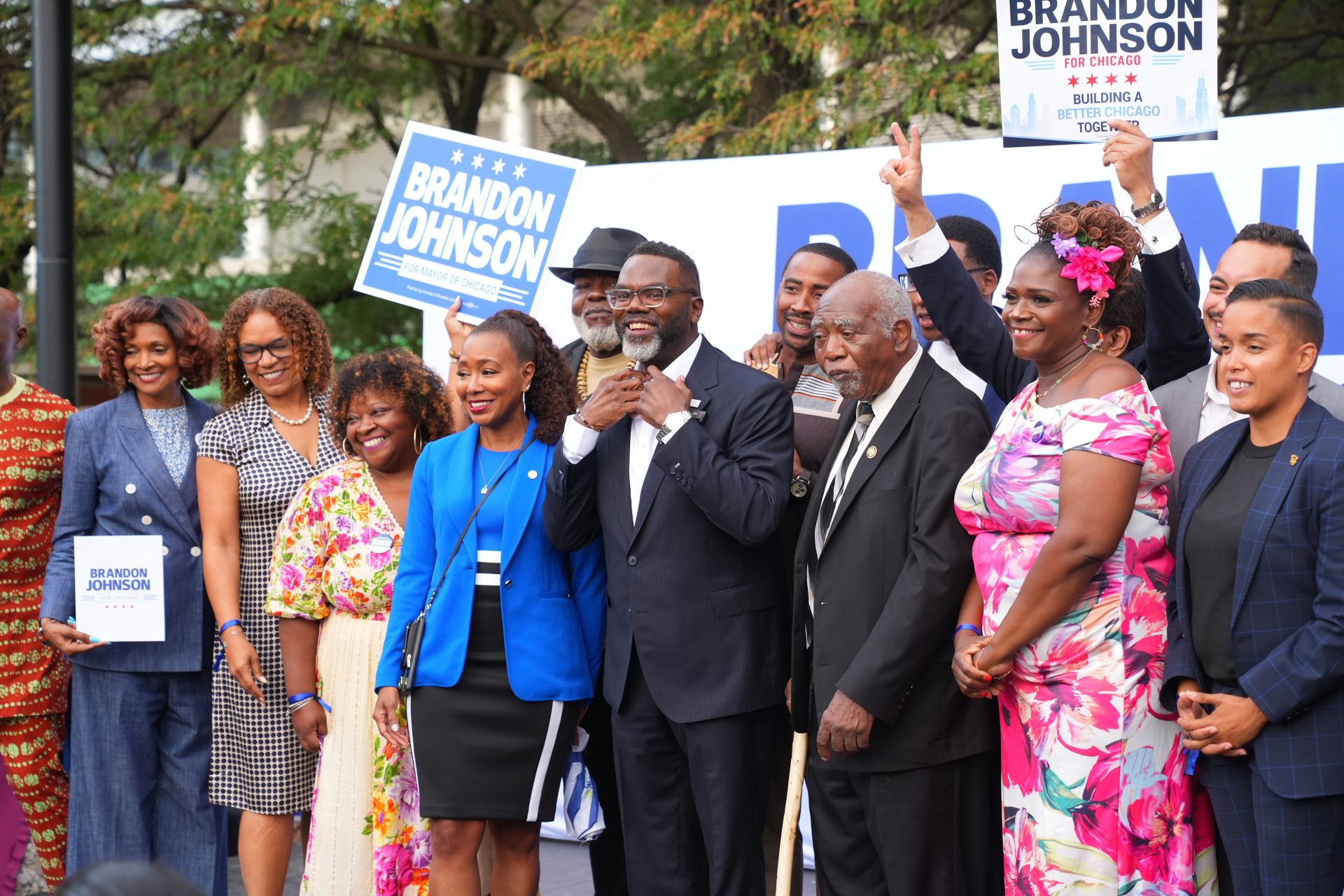
Now, Mayor Brandon Johnson recently coined his initiative the Road to Recovery Plan, which includes the Chicago Recovery Plan, and provides Community Development Grants from his recently announced 2024 Housing and Development Bond. The bond plan is funded through existing funding sources such as expiring TIFs and Low-Income Housing Tax Credits.
“Multiple City of Chicago financial programs and initiatives have been launched over the last decade to increasingly address 75 years of systemic disinvestments across the West and South sides,” Peter Strazzabosco, deputy commissioner of Chicago’s Department of Planning and Development, said in a written statement to The TRiiBE.


The Chicago Data Portal shows that, since 2018, only six projects have received a large project grant, which provides funds of over $250,000 from the Neighborhood Opportunity Fund.
According to a University of Chicago analysis of the Neighborhood Opportunity Fund, “Many place-based policies do not provide the needed equity for local businesses but rather aim to attract external private investment,” meaning that outside investors profit by building in these areas rather than business owners who are from the community.
The analysis reflects the fears that Daughrity has as he works to try to find a lender.
“Unfortunately, we’re gonna have to bring in somebody outside the community to partner with us. We’re gonna have to give up a majority of equity [in] our building,” said Daughrity. “The only problem is, once we do that, we’re gonna be in jeopardy of losing our grant from the City of Chicago.”
Daughrity has been in communication weekly with the Chicago Department of Development and Planning, informing them of the hiccups. He said the department has agreed to put the money in escrow and pay out the funds when an agreement is met, but said that banks still see it as too risky.
Another route minority business owners often use is securing loans with the Community Development Financial Institutions (CDFI) Fund, which uses federal and private dollars to invest in “economically disadvantaged communities.”
Daughrity said Policy Kings has been unsuccessful with both the Chicago Community Loan Fund and LISC Chicago, two CDFIs based in the city.
Daughrity said they have given multiple reasons why the project won’t be funded. They were told they weren’t ready and were asked to include national tenants. Daughrity said they planned to use Chicago local streetwear brand Leaders 1354 and the women’s sneaker store Queenz as its anchor tenants.
“This is a community project. So we have local community vendors who already gave us letters of intent, but you want me to go out and get a national brand tenant where it’ll make you feel more comfortable than [if] it was for somebody in the community,” Daughrity said. “And that will defeat the purpose of our grant from the City of Chicago, which is a community-based development (grant).”
Although Daughrity said he and his business partner agreed to rent out to a minority-owned UPS, which would satisfy the desire of a national tenant, the two Community Development Financial Institutions still denied them.
With 20-plus years of experience in the real estate industry working in both Chicago and Los Angeles, Daughrity said that he’s seen CDFIs lend to large developers repeatedly, but smaller ones who need the funds are often left out.
“CDFIs [will tell you] you’re not ready to purchase yet [and] put you in a Technical Assistance Program,” Daughrity said. “We don’t need any more programs. We don’t need any more assistance. We need capital.”
In an emailed statement, The Chicago Community Loan Fund (CCLF) said it cannot discuss the submissions of its applicants. In the statement, CCLF said it “remains firmly committed to its mission to provide flexible, affordable, and responsible financing and technical assistance for community stabilization and development efforts and initiatives that benefit low- to moderate-income neighborhoods, families, and individuals throughout metropolitan Chicago.”
Policy Kings has since halted renovations to the building. Daughrity said he and his business partner are in “urgency mode,” working endlessly to secure funding for the project with hopes they can continue building before another change in administration.