

This story is part of Reframing Crime Narratives, a 10-part series about public safety by The TRiiBE to create space for community conversation about crime in Chicago.
The series is supported in part by the John D. and Catherine T. MacArthur Foundation and the Envisioning Justice grant by Illinois Humanities.
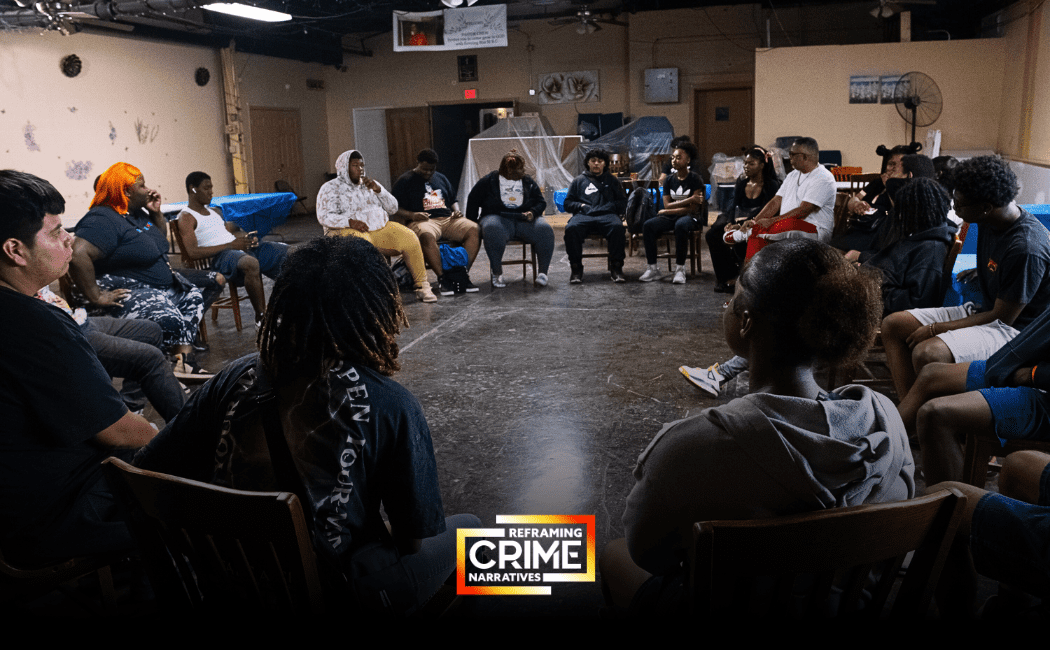
On a humid and cloudy July morning, 25 young Chicago residents aged 16-24 and three adult leaders gathered at Evening Star Baptist Church in West Englewood for week two of GoodKids MadCity’s (GKMC) Peacekeeping pilot program.
The group starts each day by forming a group circle, conducting check-ins, and engaging in a series of icebreakers. At first, the room was quiet, but as Carleeta Pittman, one of the youth leaders, got the group involved in the icebreakers one by one, there were moments when the room erupted in laughter. Each day, participants also journal, answering questions such as, ‘’What impacted you today? What was one thing that stood out to you today? Who had an impact on you today?”
Through its summer Peacekeepers pilot program, GKMC is building on the heart of its mission, using healing, restorative justice practices and a holistic approach to violence prevention. This approach addresses the root causes of violence rather than taking a punitive approach, and the program makes space for “young people to be the peacekeepers and the changemakers,” said Carlil Pittman, executive director of GKMC, and brother of Carleeta Pittman.
There’s a prevailing narrative about youth, particularly Black youth, in Chicago: they are unfairly over-generalized, demonized, and stigmatized by society because of the way they dress, the music they listen to, their interests, and their participation in large city-wide meetups known as “trends.” In some instances, these meetups have resulted in chaos or violence, but those actions are not indicative of how youth should be viewed.
“We’re talking about young people, and the city or other spaces have deemed these young people as the reason for the problems,” Carlil Pittman said.
The GKMC peacekeeping pilot program is six weeks long and is hosted four times weekly at locations citywide including, the Chicago Torture Justice Center, the Kenwood Oakland Community Organization, Evening Star Baptist Church, Acclivus, Southside Together Organizing for Power and Cannabis Equity. The majority of applicants for this summer’s pilot program live in South Side neighborhoods.
At the conclusion of the pilot program, the hope is that the youth who participate will be equipped with tools such as relationship and community-building, organizing and de-escalation techniques to become peacekeepers themselves in their communities.
The problems that Black youth are facing, according to Carlil Pittman, are directly tied to the city’s decades-long neglect and disinvestment in Black communities, including shuttered public schools, closed mental health clinics, lack of after-school programming and employment opportunities and much more. Youth also lack places to safely gather.
The goal is to make the Peacekeeping pilot program permanent and extend it beyond the summer months to year-round employment for young people, Carlil Pittman said.
Equipping youth to spread peace in community
Peace has various definitions for youth employed in peacekeeping programs. For some, it means young people have safe spaces to gather and be their authentic selves, while for others, it means being equipped with tools to de-escalate conflict.
“For me, peace is just seeing more youth outside playing and enjoying themselves in their neighborhood without having to worry about any danger or anything happening to them, not having to watch over their shoulder or anything like that, and enjoying each other’s company,” Darrion Johnson said. Johnson, 19, is a founding member of GKMC’s Englewood Branch and part of the Peacekeeping program.
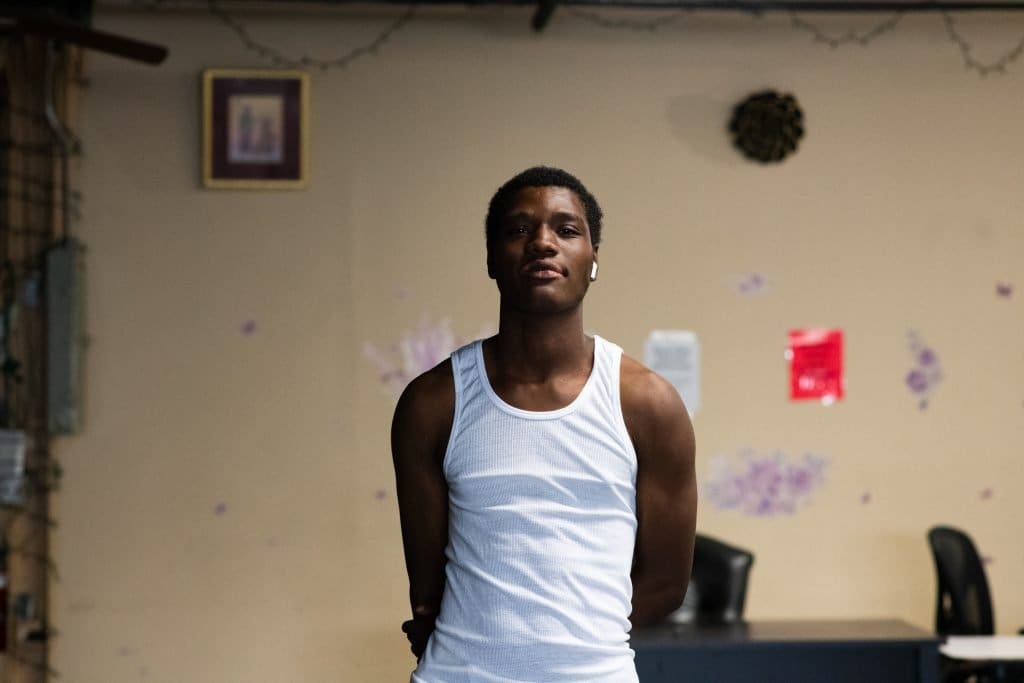
Since its inception, GKMC, a youth-led community organization, has focused its efforts on reducing inter-communal violence and over-policing while working to flip negative perceptions about youth.
“A person who’s stopping the violence or not egging it on, breaking it up [and saying] you should go this way or go that way. Just walk away, take a deep breath,” Demari McNeal, a 19-year-old GKMC peacekeeper and Englewood resident, said when asked what it means to be a peacekeeper.
This summer, 100 young people citywide are employed in GKMC’s Peacekeeping pilot program, which is part of the city’s One Summer Chicago employment initiative.
Youth work 20 hours per week and are paid $15.80 per hour. The OSC program includes government agencies, community organizations and companies that offer employment and paid internship opportunities for young people between 14 and 24 years old.
“They are engaging in peacekeeping circles, exploring podcasting, and they are sharing that this opportunity is more than just a job. It’s a place where healing begins,” Brandie Knazze, Department of Family and Support Services (DFSS) commissioner, said during a July 11 press conference. “They are learning communication and restorative justice practices. They are forming strong bonds with their peers, they are networking and they are learning positive ways to communicate with one another.”
The TRiiBE visited Evening Star Baptist Church on a Wednesday, an elective day, meaning participants have the opportunity to rotate into different activities depending on their interests. There’s a podcasting group equipped with microphones, a recording studio for music production, art therapy and culinary classes, where youth work together to prepare their meals for the day.
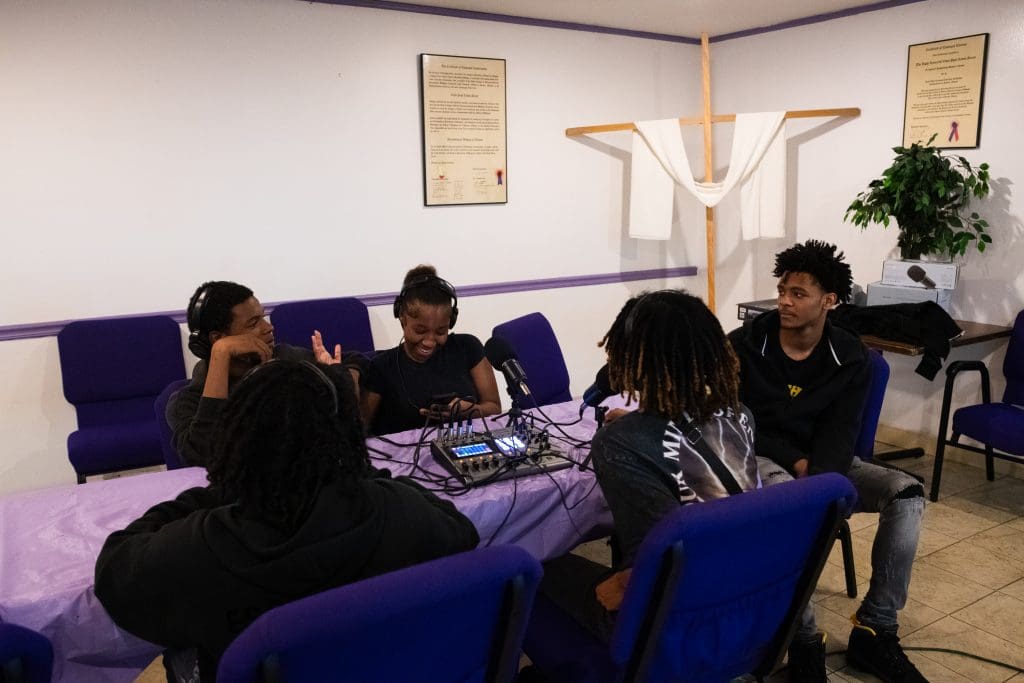
GKMC’s Peacekeeping positions were also made possible by the city’s DFSS 2024 budget, which includes an additional $76 million to expand youth employment opportunities.
A report released in May by the University of Illinois Chicago Great Cities Institute found that young people in Chicago face higher unemployment rates compared to the national average and those in the Cook County suburbs. However, teens in predominantly Black and Hispanic or Latinx neighborhoods experience significantly worse unemployment rates than their white peers.
This summer, more than 27,000 young people were hired for jobs as part of the One Summer Chicago program. However, according to a WBEZ news report, the current number of youth employees falls a bit short of Mayor Brandon Johnson’s goal of employing up to 28,000 young people.
Increasing job opportunities for youth is part of Mayor Brandon Johnson’s administration’s multipronged approach to addressing Chicago’s violence holistically and not punitively. Sixty percent of the young people who received jobs in 2023 were Black, according to Johnson.
“Peacekeeping is giving kids a voice and showing them ways for us to keep the peace,” 18-year-old Amiyah Lindo, vice president of GKMC’s youth board and a Gage Park resident, said.
Lindo first joined GKMC’s summer programming in 2022 and is one of the youth employed in the program this summer.
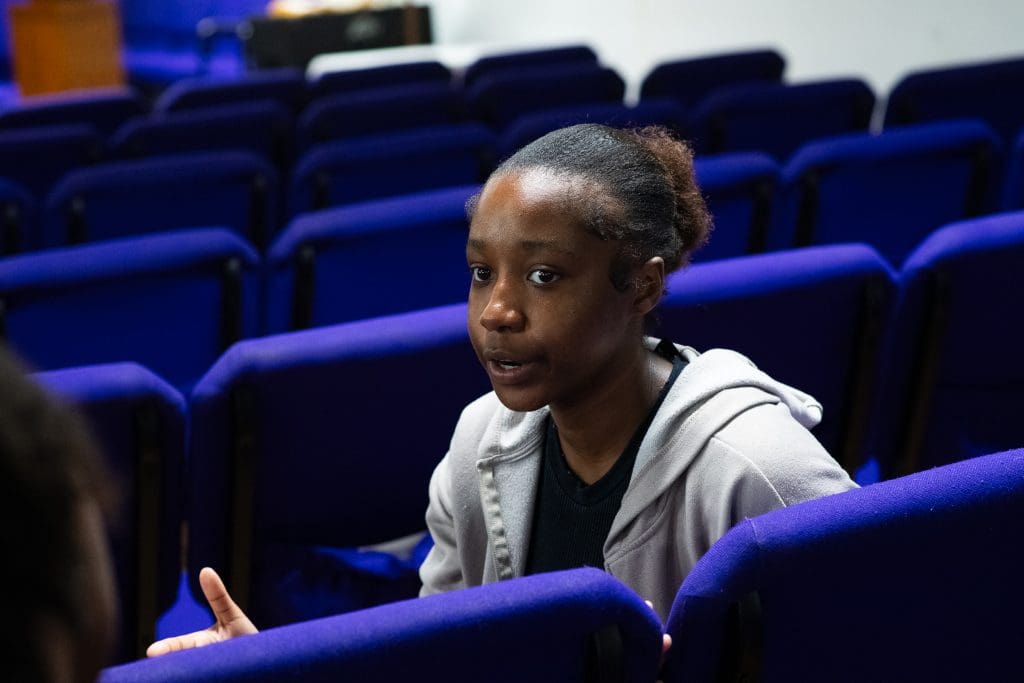
“We want to spread the work of peacekeeping. I’m a peacekeeper. I don’t want any negativity to come to me,” she added.
Pittman said each of these weekly activities also encompasses what it means to be a peacekeeper. The most important skill they’re learning through these activities is building community and relationships with one another.
“We’re leading them to organize their own events, to reach out to the community, to connect with the community, and to use these internal skills to do that same thing because the most important tool in organizing is the ability to build and maintain relationships,” Pittman explained.
Communication tools and healing
As participants learn about GKMC and peacekeeping, they also begin to unpack their own trauma. Some peacekeeper participants have lost parents, siblings or friends to gun violence, according to Pittman.
“This year started off with shootings and killings and losing friends left and right. Some of the people who died are people I went to elementary school with and, it’s like, that right there discourages you and it makes people think that you might not make it out, or that you might not be able to live the life you want to live because of the streets of Chicago,” Lindo said.
Being a part of GKMC has provided hope and community for Lindo who shared that she’s experienced moments where she felt hopeless. Peacekeeping and leaders within GKMC demonstrate the possibilities for the future. They’ve encouraged her to keep going. When she graduates from high school next year, she wants to pursue a career in law and specifically help young people in the juvenile justice system.
“What we hope to do is get the budget to where this is ongoing, not just a summer program, and we can reach thousands of young people throughout the city,” Pittman said.
It’s unclear what funding for the Peacekeeping program will look like in the city’s 2025 budget. The Johnson administration hosted four public budget engagement roundtables last month and is expected to deliver the budget address this fall.
In a statement to The TRiiBE, DFSS spokesperson Brian Berg wrote:
“DFSS will be participating in the city’s 2025 budget process that will determine funding levels for next year. Additionally, later this month DFSS will be releasing RFPs (request for proposals) for year-round employment for programming beginning next year with community organizations. We are committed to providing youth with enriching and engaging opportunities that allow them to learn new skills and discover their passion while earning money.”
In addition, Pittman said they’re developing an app that would serve as a find-all for community members looking for shelter, clothing, food and safe spaces to gather.
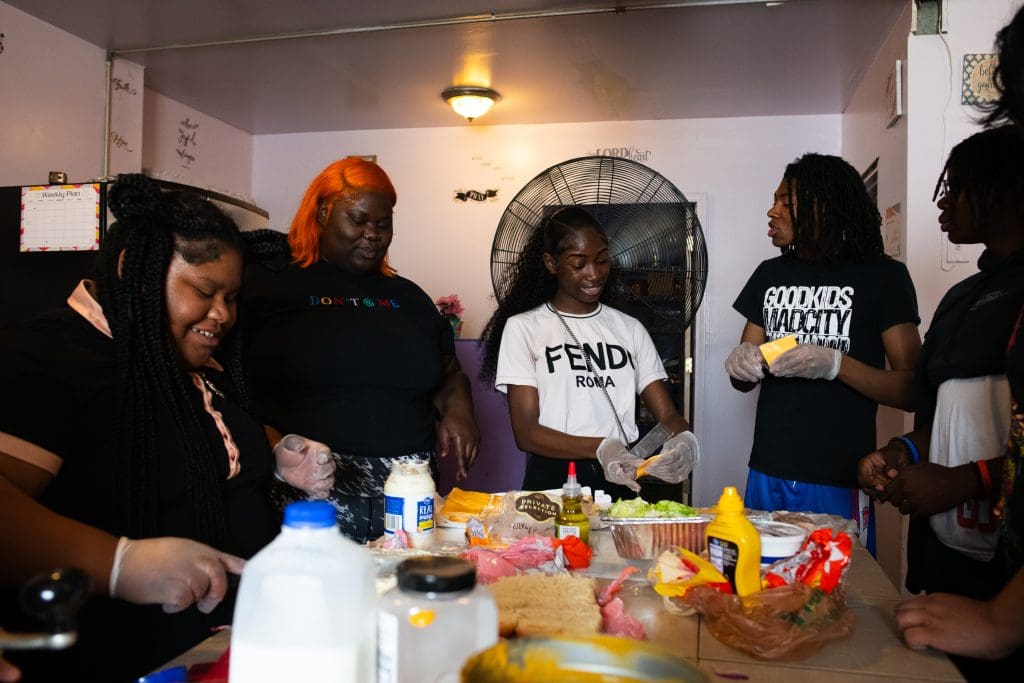
“Peacekeepers will be in charge of running these apps and kind of facilitating these conversations to make sure folks are getting connected to those resources that they need,” he said, referring to the app.
The organization also still has its eyes set on passing the Peacebook Ordinance, which calls for the police budget to be reallocated to community-run services such as violence interruption, education, mental health programs, and more. They are asking for $50 million from the city to fund the Peacebook Ordinance.
GKMC wants to pilot the Peacebook in the 3rd, 4th, 5th and 20th wards, which includes the Woodlawn, Washington Park, Kenwood, Oakland and Bronzeville neighborhoods, because GKMC members are primarily from these communities and have bonds and relationships with youth who also live there.
The Peacekeeping program is part of the ordinance, which was introduced to the Chicago City Council in 2022 but was blocked from advancing the same day it was introduced.
Mayor Johnson reiterated his support for the passage of the Peacebook Ordinance during a July 11 press conference.
“There is still an organizing effort to bring it to complete fruition. It has my support and this pilot [program], of course,” Johnson said, referring to the Peacebook and the Peacekeeping program.
“A lot of times what happens when you’re trying to help move other people who may not be where you are, we call that organizing, showing people that it works and what you’re seeing today is a clear example that it does work. So that effort continues. There are strong champions in City Council who are committed to moving the Peacebook,” Johnson said.